ADHD: Understanding Attention-Deficit/Hyperactivity Disorder
Attention-Deficit/Hyperactivity Disorder (ADHD) is one of the most common neurodevelopmental conditions affecting both children and adults. It is characterized by persistent patterns of inattention, hyperactivity, and impulsivity that interfere with learning, work, relationships, or daily life.
Many people think ADHD only affects children, but symptoms often continue into adulthood. With early diagnosis, appropriate treatment, and supportive strategies, individuals with ADHD can thrive academically, professionally, and socially.
At Teledoctor Kenya, we provide comprehensive assessment, education, and treatment plans tailored to each patient’s needs.
What Is ADHD?
ADHD is a neurodevelopmental disorder, meaning it affects how the brain develops and functions, particularly in areas responsible for attention, self-control, planning, and organization.
It is not caused by poor parenting, laziness, or lack of intelligence.
People with ADHD often have normal or above-average intelligence but may struggle with maintaining focus, completing tasks, or controlling impulses.
Types of ADHD
Healthcare professionals classify ADHD into three main presentations:
Predominantly Inattentive Presentation
People mainly struggle with:
- Paying attention
- Staying organized
- Completing tasks
- Following instructions
Hyperactivity may be minimal.
Predominantly Hyperactive-Impulsive Presentation
This presentation is characterized mainly by:
- Excessive activity
- Restlessness
- Difficulty sitting still
- Acting without thinking
Combined Presentation
The most common form, involving significant symptoms of both:
- Inattention
- Hyperactivity and impulsivity
Symptoms of ADHD
Symptoms usually begin in childhood, although they may not be recognized until adolescence or adulthood.
Symptoms of Inattention
A person may:
- Make careless mistakes
- Have difficulty sustaining attention
- Appear not to listen
- Lose items frequently
- Be easily distracted
- Forget daily activities
- Struggle to complete assignments or work
- Have poor time management
- Avoid tasks requiring prolonged concentration
Symptoms of Hyperactivity
They may:
- Fidget frequently
- Leave their seat when expected to remain seated
- Run or climb excessively (especially in children)
- Talk excessively
- Feel constantly “on the go”
- Find it difficult to relax quietly
Symptoms of Impulsivity
They may:
- Interrupt conversations
- Answer questions before they are finished
- Have difficulty waiting their turn
- Make impulsive decisions
- Engage in risky behaviours without considering consequences
ADHD in Children
Children with ADHD may experience:
- Poor academic performance
- Difficulty following classroom instructions
- Frequent disciplinary problems
- Difficulty making friends
- Low self-esteem
- Emotional outbursts
Not every active child has ADHD. Diagnosis requires a careful assessment by a qualified healthcare professional.
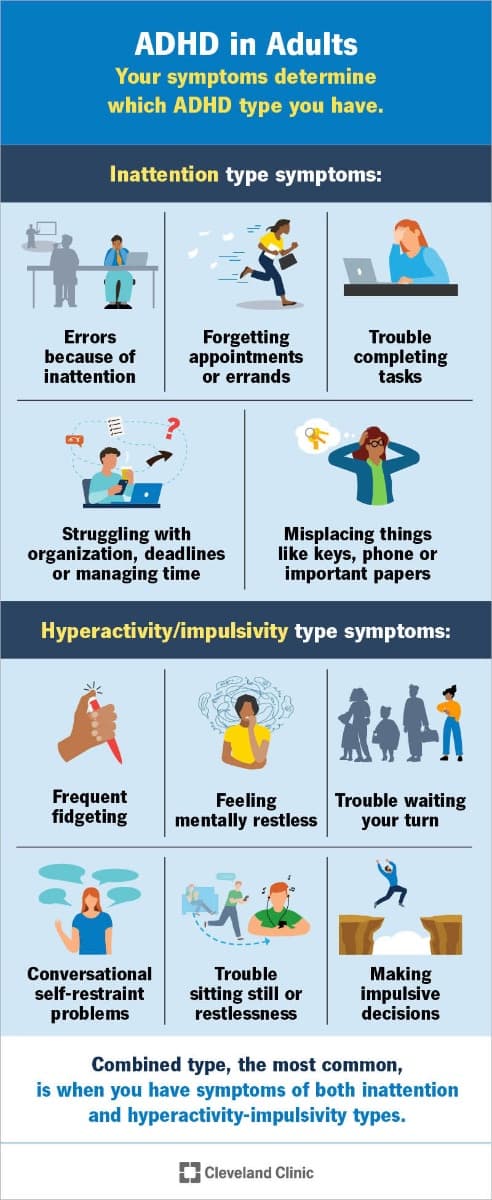
ADHD in Adults
Many adults remain undiagnosed until later in life.
Adult ADHD symptoms may include:
- Difficulty staying organized
- Frequently missing deadlines
- Poor concentration
- Restlessness
- Forgetfulness
- Impulsive spending
- Difficulty maintaining relationships
- Frequent job changes
- Poor time management
Hyperactivity often becomes less obvious with age, while inattention and impulsivity may persist.
What Causes ADHD?
The exact cause is unknown, but several factors contribute.
Genetics
ADHD tends to run in families.
Brain Development
Differences in brain structure and function, particularly in areas involved in attention and self-control, are thought to play a role.
Environmental Factors
Certain prenatal and early childhood factors may increase risk, such as:
- Premature birth
- Low birth weight
- Maternal smoking or alcohol use during pregnancy
- Exposure to environmental toxins
Importantly, ADHD is not caused by poor parenting, excessive sugar intake, or watching television.
How Is ADHD Diagnosed?
There is no single blood test or brain scan for ADHD.
Diagnosis involves:
- A detailed medical and developmental history
- Behavioural questionnaires
- Interviews with parents, teachers, or caregivers (for children)
- Assessment of symptoms across multiple settings (such as home and school)
- Excluding other medical or mental health conditions
Symptoms should have been present since childhood and significantly affect daily functioning.
⸻
Treatment Options
Treatment is individualized and often combines several approaches.
Education and Support
Understanding ADHD helps individuals and families develop realistic expectations and effective coping strategies.
Behavioural Therapy
Behavioural interventions can help improve:
- Organization
- Time management
- Emotional regulation
- Social skills
- Classroom behaviour
Parent training and teacher support are especially valuable for children.
Medication
Medication may be recommended for moderate to severe ADHD.
Common medications include:
- Stimulants, such as methylphenidate and amphetamine-based medicines
- Non-stimulants, such as atomoxetine or guanfacine, in selected individuals
Medication should only be prescribed and monitored by a qualified healthcare professional.
School and Workplace Support
Helpful accommodations may include:
- Extra time for assignments or examinations
- Written instructions
- Quiet workspaces
- Scheduled breaks
- Organizational tools and reminders
Practical Tips for Managing ADHD
Daily habits can make a significant difference.
Consider:
- Using calendars and planners
- Breaking large tasks into smaller steps
- Creating daily routines
- Limiting distractions
- Exercising regularly
- Getting enough sleep
- Setting reminders on your phone
- Celebrating small achievements
Common Myths About ADHD
“ADHD only affects children.”
False. Many adults continue to experience ADHD symptoms.
“People with ADHD are lazy.”
False. ADHD affects attention and executive functioning—not intelligence or motivation.
“Sugar causes ADHD.”
There is no strong scientific evidence that sugar causes ADHD.
“Medication changes your personality.”
When appropriately prescribed and monitored, ADHD medication aims to improve attention and self-control, not change a person’s personality.
When Should You Seek Medical Advice?
Consult a healthcare professional if:
- Attention problems interfere with school or work
- Hyperactivity is affecting daily life
- Impulsivity leads to risky behaviour
- Symptoms have been present since childhood
- Emotional or behavioural problems are worsening
Early assessment can improve educational, occupational, and social outcomes.
Can Teledoctor Help?
Yes.
Teledoctor Kenya offers confidential ADHD assessments and ongoing care.
Our healthcare professionals can:
- Assess ADHD symptoms
- Screen for anxiety, depression, and learning difficulties
- Recommend behavioural strategies
- Discuss medication when appropriate
- Provide follow-up care
- Refer to psychologists, psychiatrists, or occupational therapists if needed
Living Successfully with ADHD
ADHD presents challenges, but it also comes with strengths. Many people with ADHD are creative, energetic, curious, resilient, and capable of thinking outside the box.
With the right support, structured routines, appropriate treatment, and encouragement, children and adults with ADHD can succeed in school, work, relationships, and everyday life.
Book an ADHD Assessment with Teledoctor Kenya
If you or your child may have ADHD, our experienced healthcare professionals are here to help.
We provide:
- Confidential consultations
- ADHD screening and assessment
- Behavioural counselling
- Medication management when appropriate
- Family education
- Specialist referrals
- Ongoing follow-up
📞 Call or WhatsApp: 0701 913 000
🌐 Book your consultation today at www.teledoctor.co.ke
Frequently Asked Questions
Can adults develop ADHD?
ADHD begins in childhood, although some people are not diagnosed until adulthood when increasing responsibilities make symptoms more noticeable.
Is ADHD curable?
There is no cure, but many people manage ADHD successfully with treatment, behavioural strategies, and support.
Does everyone with ADHD need medication?
No. Treatment depends on the severity of symptoms, age, and individual circumstances. Some people benefit from behavioural strategies alone, while others may also need medication.
Can children with ADHD perform well in school?
Yes. With early diagnosis, supportive teaching, appropriate accommodations, and treatment, many children with ADHD perform well academically.
Can ADHD occur together with other conditions?
Yes. ADHD can occur alongside anxiety disorders, depression, autism spectrum disorder, learning disorders, and sleep disorders. A comprehensive assessment helps identify coexisting conditions.