Alcohol is widely consumed in Kenya during social gatherings, celebrations, sporting events, and cultural occasions. For many people, drinking is an occasional part of their lifestyle. However, alcohol can affect nearly every organ in the body, and excessive consumption is associated with a wide range of physical, mental, and social health problems.
Understanding how alcohol affects your health can help you make informed decisions and recognise when it may be time to seek medical advice.
⸻
How Alcohol Affects Your Body
After you consume alcohol, it is rapidly absorbed into your bloodstream and transported throughout the body.
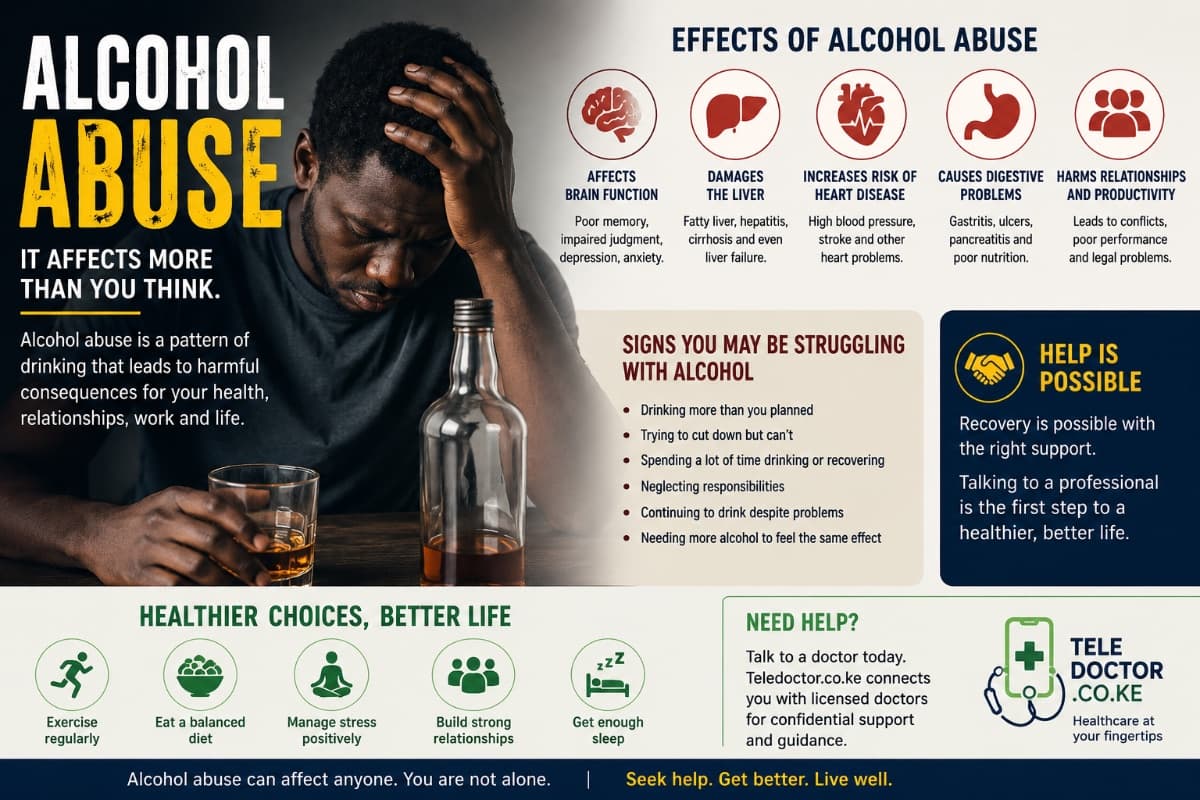
Alcohol affects several organs, including:
- Brain: Impairs judgment, concentration, coordination, memory, and reaction time.
- Liver: Breaks down alcohol but can become damaged with repeated excessive drinking.
- Heart: Heavy drinking may increase the risk of high blood pressure, abnormal heart rhythms, heart muscle disease, and stroke.
- Digestive system: Alcohol can irritate the stomach lining and contribute to gastritis, ulcers, and pancreatitis.
- Immune system: Excessive alcohol use may reduce your body’s ability to fight infections.
Even small amounts of alcohol can affect driving, operating machinery, and decision-making.
⸻
Is There a Safe Amount of Alcohol?
There is no level of alcohol consumption that is completely risk-free for everyone.
The health effects depend on factors such as:
- Age
- Sex
- Body weight
- Existing medical conditions
- Pregnancy
- Medications being taken
- Frequency and quantity of alcohol consumed
Some people should avoid alcohol completely, including:
- Pregnant women
- People with liver disease
- Individuals recovering from alcohol dependence
- Anyone taking medications that interact with alcohol
- People planning to drive or operate machinery
If you choose to drink, moderation is important.
⸻
Short-Term Risks of Excessive Drinking
Drinking large amounts of alcohol over a short period can lead to:
- Accidents and injuries
- Falls
- Road traffic crashes
- Alcohol poisoning
- Risky sexual behaviour
- Violence
- Poor decision-making
- Dehydration
- Severe vomiting
Alcohol poisoning is a medical emergency and requires immediate hospital treatment.
⸻
Long-Term Health Risks
Regular heavy alcohol use increases the risk of:
Liver Disease
The liver is particularly vulnerable to alcohol-related damage.
Long-term excessive drinking can cause:
- Fatty liver disease
- Alcoholic hepatitis
- Cirrhosis (permanent liver scarring)
These conditions can become life-threatening if left untreated.
⸻
High Blood Pressure and Heart Disease
Heavy alcohol use may contribute to:
- Hypertension
- Heart rhythm abnormalities
- Heart failure
- Stroke
Reducing alcohol intake can improve cardiovascular health.
⸻
Mental Health Problems
Alcohol can worsen or contribute to:
- Depression
- Anxiety
- Sleep problems
- Memory difficulties
Although alcohol may initially seem relaxing, it often disrupts normal sleep and may worsen mood over time.
⸻
Increased Cancer Risk
Long-term alcohol consumption has been linked to an increased risk of several cancers, including cancers of the mouth, throat, oesophagus, liver, breast, and bowel.
Reducing alcohol intake may lower these risks.
⸻
Recognising Alcohol Dependence
Some signs that alcohol may be becoming a problem include:
- Needing more alcohol to achieve the same effect
- Difficulty controlling how much you drink
- Drinking despite health, family, or work problems
- Experiencing withdrawal symptoms such as shaking, sweating, anxiety, or nausea when you stop drinking
- Neglecting responsibilities because of alcohol use
If these signs sound familiar, seeking medical advice early can make a significant difference.
⸻
Tips for Healthier Drinking
If you choose to drink alcohol:
- Avoid binge drinking.
- Drink slowly and alternate alcoholic drinks with water.
- Eat before and while drinking.
- Set personal limits and stick to them.
- Plan alcohol-free days each week.
- Never drink and drive.
- Avoid mixing alcohol with recreational drugs or medications unless advised by your doctor.
Small changes in drinking habits can have significant health benefits.
⸻
Can Alcohol Affect Chronic Diseases?
Yes.
Alcohol may interfere with the management of conditions such as:
- Diabetes
- High blood pressure
- Heart disease
- Liver disease
- Epilepsy
- Depression and anxiety
It can also interact with many prescription medications, reducing their effectiveness or increasing the risk of side effects.
Always discuss alcohol use with your healthcare provider if you have a chronic medical condition.
⸻
When Should You See a Doctor?
Arrange a medical review if you:
- Feel unable to control your drinking
- Experience withdrawal symptoms
- Notice yellowing of the eyes or skin
- Develop persistent abdominal pain
- Have repeated blackouts or memory loss
- Experience worsening depression or anxiety
- Have concerns about how alcohol is affecting your health
Seeking help early can prevent serious complications and improve your overall wellbeing.
⸻
How Can Teledoctor Kenya Help?
If you’re concerned about your alcohol use or its impact on your health, you don’t have to face it alone.
Through a confidential online consultation, our licensed healthcare professionals can:
- Assess your alcohol consumption
- Discuss your medical history
- Identify alcohol-related health risks
- Provide personalised advice on reducing alcohol intake
- Recommend investigations if needed
- Support you in managing related health conditions
- Refer you for specialised treatment when appropriate
Every consultation is private, respectful, and focused on helping you achieve better health.
⸻
Take the First Step Towards Better Health
Many people are surprised by how much better they feel after reducing or stopping alcohol. Improvements in sleep, energy levels, blood pressure, concentration, and mood often begin within weeks.
Whether you simply want to drink more responsibly or you’re worried that alcohol is affecting your health, speaking with a healthcare professional is an important first step.
You deserve support without judgment.
⸻
Book an Online Consultation with Teledoctor Kenya
If you have questions about alcohol and your health, our experienced doctors are here to help.
Teledoctor Kenya offers confidential online consultations where you can discuss your concerns, receive evidence-based medical advice, and develop a personalised plan to improve your health.
Book your online consultation today and take a positive step towards a healthier future.
⸻
Frequently Asked Questions
Can alcohol increase blood pressure?
Yes. Regular heavy drinking can contribute to high blood pressure and increase the risk of heart disease and stroke.
Does alcohol affect sleep?
Yes. Although alcohol may make you feel sleepy initially, it often disrupts normal sleep patterns, leading to poor-quality sleep and frequent waking.
Can alcohol interact with medications?
Yes. Alcohol can interact with many medicines, including some antibiotics, pain medicines, sleeping tablets, diabetes medications, and treatments for high blood pressure. Always ask your healthcare provider if alcohol is safe with your prescribed medication.
When should I seek help for my drinking?
Seek medical advice if alcohol is affecting your health, relationships, work, or daily life, or if you experience withdrawal symptoms when you stop drinking.
Can I discuss alcohol concerns during an online consultation?
Yes. Teledoctor Kenya provides confidential online consultations where you can discuss alcohol use, receive personalised medical advice, and be referred for additional support if needed.