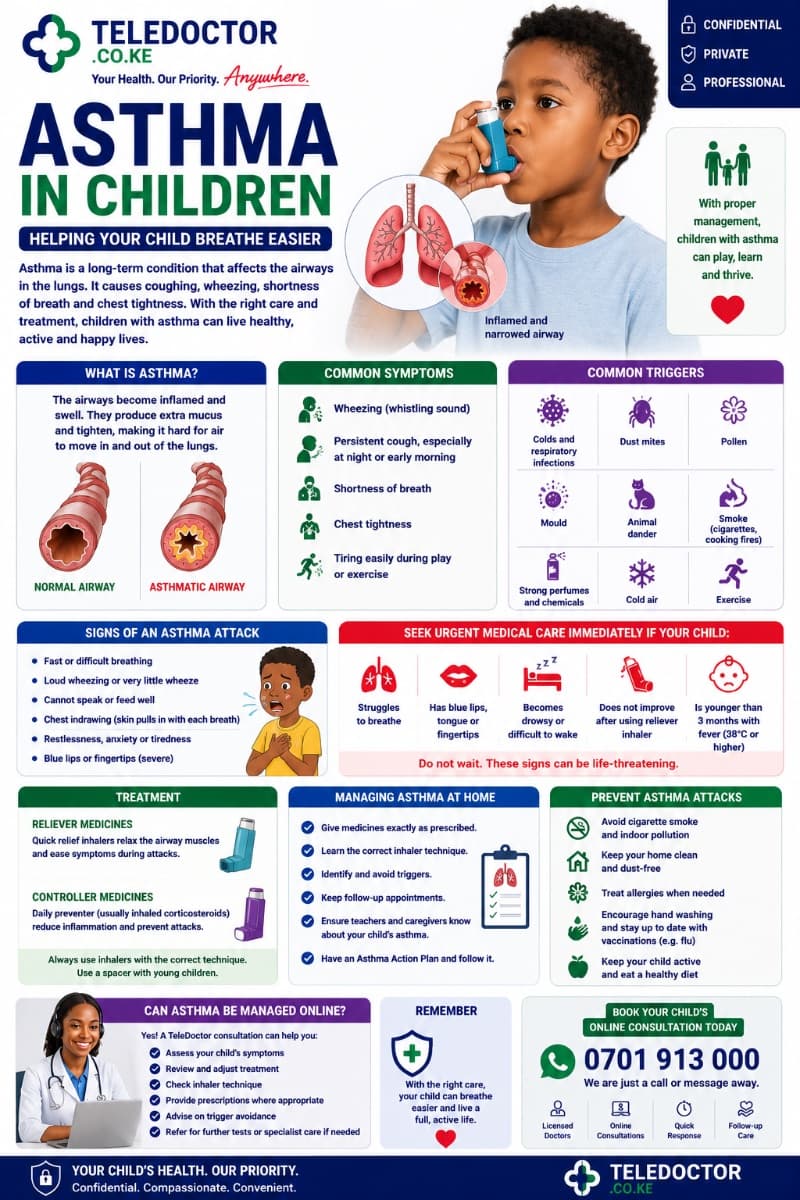
Asthma is one of the most common long-term medical conditions affecting children. It causes inflammation and narrowing of the airways, making breathing difficult. While asthma cannot usually be cured, it can be effectively controlled with the right treatment and avoidance of triggers.
Children with well-managed asthma can attend school, play sports, and enjoy normal daily activities.
What Is Asthma?
Asthma is a chronic condition in which the airways become inflamed and overly sensitive. When exposed to certain triggers, the muscles around the airways tighten, the lining swells, and excess mucus is produced.
These changes narrow the airways, making it difficult for air to move in and out of the lungs.
What Causes Asthma?
The exact cause of asthma is not fully understood, but it is thought to result from a combination of genetic and environmental factors.
Children are more likely to develop asthma if they:
- Have a family history of asthma
- Have eczema or allergic rhinitis (hay fever)
- Are exposed to cigarette smoke
- Have frequent respiratory infections in early childhood
- Live in environments with air pollution or indoor allergens
Common Asthma Triggers
Asthma symptoms may worsen after exposure to:
- Viral infections such as the common cold or flu
- Dust mites
- Pollen
- Animal dander
- Mould
- Smoke from cigarettes or cooking fires
- Strong perfumes or chemical fumes
- Cold air
- Exercise
- Emotional stress
Every child has different triggers, so identifying and avoiding them is an important part of asthma management.
Symptoms of Asthma in Children
Common symptoms include:
- Wheezing (a whistling sound when breathing)
- Persistent cough, especially at night or early morning
- Shortness of breath
- Chest tightness
- Rapid breathing
- Tiring easily during play or exercise
Some children may mainly have a cough, particularly at night or after exercise, without obvious wheezing.
Signs of an Asthma Attack
During an asthma attack, symptoms become more severe.
Your child may:
- Struggle to breathe
- Breathe very quickly
- Wheeze loudly—or, in severe cases, have very little wheeze because airflow is so limited
- Be unable to complete sentences (older children)
- Use the muscles between the ribs or at the neck to breathe
- Become unusually anxious or restless
- Have blue lips or fingertips in severe cases
An asthma attack requires prompt treatment.
How Is Asthma Diagnosed?
Diagnosis is based on:
- Your child’s symptoms
- Medical history
- Family history of asthma or allergies
- Physical examination
For older children, lung function tests (spirometry) may help confirm the diagnosis. Allergy testing may be recommended in some cases.
Treatment
Asthma treatment aims to control symptoms, prevent attacks, and allow children to lead active lives.
Reliever Medicines
These inhalers relax the muscles around the airways and provide quick relief during asthma symptoms or attacks.
They should be used exactly as advised by your healthcare provider.
Controller Medicines
Children with frequent symptoms may need daily controller medicines, usually inhaled corticosteroids.
These reduce inflammation in the airways and help prevent asthma attacks.
Controller medicines work best when taken regularly, even if the child feels well.
Inhaler Technique
Correct inhaler technique is essential.
Young children often benefit from using a spacer device with their inhaler to ensure the medicine reaches the lungs effectively.
Managing Asthma at Home
Parents can help by:
- Giving medications exactly as prescribed
- Learning the correct inhaler technique
- Identifying and avoiding triggers
- Keeping follow-up appointments
- Ensuring teachers and caregivers know about the child’s asthma
- Having an asthma action plan provided by your healthcare provider
Preventing Asthma Attacks
You can reduce the risk of attacks by:
- Avoiding cigarette smoke
- Reducing dust exposure
- Treating allergies when appropriate
- Encouraging good hand hygiene to reduce viral infections
- Keeping vaccinations up to date, including influenza vaccination if recommended
- Ensuring regular use of controller medication when prescribed
When Should You Seek Urgent Medical Care?
Seek emergency medical attention immediately if your child:
- Is struggling to breathe
- Cannot speak or feed because of breathlessness
- Has blue lips or fingertips
- Becomes drowsy or difficult to wake
- Does not improve after using a prescribed reliever inhaler
- Has severe chest indrawing or rapid breathing
These signs indicate a medical emergency.
Can Asthma Be Managed Through an Online Consultation?
Yes.
Many asthma reviews can begin with a confidential online consultation.
A licensed healthcare professional can:
- Assess your child’s symptoms
- Review current medications
- Discuss inhaler technique
- Adjust treatment where appropriate
- Provide advice on avoiding triggers
- Arrange referrals for lung function testing or specialist review if needed
Children experiencing severe breathing difficulty should be taken immediately to the nearest healthcare facility.
Living Well with Asthma
With proper treatment, regular follow-up, and avoidance of triggers, most children with asthma live healthy, active lives.
If your child has recurrent cough, wheezing, or breathing difficulties, early assessment can lead to better symptom control and reduce the risk of severe asthma attacks.
Book an Online Paediatric Consultation with Teledoctor Kenya
If your child has persistent cough, wheezing, shortness of breath, or suspected asthma, Teledoctor Kenya is here to help.
Our licensed healthcare professionals provide confidential online consultations, asthma assessments, treatment advice, prescription refills where appropriate, and referrals for further evaluation when needed.
Call or WhatsApp: 0701 913 000
Book your child’s online consultation today and receive expert medical care from the comfort of your home.
Frequently Asked Questions
Can children outgrow asthma?
Some children experience fewer symptoms as they grow older, but others continue to have asthma into adulthood. Regular follow-up is important.
Is exercise safe for children with asthma?
Yes. Most children with well-controlled asthma can participate in sports and physical activities. Some may need to use a reliever inhaler before exercise if advised by their healthcare provider.
Can asthma be cured?
There is currently no cure for asthma, but it can usually be well controlled with appropriate treatment and trigger avoidance.
Should my child stop using their controller inhaler when they feel better?
No. Controller medicines should only be stopped or adjusted after discussing this with your healthcare provider, as symptoms may return if treatment is stopped too soon.
Can asthma be managed through an online consultation?
Yes. Teledoctor Kenya can assess asthma symptoms, review medications, provide advice on inhaler use, arrange prescriptions where appropriate, and recommend in-person assessment.