Bipolar Disorder: A Treatable Mental Health Condition
Bipolar disorder is a mental health condition that causes significant changes in mood, energy, activity levels, and the ability to carry out daily tasks. People with bipolar disorder experience episodes of unusually elevated mood (mania or hypomania) and episodes of depression. Between episodes, many people return to their usual level of functioning.
Bipolar disorder is a medical condition—not a personal weakness or character flaw. With the right treatment and support, many people lead productive, fulfilling lives.
At Teledoctor Kenya, we encourage early diagnosis and ongoing care to help individuals manage symptoms, reduce the risk of relapse, and improve quality of life.
What Is Bipolar Disorder?
Bipolar disorder is a chronic mood disorder characterized by episodes of:
- Mania – a period of abnormally elevated, expansive, or irritable mood and increased energy.
- Hypomania – a milder form of mania that does not cause severe impairment or psychosis.
- Depression – a period of persistent low mood and loss of interest in usual activities.
Mood episodes can last days to weeks and vary in severity from person to person.
Types of Bipolar Disorder
Bipolar I Disorder
Bipolar I disorder involves at least one manic episode. Many people also experience episodes of major depression, although depression is not required for the diagnosis.
Mania may become severe enough to require hospital treatment or may include psychotic symptoms such as hallucinations or delusions.
Bipolar II Disorder
Bipolar II disorder involves:
- At least one episode of hypomania
- At least one episode of major depression
People with Bipolar II do not experience full manic episodes.
Cyclothymic Disorder
Cyclothymic disorder involves repeated periods of mild hypomanic symptoms and mild depressive symptoms that do not meet the full criteria for bipolar disorder.
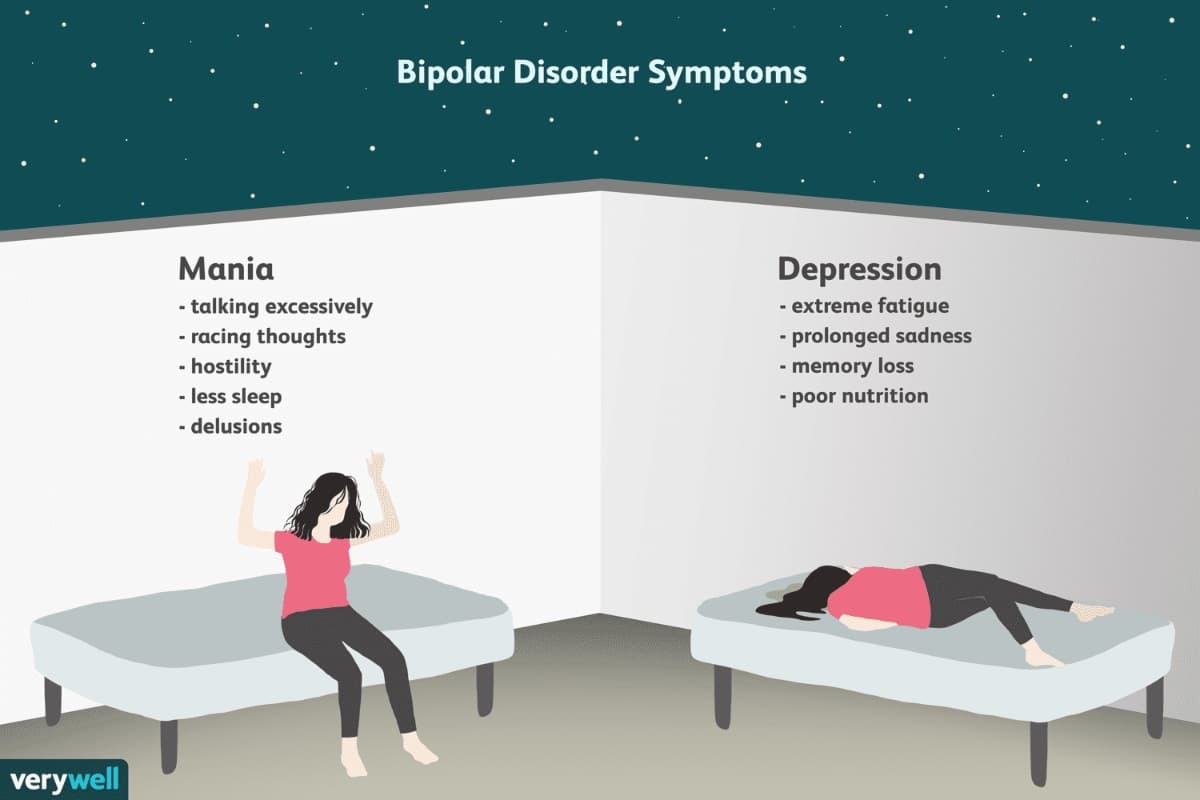
Symptoms of Mania
A manic episode may include:
- Feeling unusually happy, euphoric, or irritable
- Increased energy or activity
- Reduced need for sleep
- Talking much more than usual
- Racing thoughts
- Increased self-confidence or grandiosity
- Poor judgment
- Spending excessive amounts of money
- Risky sexual behaviour
- Increased goal-directed activity
- Becoming easily distracted
In severe cases, mania may lead to:
- Delusions
- Hallucinations
- Aggressive behaviour
- Loss of insight
- Hospital admission
Symptoms of Hypomania
Hypomania shares many of the same symptoms as mania but is less severe.
People may:
- Feel unusually energetic
- Be more productive
- Need less sleep
- Become more sociable
Although hypomania may seem positive at first, it can progress to more severe mania or be followed by a depressive episode.
Symptoms of Depression
During a depressive episode, a person may experience:
- Persistent sadness
- Loss of interest or pleasure
- Fatigue
- Poor concentration
- Feelings of guilt or worthlessness
- Changes in appetite or weight
- Sleep disturbances
- Slowed thinking or movement
- Thoughts of death or suicide
If someone has thoughts of harming themselves or feels unable to stay safe, they should seek emergency medical care immediately.
What Causes Bipolar Disorder?
There is no single cause.
Several factors are believed to contribute:
- Family history
- Differences in brain chemistry and function
- Stressful life events
- Sleep disruption
- Certain medications or recreational drugs may trigger episodes in susceptible individuals
Bipolar disorder is a medical illness that can affect anyone.
How Is Bipolar Disorder Diagnosed?
Diagnosis is made by a qualified healthcare professional based on:
- A detailed medical and psychiatric history
- Description of mood episodes
- Information from family members or close friends (when appropriate)
- Physical examination and tests to rule out other medical conditions if indicated
There is no single blood test or brain scan that confirms bipolar disorder.
Treatment Options
Treatment aims to stabilize mood, prevent relapses, and improve quality of life.
Mood-Stabilizing Medication
Mood stabilizers are commonly used to reduce the risk of future manic and depressive episodes.
Examples include medications such as lithium and certain anticonvulsants, depending on the individual’s needs.
Atypical Antipsychotic Medications
Some newer antipsychotic medications are effective in treating mania, bipolar depression, or maintenance therapy.
The choice of medication depends on symptoms, medical history, and potential side effects.
Psychological Therapies
Talking therapies can help individuals:
- Understand their illness
- Recognize early warning signs
- Improve coping strategies
- Strengthen relationships
- Reduce relapse risk
Examples include cognitive behavioural therapy (CBT), psychoeducation, and family-focused therapy.
Lifestyle Measures That Help
Healthy daily habits play an important role alongside medication.
These include:
- Taking medication as prescribed
- Maintaining a regular sleep schedule
- Exercising regularly
- Eating a balanced diet
- Avoiding alcohol and recreational drugs
- Managing stress
- Keeping regular follow-up appointments
Recognizing Early Warning Signs
Many people notice warning signs before a full mood episode develops.
Possible early signs of mania include:
- Sleeping much less than usual
- Feeling unusually energetic
- Increased confidence
- Talking more than normal
- Racing thoughts
- Increased spending
- Becoming unusually productive
- Irritability
Possible early signs of depression include:
- Low energy
- Withdrawal from family and friends
- Poor sleep
- Reduced motivation
- Persistent sadness
Recognizing these signs early allows prompt medical review and may help prevent a more severe episode.
Can Bipolar Disorder Be Cured?
There is currently no cure for bipolar disorder.
However, with ongoing treatment, many people achieve long periods of mood stability and lead successful personal and professional lives.
Treatment is often long-term because bipolar disorder has a tendency to recur if medication is stopped without medical supervision.
When Should You Seek Medical Help?
Arrange an assessment if you or a loved one experiences:
- Unusually elevated mood lasting several days
- Severe depression
- Risk-taking behaviour
- Marked reduction in sleep without feeling tired
- Hallucinations or delusions
- Thoughts of self-harm or suicide
- Sudden changes in behaviour or functioning
Early treatment can reduce the severity of episodes and improve long-term outcomes.
Can Teledoctor Help?
Yes.
Teledoctor Kenya provides confidential mental health consultations.
Our healthcare professionals can:
- Assess mood symptoms
- Screen for bipolar disorder and other mental health conditions
- Develop an individualized treatment plan
- Prescribe medication when appropriate
- Provide counselling and education
- Monitor treatment progress
- Refer to psychiatrists or psychologists when specialized care is needed
Living Well with Bipolar Disorder
Receiving a diagnosis of bipolar disorder can feel overwhelming, but it does not define who you are.
With the right combination of medication, psychological support, healthy lifestyle habits, and a strong support network, many people with bipolar disorder build successful careers, maintain meaningful relationships, and enjoy fulfilling lives.
Seeking help early and staying engaged in treatment are among the most effective steps you can take to protect your mental health.
Book a Confidential Mental Health Consultation with Teledoctor Kenya
If you or someone you care about is experiencing symptoms of bipolar disorder, Teledoctor Kenya is here to help.
We provide:
- Confidential online consultations
- Mental health assessments
- Medication review and management
- Counselling and psychoeducation
- Follow-up support
- Specialist referrals when needed
📞 Call or WhatsApp: 0701 913 000
🌐 Book your online consultation today at www.teledoctor.co.ke
Frequently Asked Questions
Is bipolar disorder the same as mood swings?
No. Everyone experiences normal changes in mood, but bipolar disorder involves distinct episodes of mania, hypomania, and/or depression that significantly affect daily functioning and often require medical treatment.
Can bipolar disorder be managed without medication?
For most people with Bipolar I disorder, medication is a key part of treatment and helps reduce the risk of relapse. Any changes to medication should only be made in consultation with a healthcare professional.
Can stress trigger bipolar episodes?
Stress, sleep deprivation, and major life changes can trigger episodes in people who are vulnerable, although they do not cause bipolar disorder by themselves.
Can people with bipolar disorder work and have families?
Yes. With appropriate treatment and support, many people with bipolar disorder have successful careers, healthy relationships, and active family lives.
What should family members do if someone becomes manic?
Encourage the person to seek medical care promptly. If they become severely agitated, lose touch with reality, or pose a risk to themselves or others, seek urgent medical attention or emergency services.