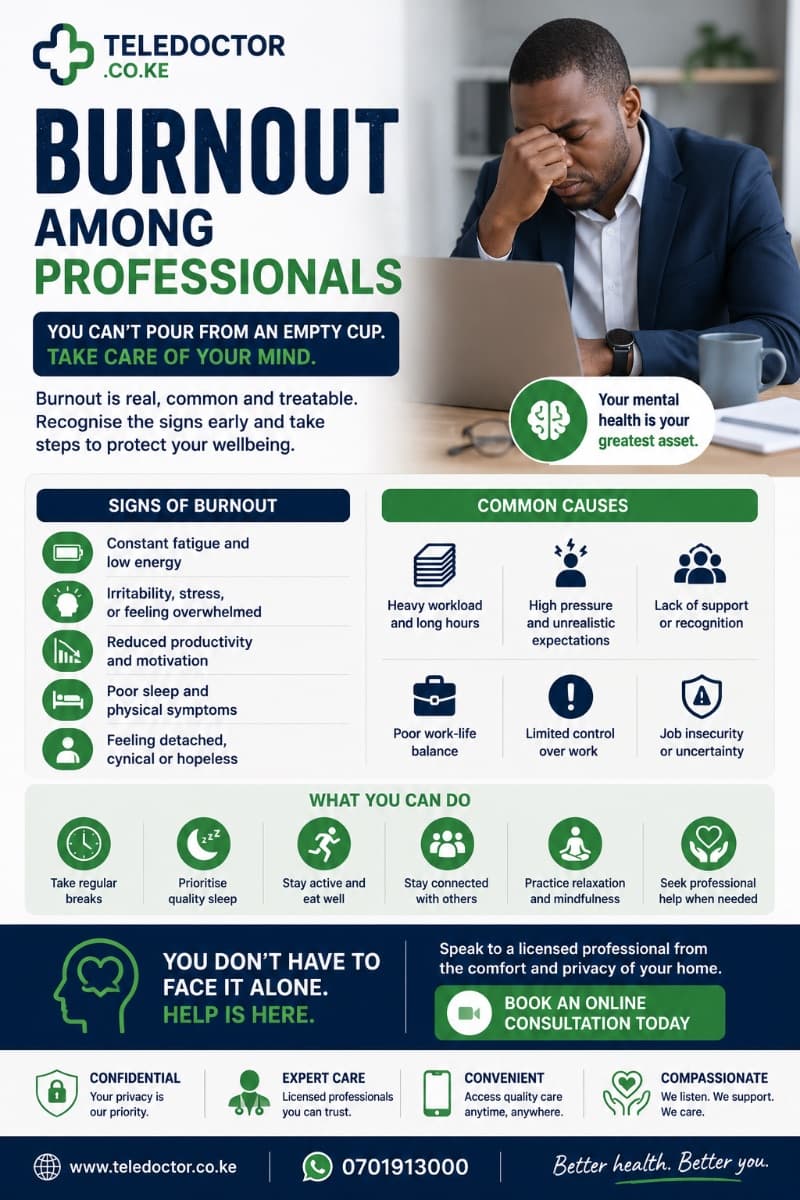
Many professionals take pride in working hard, meeting deadlines, and supporting their families or organisations. However, when workplace stress becomes constant and overwhelming, it can lead to burnout—a state of emotional, physical, and mental exhaustion that affects both wellbeing and performance.
Burnout does not happen overnight. It develops gradually, often after prolonged periods of excessive workload, high pressure, limited recovery time, or feeling that your efforts are not making a difference.
Recognising burnout early can help prevent more serious mental and physical health problems.
⸻
What Is Burnout?
Burnout is a syndrome associated with chronic workplace stress that has not been successfully managed. It is characterised by three main features:
- Emotional exhaustion – feeling drained, overwhelmed, or unable to cope.
- Increased mental distance from work – becoming cynical, detached, or losing enthusiasm for your job.
- Reduced professional effectiveness – feeling less productive, less motivated, or doubting your abilities.
Burnout is different from ordinary tiredness. A good night’s sleep may help with fatigue, but burnout often persists despite rest and can significantly affect daily life.
⸻
Who Is Most at Risk?
Although anyone can experience burnout, it is particularly common among:
- Healthcare professionals
- Teachers and lecturers
- Bankers and finance professionals
- Lawyers
- Business owners and entrepreneurs
- Information technology professionals
- Customer service teams
- Journalists
- Emergency responders
- Managers and executives
People balancing demanding careers with family responsibilities may also be at increased risk.
⸻
Common Causes of Burnout
Several workplace factors can contribute to burnout, including:
- Excessive workload
- Long working hours
- Poor work-life balance
- Lack of control over work
- Unrealistic expectations
- Inadequate staffing
- Limited recognition or appreciation
- Workplace conflict
- Job insecurity
- Constant exposure to emotionally demanding situations
Burnout can also be worsened by financial pressures, caregiving responsibilities, and chronic medical conditions.
⸻
Signs and Symptoms of Burnout
Burnout affects people differently, but common symptoms include:
Emotional Symptoms
- Feeling emotionally drained
- Loss of motivation
- Irritability
- Hopelessness
- Increased frustration
- Reduced job satisfaction
Physical Symptoms
- Persistent fatigue
- Frequent headaches
- Muscle tension
- Poor sleep
- Changes in appetite
- Frequent illnesses
Mental Symptoms
- Difficulty concentrating
- Forgetfulness
- Reduced creativity
- Feeling overwhelmed
- Poor decision-making
Behavioural Changes
- Withdrawing from colleagues or family
- Reduced productivity
- Increased absenteeism
- Procrastination
- Increased alcohol consumption or other unhealthy coping behaviours
⸻
Burnout or Depression?
Burnout and depression can have similar symptoms, including fatigue, poor concentration, and loss of interest.
However, depression affects many areas of life, while burnout is primarily related to chronic workplace stress.
That said, prolonged burnout can increase the risk of developing depression or anxiety.
A healthcare professional can help distinguish between these conditions and recommend appropriate treatment.
⸻
How Burnout Affects Physical Health
Chronic stress may contribute to:
- High blood pressure
- Heart disease
- Sleep disorders
- Weakened immune function
- Digestive problems
- Poor diabetes control
- Chronic pain
Looking after your mental health also supports your physical health.
⸻
Practical Strategies to Recover From Burnout
Recovery takes time, but small, consistent changes can make a meaningful difference.
Recognise the Problem
The first step is acknowledging that you are struggling. Burnout is not a sign of weakness or failure.
Take Regular Breaks
Short breaks during the workday and taking annual leave when possible help your mind and body recover.
Set Healthy Boundaries
Where practical, avoid answering work emails or messages outside working hours and learn to say no to unrealistic demands.
Prioritise Sleep
Aim for seven to nine hours of quality sleep each night. Good sleep supports concentration, mood, and resilience.
Stay Physically Active
Regular exercise can reduce stress, improve mood, and boost energy levels.
Maintain Social Connections
Spending time with supportive family and friends can reduce feelings of isolation and provide perspective during stressful periods.
Seek Professional Support
If burnout is affecting your health or daily functioning, speak with a healthcare professional. Early support can prevent symptoms from worsening.
⸻
Can Burnout Be Managed Through an Online Consultation?
Yes.
An online consultation provides a confidential opportunity to discuss how work-related stress is affecting your health.
A healthcare professional can:
- Assess your symptoms
- Explore possible contributing factors
- Screen for anxiety, depression, or other conditions
- Recommend practical coping strategies
- Discuss whether counselling or medication may be appropriate
- Arrange follow-up care or specialist referral if needed
Telemedicine makes it easier to seek help without taking significant time away from work.
⸻
When Should You Seek Urgent Medical Attention?
Seek immediate medical care if you experience:
- Thoughts of harming yourself or others
- Severe hopelessness
- Sudden confusion
- Hallucinations
- Extreme agitation or inability to function safely
These symptoms require urgent assessment and should not be managed through telemedicine alone.
⸻
Preventing Burnout in the Workplace
Employers also have an important role in promoting healthy workplaces.
Supportive measures include:
- Reasonable workloads
- Flexible working arrangements where possible
- Employee wellness programmes
- Access to mental health resources
- Encouraging annual leave
- Open communication between staff and management
- Promoting a healthy work-life balance
A culture that values employee wellbeing benefits both individuals and organisations.
⸻
Burnout Is Treatable
Burnout can feel overwhelming, but recovery is possible.
With early recognition, supportive lifestyle changes, and professional guidance where needed, many people regain their energy, confidence, and enjoyment of work.
Seeking help is a positive step toward protecting both your career and your health.
⸻
Book an Online Mental Health Consultation with Teledoctor Kenya
If work-related stress is affecting your sleep, mood, relationships, or performance, you do not have to face it alone.
Teledoctor Kenya offers confidential online consultations with licensed healthcare professionals who can assess your symptoms, provide practical advice, and help you develop a personalised recovery plan.
Whether you are a healthcare worker, teacher, entrepreneur, corporate executive, or student, we are here to support your mental wellbeing.
Book your online consultation today and take the first step toward restoring your health and balance.
⸻
Frequently Asked Questions
Is burnout a medical condition?
Burnout is recognised as a syndrome associated with chronic workplace stress that has not been successfully managed. It can significantly affect mental and physical wellbeing and may occur alongside conditions such as anxiety or depression.
Can burnout be treated?
Yes. Recovery often involves addressing workplace stressors, improving work-life balance, adopting healthy lifestyle habits, and seeking professional support when needed.
Can burnout affect physical health?
Yes. Chronic stress associated with burnout may contribute to headaches, poor sleep, high blood pressure, digestive problems, and a weakened immune system.
Can I discuss burnout during an online consultation?
Yes. Online consultations are appropriate for assessing burnout, workplace stress, anxiety, sleep problems, and related concerns. Your clinician can recommend treatment, follow-up, or specialist referral if required.
How can employers help prevent burnout?
Employers can reduce the risk of burnout by promoting manageable workloads, encouraging regular leave, supporting mental health, fostering open communication, and creating a workplace culture that values employee wellbeing.