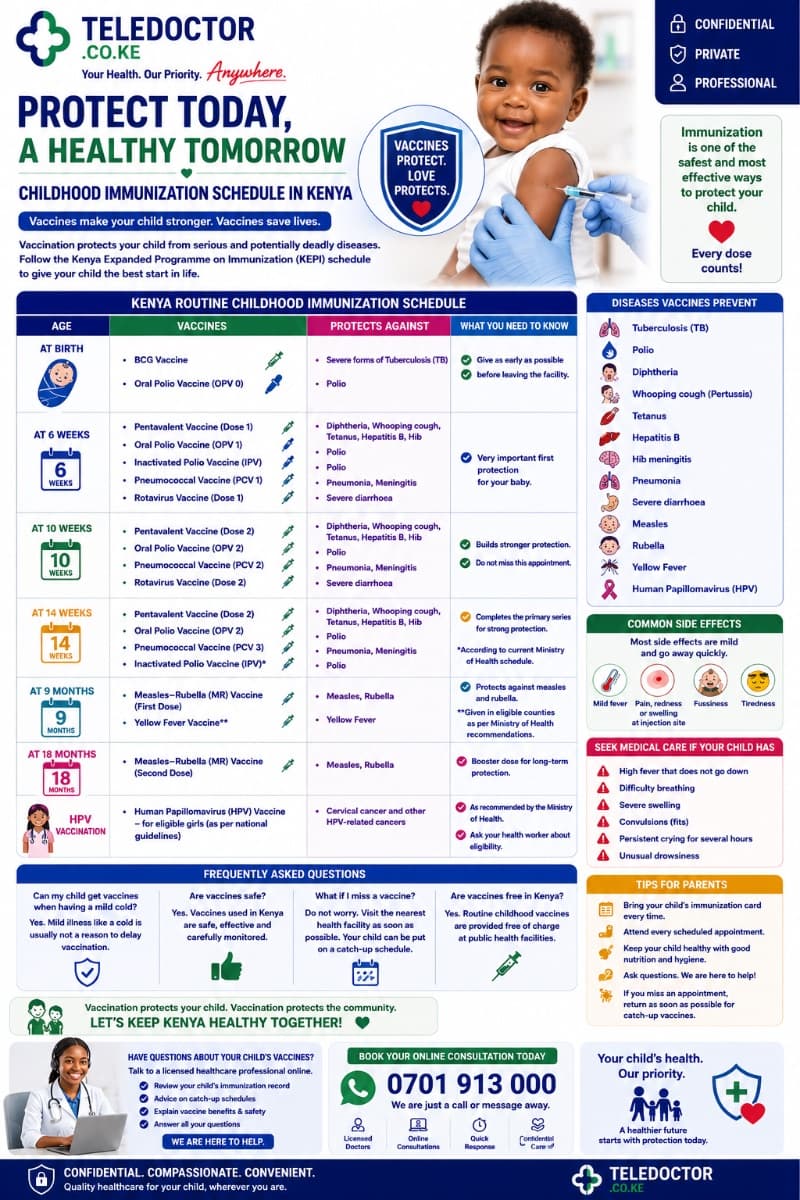
Vaccination is one of the safest and most effective ways to protect children from serious infectious diseases. Through Kenya’s Expanded Programme on Immunization (KEPI), children receive vaccines that protect against illnesses such as tuberculosis, polio, measles, pneumonia, hepatitis B, rotavirus diarrhoea, and cervical cancer.
Following the recommended vaccination schedule gives your child the best protection during the most vulnerable stages of life.
Why Are Vaccines Important?
Vaccines help the body’s immune system recognise and fight disease-causing germs without causing the illness itself.
Vaccination:
- Protects children from serious infections
- Reduces disability caused by preventable diseases
- Prevents outbreaks in communities
- Saves lives
- Helps children grow up healthy
When many children are vaccinated, the spread of infectious diseases is greatly reduced, helping protect vulnerable members of the community.
Kenya’s Routine Childhood Immunization Schedule
The Ministry of Health recommends the following routine immunizations.
At Birth
Your baby should receive:
- BCG vaccine – Protects against severe forms of tuberculosis (TB)
- Oral Polio Vaccine (OPV 0) – Provides early protection against polio
At 6 Weeks
Your baby receives:
- Pentavalent Vaccine (Dose 1) – Protects against:
- Diphtheria
- Whooping cough (Pertussis)
- Tetanus
- Hepatitis B
- Haemophilus influenzae type b (Hib)
- Oral Polio Vaccine (OPV 1)
- Inactivated Polio Vaccine (IPV) (according to the current national schedule)
- Pneumococcal Conjugate Vaccine (PCV 1) – Protects against pneumonia and meningitis
- Rotavirus Vaccine (Dose 1) – Protects against severe diarrhoea
At 10 Weeks
Your child receives:
- Pentavalent Vaccine (Dose 2)
- Oral Polio Vaccine (OPV 2)
- Pneumococcal Vaccine (PCV 2)
- Rotavirus Vaccine (Dose 2)
At 14 Weeks
Your child receives:
- Pentavalent Vaccine (Dose 3)
- Oral Polio Vaccine (OPV 3)
- Pneumococcal Vaccine (PCV 3)
- Inactivated Polio Vaccine (if scheduled at this visit according to the current national programme)
At 9 Months
Your child receives:
- Measles-Rubella (MR) Vaccine – First Dose
- Yellow Fever Vaccine (in eligible counties and according to Ministry of Health recommendations)
At 18 Months
Your child receives:
- Measles-Rubella (MR) – Second Dose
This booster strengthens long-term protection.
HPV Vaccination
Kenya also recommends the Human Papillomavirus (HPV) vaccine for eligible girls (and recommendations may evolve over time).
HPV vaccination helps prevent:
- Cervical cancer
- Certain other HPV-related cancers
Ask your healthcare provider or your child’s school about eligibility and the current national recommendations.
What Diseases Do These Vaccines Prevent?
Routine childhood vaccines protect against serious illnesses including:
- Tuberculosis
- Polio
- Diphtheria
- Tetanus
- Whooping cough
- Hepatitis B
- Hib meningitis
- Pneumonia
- Rotavirus diarrhoea
- Measles
- Rubella
- Yellow fever (where recommended)
- Human papillomavirus (HPV)
Many of these diseases can lead to hospitalization, lifelong disability, or death if not prevented.
Are Vaccines Safe?
Yes.
Vaccines used in Kenya undergo rigorous testing and continuous safety monitoring.
Most children experience only mild side effects such as:
- Mild fever
- Pain at the injection site
- Temporary swelling
- Fussiness or irritability
These symptoms usually resolve within a day or two.
Serious allergic reactions are very rare, but vaccination clinics are prepared to manage them if they occur.
What If My Child Misses a Vaccine?
If your child misses a scheduled vaccination:
- Do not panic.
- Visit your nearest health facility as soon as possible.
- In most cases, your child can continue with a catch-up vaccination schedule without restarting previous doses.
Your healthcare provider will advise on the appropriate schedule.
Common Questions Parents Ask
Can my child receive vaccines when they have a mild cold?
Yes. A mild cold, runny nose, or low-grade fever is usually not a reason to delay routine vaccination. However, if your child is moderately or severely ill, your healthcare provider may recommend postponing vaccination until they recover.
Can vaccines overload my baby’s immune system?
No. Babies are exposed to many germs every day. The immune system can safely respond to the small number of antigens in routine vaccines.
Why are several vaccines given during one visit?
Giving multiple vaccines during the same visit is safe and helps ensure children are protected as early as possible while reducing the number of clinic visits.
Tips for Parents
- Keep your child’s vaccination card safe.
- Attend every scheduled vaccination appointment.
- Ask questions if you are unsure about any vaccine.
- Inform the healthcare provider if your child has had a previous severe allergic reaction to a vaccine.
- Encourage friends and family to vaccinate their children.
When Should You Seek Medical Advice After Vaccination?
Seek medical attention if your child develops:
- Difficulty breathing
- Severe swelling of the face or lips
- Persistent high fever
- Continuous crying for several hours
- Convulsions (seizures)
- Unusual drowsiness or difficulty waking
These reactions are uncommon but require prompt assessment.
Can Teledoctor Help?
Yes.
If you have questions about your child’s vaccinations, missed immunizations, vaccine side effects, or the national immunization schedule, Teledoctor Kenya can help.
Our licensed healthcare professionals can:
- Review your child’s vaccination record
- Advise on catch-up schedules
- Explain vaccine safety
- Discuss common side effects
- Determine whether your child should be seen in person
- Answer your immunization questions through a confidential online consultation
Protect Your Child Through Timely Vaccination
Vaccination is one of the greatest investments you can make in your child’s health. Following Kenya’s recommended immunization schedule helps protect your child from preventable diseases and contributes to a healthier community.
If you have questions about your child’s vaccinations or need guidance after missing an appointment, Teledoctor Kenya is here to support you.
Call or WhatsApp: 0701 913 000
Book your online consultation today for trusted advice on your child’s health and immunization.
Frequently Asked Questions
Are childhood vaccines free in Kenya?
Routine childhood vaccines provided through the Kenya Ministry of Health’s immunization programme are generally available free of charge at public health facilities.
Can my child receive vaccines if they were born prematurely?
Yes. Most premature babies should receive vaccines according to their chronological age unless advised otherwise by their healthcare provider.
What should I bring to the vaccination clinic?
Bring your child’s Mother and Child Health (MCH) booklet or vaccination card so each vaccine can be recorded accurately.
What if I lose my child’s vaccination card?
Visit the health facility where your child received vaccinations. They may be able to help reconstruct your child’s vaccination record based on available documentation.
Does Teledoctor provide vaccination advice?
Yes. Teledoctor Kenya offers confidential online consultations to answer questions about childhood vaccinations, missed doses, vaccine safety, and catch-up vaccines.