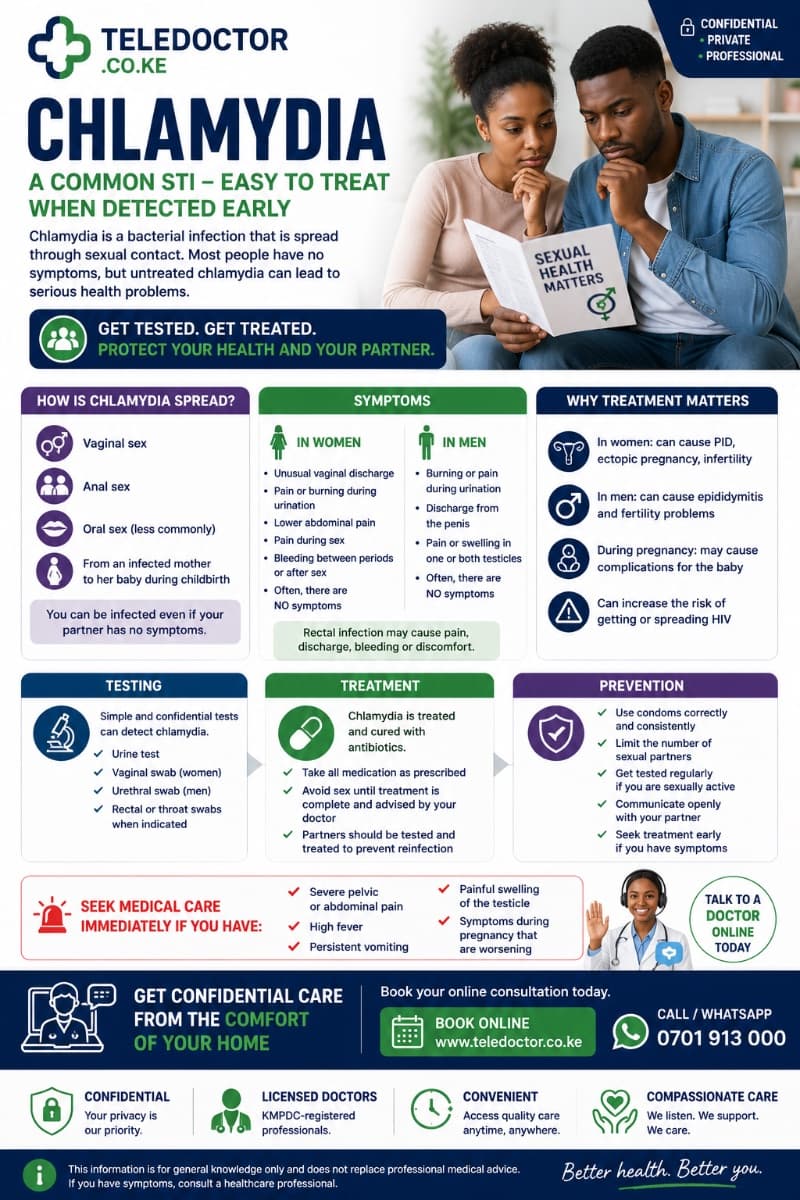
Chlamydia is one of the most common sexually transmitted infections (STIs) worldwide. It is caused by the bacterium Chlamydia trachomatis and affects both men and women.
One of the biggest challenges with chlamydia is that most infected people have no symptoms. This means they may unknowingly pass the infection to sexual partners or develop complications before seeking treatment.
The good news is that chlamydia is usually easy to diagnose and can be effectively treated with antibiotics when detected early.
⸻
How Is Chlamydia Spread?
Chlamydia is transmitted through:
- Vaginal sex
- Anal sex
- Oral sex (less commonly)
- From an infected mother to her baby during childbirth
You can become infected even if your partner has no symptoms.
⸻
What Are the Symptoms?
Many people with chlamydia experience no symptoms at all.
When symptoms do occur, they usually appear 1–3 weeks after exposure, but they may develop later.
Symptoms in Women
Women may experience:
- Unusual vaginal discharge
- Pain or burning during urination
- Lower abdominal or pelvic pain
- Pain during sexual intercourse
- Bleeding between periods
- Bleeding after sex
- Increased vaginal discharge
If left untreated, chlamydia can spread to the uterus and fallopian tubes, causing pelvic inflammatory disease (PID).
⸻
Symptoms in Men
Men may notice:
- Burning or pain during urination
- Clear or cloudy discharge from the penis
- Pain or swelling in one or both testicles (less common)
- Discomfort around the urethra
⸻
Rectal Infection
People who have receptive anal sex may develop:
- Rectal pain
- Rectal discharge
- Bleeding
- Discomfort during bowel movements
⸻
Why Is Chlamydia Dangerous?
Untreated chlamydia can lead to serious health problems.
In Women
Possible complications include:
- Pelvic inflammatory disease (PID)
- Chronic pelvic pain
- Ectopic pregnancy
- Infertility due to damage to the fallopian tubes
In Men
Although less common, untreated infection can cause:
- Epididymitis (inflammation near the testicles)
- Chronic testicular pain
- Reduced fertility in some cases
During Pregnancy
Untreated chlamydia during pregnancy may increase the risk of:
- Premature birth
- Infection in the newborn’s eyes (conjunctivitis)
- Pneumonia in newborn babies
Prompt diagnosis and treatment during pregnancy are important.
⸻
Who Should Get Tested?
Testing is recommended if you:
- Have symptoms suggestive of chlamydia
- Have had unprotected sex
- Have a new sexual partner
- Have multiple sexual partners
- Have a partner diagnosed with an STI
- Are pregnant and your healthcare provider recommends screening
Even without symptoms, testing can identify infection early and prevent complications.
⸻
How Is Chlamydia Diagnosed?
Diagnosis is usually straightforward.
Your healthcare provider may recommend:
- A urine test
- A vaginal swab (for women)
- A urethral swab (in selected cases)
- Rectal or throat swabs when indicated by sexual history
These tests are accurate and help guide appropriate treatment.
⸻
Can Chlamydia Be Treated?
Yes.
Chlamydia is usually treated successfully with antibiotics prescribed by a healthcare professional.
It is important to:
- Take all medication exactly as prescribed.
- Avoid sexual activity until treatment is completed and your clinician advises it is safe to resume.
- Ensure recent sexual partner(s) are informed, evaluated, and treated if necessary to reduce the risk of reinfection.
Do not share antibiotics or use leftover medication from previous illnesses.
⸻
Preventing Chlamydia
You can reduce your risk by:
- Using condoms consistently and correctly during vaginal, anal, and oral sex
- Limiting the number of sexual partners
- Having regular STI screening if you are sexually active and at increased risk
- Seeking prompt treatment if symptoms develop
- Encouraging partners to be tested and treated when appropriate
Open communication with partners about sexual health is an important part of prevention.
⸻
Can Chlamydia Be Managed Through an Online Consultation?
Yes.
An online consultation is often an excellent first step.
A licensed healthcare professional can:
- Review your symptoms and sexual history
- Assess your risk
- Recommend appropriate laboratory tests
- Explain your test results
- Prescribe treatment when clinically appropriate
- Advise on partner notification and follow-up
- Recommend additional STI screening if needed
Telemedicine provides discreet, confidential access to sexual healthcare without unnecessary delays.
⸻
When Should You Seek Urgent Medical Care?
Seek immediate medical attention if you experience:
- Severe pelvic pain
- High fever
- Persistent vomiting
- Severe abdominal pain
- Painful swelling of the testicle
- Symptoms during pregnancy that are concerning or worsening
These symptoms may indicate complications requiring urgent assessment.
⸻
Looking After Your Sexual Health
Regular STI screening is an important part of preventive healthcare.
Because chlamydia often causes no symptoms, many people only discover they are infected during routine testing.
Early diagnosis protects your health, helps prevent complications, and reduces the spread of infection to others.
⸻
Book a Confidential Online Consultation with Teledoctor Kenya
If you have symptoms of chlamydia, have had unprotected sex, or would like confidential sexual health advice, Teledoctor Kenya is here to help.
Our licensed healthcare professionals provide private online consultations, guidance on STI testing, treatment recommendations, and follow-up care.
Your privacy is respected at every stage of your care.
Book your confidential online consultation today and take control of your sexual health.
⸻
Frequently Asked Questions
Can I have chlamydia without symptoms?
Yes. Most people with chlamydia have no symptoms, which is why testing is important after unprotected sex or if you are at increased risk.
Can chlamydia be cured?
Yes. Chlamydia is usually cured with the appropriate course of antibiotics when taken as prescribed.
Should my partner be treated?
Yes. Recent sexual partner(s) should be informed, assessed, and treated if necessary to reduce the risk of reinfection and ongoing transmission.
Can I get chlamydia more than once?
Yes. Previous infection does not provide immunity. You can become infected again if exposed.
Can I consult a doctor online for chlamydia?
Yes. An online consultation is an appropriate way to discuss symptoms, arrange testing, receive treatment when indicated, and obtain confidential sexual health advice.