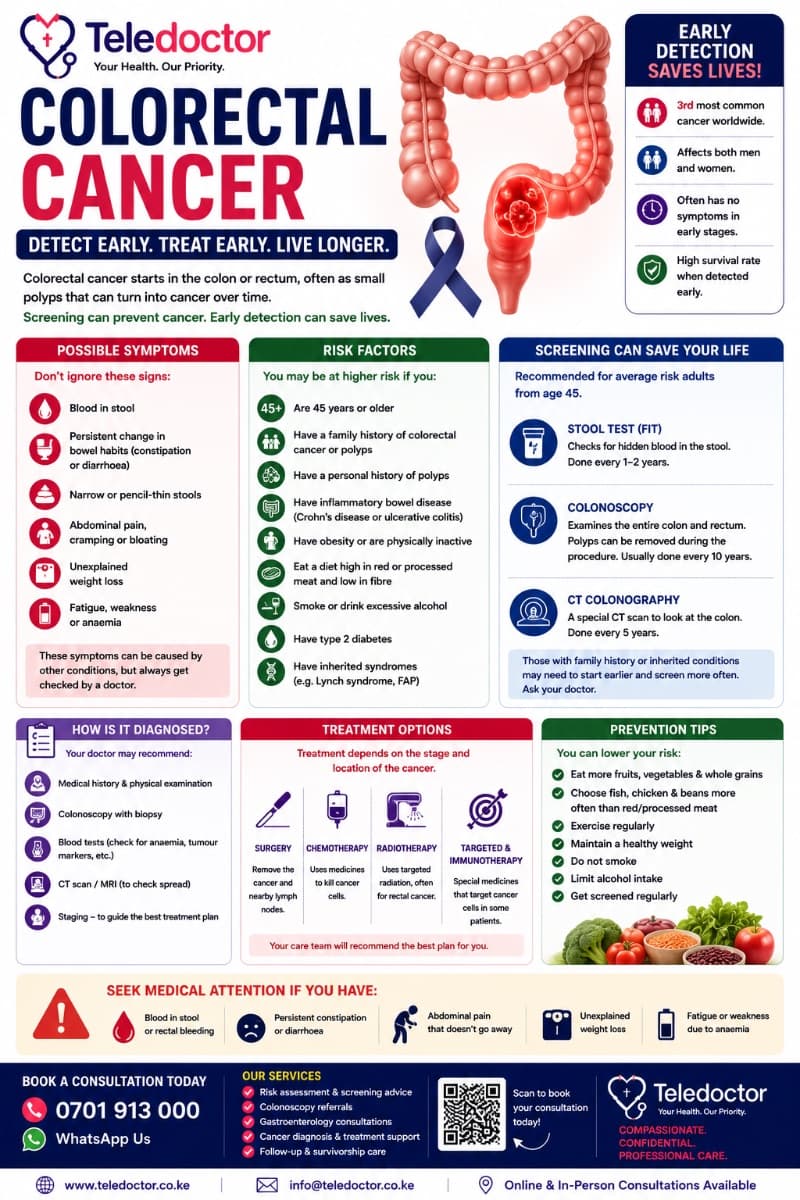
Colorectal Cancer: Early Detection Can Save Your Life
Colorectal cancer is one of the most common cancers worldwide. It develops in the colon (large intestine) or rectum and often begins as small, non-cancerous growths called polyps. Over several years, some polyps can develop into cancer.
The encouraging news is that colorectal cancer is highly preventable and often curable when detected early. Regular screening can identify and remove precancerous polyps before they become cancer.
At Teledoctor Kenya, we provide risk assessments, screening advice, referrals for colonoscopy, and ongoing support for patients diagnosed with colorectal cancer.
What Is Colorectal Cancer?
Colorectal cancer refers to cancer that develops in:
- The colon (large intestine)
- The rectum (the final part of the large intestine)
Most colorectal cancers are adenocarcinomas, meaning they arise from the glandular cells lining the bowel.
How Does Colorectal Cancer Develop?
In many cases, colorectal cancer develops gradually:
- Normal bowel lining
- Formation of a small polyp
- Growth of the polyp over several years
- Development of cancer within the polyp
- Spread beyond the bowel if left untreated
Because this process is usually slow, screening offers an opportunity to detect and remove polyps before cancer develops.
Risk Factors
Several factors increase the risk of colorectal cancer.
Age
Risk increases after the age of 45–50 years, although younger adults can also develop the disease.
Family History
Your risk is higher if a close relative has had:
- Colorectal cancer
- Advanced bowel polyps
Inherited Genetic Conditions
Examples include:
- Lynch syndrome
- Familial Adenomatous Polyposis (FAP)
These conditions require specialist surveillance.
Lifestyle Factors
Risk increases with:
- Smoking
- Heavy alcohol use
- Obesity
- Physical inactivity
- Diets high in processed and red meat
- Diets low in fibre
Medical Conditions
People with:
- Ulcerative colitis
- Crohn’s disease involving the colon
- Type 2 diabetes
may have an increased risk.
Symptoms of Colorectal Cancer
Early colorectal cancer may cause no symptoms, which is why screening is so important.
As the disease progresses, symptoms may include:
- Blood in the stool
- Black or dark stools (depending on the location of bleeding)
- Persistent change in bowel habits
- Constipation
- Diarrhoea
- Narrow or pencil-thin stools
- Feeling that the bowel does not empty completely
- Abdominal pain or cramping
- Bloating
- Unexplained weight loss
- Fatigue
- Iron-deficiency anaemia
Any persistent bowel symptoms should be medically evaluated.
When Should You See a Doctor?
Arrange an appointment if you notice:
- Rectal bleeding
- Blood mixed with stool
- Persistent constipation or diarrhoea lasting more than a few weeks
- Ongoing abdominal pain
- Unexplained weight loss
- Fatigue due to anaemia
- A persistent change in bowel habits
These symptoms do not always indicate cancer, but they should never be ignored.
Screening Saves Lives
Most colorectal cancers can be detected early—or prevented altogether—through screening.
People at average risk are generally advised to begin screening from around age 45, although the recommended age and screening interval may vary depending on national guidelines and individual risk factors.
Those with a strong family history or inherited conditions may need to start screening earlier under specialist advice.
Screening Tests
Stool-Based Tests
These tests look for hidden blood in the stool.
Examples include:
- Fecal Immunochemical Test (FIT)
- Guaiac-based fecal occult blood test (gFOBT)
A positive result requires further evaluation with colonoscopy.
Colonoscopy
Colonoscopy is considered the gold standard for colorectal cancer screening.
During the procedure:
- A flexible camera examines the entire colon and rectum.
- Polyps can be removed immediately.
- Tissue samples (biopsies) can be taken if necessary.
CT Colonography
This specialized CT scan may be an option for selected patients when colonoscopy is not suitable.
How Is Colorectal Cancer Diagnosed?
If cancer is suspected, investigations may include:
- Colonoscopy with biopsy
- Blood tests (including a full blood count)
- Liver function tests
- CT scan of the chest, abdomen, and pelvis
- MRI (particularly for rectal cancer)
- Carcinoembryonic antigen (CEA) blood test to help monitor treatment in selected patients
The diagnosis is confirmed by examining biopsy tissue under a microscope.
Staging
Once cancer is confirmed, additional tests determine:
- Tumour size
- Whether lymph nodes are involved
- Whether the cancer has spread (metastasized)
This helps guide treatment decisions.
Treatment
Treatment depends on the stage, location, and overall health of the patient.
Surgery
Surgery is the main treatment for localized colorectal cancer.
The surgeon removes:
- The affected section of the bowel
- Nearby lymph nodes
Many patients can have the bowel reconnected, although some may temporarily or permanently require a stoma.
Chemotherapy
Chemotherapy may be used:
- After surgery to reduce recurrence risk
- Before surgery in selected cases
- For advanced or metastatic disease
Radiotherapy
Radiotherapy is used more commonly for rectal cancer, often before surgery to shrink the tumour and reduce the risk of recurrence.
Targeted Therapy and Immunotherapy
Some patients with advanced colorectal cancer may benefit from targeted medicines or immunotherapy, depending on the tumour’s molecular characteristics.
Can Colorectal Cancer Be Prevented?
While not all cases can be prevented, the risk may be reduced by:
- Participating in screening programmes
- Eating a diet rich in fruits, vegetables, and whole grains
- Limiting processed and red meat
- Maintaining a healthy weight
- Exercising regularly
- Avoiding smoking
- Limiting alcohol intake
Living After Colorectal Cancer
Many people live long, healthy lives after successful treatment.
Follow-up care may include:
- Regular medical reviews
- Repeat colonoscopies
- Imaging when indicated
- Blood tests
- Healthy lifestyle changes
- Emotional and psychological support
Can Teledoctor Help?
Yes.
Teledoctor Kenya offers comprehensive support for patients concerned about colorectal cancer.
Our healthcare professionals can:
- Assess bowel symptoms
- Evaluate individual cancer risk
- Recommend appropriate screening
- Arrange colonoscopy referrals
- Coordinate specialist care
- Support patients during and after treatment
- Provide long-term follow-up advice
Book a Consultation with Teledoctor Kenya
If you have persistent bowel symptoms, blood in your stool, or are due for colorectal cancer screening, our healthcare professionals are here to help.
Our services include:
- Cancer risk assessment
- Screening advice
- Colonoscopy referrals
- Gastroenterology consultations
- Follow-up care
- Lifestyle counselling
📞 Call or WhatsApp: 0701 913 000
🌐 Visit: www.teledoctor.co.ke
📍 Online and In-Person Consultations Available
Frequently Asked Questions
Does blood in the stool always mean colorectal cancer?
No. Blood in the stool can result from haemorrhoids, anal fissures, inflammatory bowel disease, or other conditions. However, it should always be assessed by a healthcare professional.
At what age should colorectal cancer screening begin?
For most people at average risk, screening begins around age 45. Individuals with a strong family history or inherited conditions may need earlier screening.
Is colorectal cancer curable?
Yes. When detected early, colorectal cancer is often curable, particularly if it has not spread beyond the bowel.
Can young adults develop colorectal cancer?
Yes. Although more common in older adults, colorectal cancer can occur in younger people. Persistent symptoms should not be ignored regardless of age.
Can lifestyle changes reduce the risk?
Yes. A healthy diet, regular exercise, maintaining a healthy weight, avoiding smoking, limiting alcohol, and participating in screening programmes can all help reduce the risk of developing the malignancy.