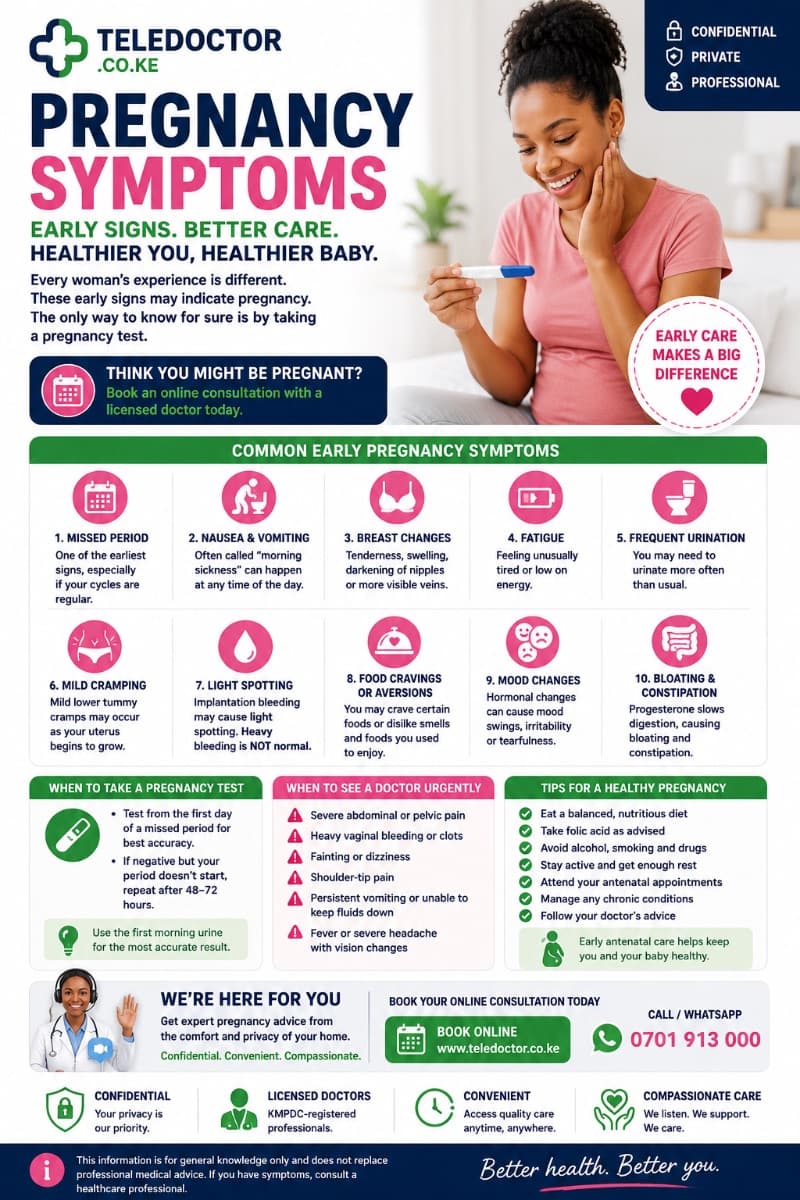
Pregnancy affects every woman differently. Some women notice symptoms within a few weeks of conception, while others may not experience noticeable changes until later in the first trimester.
Although a missed menstrual period is often the first sign of pregnancy, many other symptoms can occur due to hormonal changes in the body.
Recognising these early signs can help you seek appropriate medical care and begin a healthy pregnancy journey.
⸻
What Are the Earliest Signs of Pregnancy?
Several symptoms may suggest pregnancy, although none of them alone can confirm it.
The most reliable way to confirm pregnancy is with a pregnancy test, followed by medical assessment if the result is positive or if you have concerning symptoms.
⸻
- Missed Menstrual Period
A missed period is one of the earliest and most common signs of pregnancy, particularly in women with regular menstrual cycles.
However, stress, significant weight changes, hormonal conditions, and certain medications can also delay a period.
If your period is late and there is a possibility of pregnancy, take a home pregnancy test.
⸻
- Nausea and Vomiting (“Morning Sickness”)
Despite the name, nausea can occur at any time of the day.
Symptoms often begin between 4 and 7 weeks of pregnancy and may include:
- Feeling nauseated
- Vomiting
- Sensitivity to certain smells
- Loss of appetite
For most women, symptoms improve after the first trimester.
⸻
- Breast Changes
Hormonal changes may cause:
- Breast tenderness
- Swelling
- Increased fullness
- Darkening of the nipples
- More visible veins
These changes often appear early in pregnancy.
⸻
- Fatigue
Many women feel unusually tired during early pregnancy.
Higher levels of the hormone progesterone, together with the body’s increased energy demands, contribute to this fatigue.
Adequate rest, good nutrition, and hydration are important.
⸻
- Frequent Urination
Pregnancy increases blood flow to the kidneys, causing more urine production.
You may find yourself needing to urinate more frequently, even during the early weeks of pregnancy.
Painful urination, however, is not a normal pregnancy symptom and may indicate a urinary tract infection that requires medical assessment.
⸻
- Mild Abdominal Cramping
Some women experience mild lower abdominal cramping during early pregnancy as the uterus begins to grow.
Severe or persistent pain is not normal and should be assessed promptly.
⸻
- Light Vaginal Spotting
A small amount of light spotting may occur around the time a fertilised egg implants into the lining of the uterus.
This is sometimes called implantation bleeding.
Heavy bleeding, bleeding with severe pain, or passing clots requires urgent medical evaluation.
⸻
- Food Cravings and Food Aversions
Hormonal changes may alter your sense of taste and smell.
You may:
- Crave certain foods
- Develop aversions to foods you previously enjoyed
- Notice a metallic taste in your mouth
These changes vary from person to person.
⸻
- Mood Changes
Fluctuating hormone levels can affect emotions.
Some women experience:
- Irritability
- Tearfulness
- Anxiety
- Mood swings
Persistent low mood or severe anxiety should be discussed with a healthcare professional.
⸻
- Bloating and Constipation
Progesterone slows digestion, which may lead to:
- Bloating
- Constipation
- Increased gas
- Feeling full more quickly
Eating fibre-rich foods, staying hydrated, and regular physical activity may help.
⸻
How Soon Can a Pregnancy Test Detect Pregnancy?
Most home urine pregnancy tests are accurate from the first day of a missed period when used correctly.
Testing too early may produce a false-negative result because pregnancy hormone levels may still be too low.
If your test is negative but your period does not start, repeat the test after 48–72 hours or consult a healthcare professional.
⸻
What Should You Do After a Positive Pregnancy Test?
If your pregnancy test is positive:
- Book an appointment with a healthcare professional.
- Begin taking folic acid if you are not already taking it.
- Avoid smoking, alcohol, and recreational drugs.
- Eat a balanced diet.
- Discuss any prescription or over-the-counter medications with your clinician before continuing them.
- Arrange your first antenatal care visit.
Early antenatal care helps identify health conditions that may affect you or your baby.
⸻
When Should You Seek Urgent Medical Attention?
Seek immediate medical care if you experience:
- Severe abdominal or pelvic pain
- Heavy vaginal bleeding
- Fainting or dizziness
- Shoulder-tip pain
- Persistent vomiting leading to dehydration
- Fever
- Severe headaches with vision changes
These symptoms may indicate serious conditions such as an ectopic pregnancy, miscarriage, or another medical emergency.
⸻
Can Pregnancy Concerns Be Discussed During an Online Consultation?
Yes.
An online consultation is a convenient way to:
- Discuss early pregnancy symptoms
- Interpret pregnancy test results
- Receive advice on nutrition and supplements
- Review medications
- Learn when to attend antenatal care
- Understand warning signs that require hospital assessment
If an ultrasound, blood tests, or physical examination are needed, your clinician will advise you accordingly.
⸻
Supporting a Healthy Pregnancy
Healthy habits during pregnancy include:
- Eating a varied, nutritious diet
- Staying physically active as advised by your healthcare provider
- Getting enough sleep
- Attending all recommended antenatal appointments
- Keeping up to date with recommended vaccinations
- Managing chronic conditions such as diabetes or high blood pressure
Looking after your health from the beginning benefits both you and your developing baby.
⸻
Book an Online Pregnancy Consultation with Teledoctor Kenya
If you think you may be pregnant or have questions about early pregnancy symptoms, Teledoctor Kenya is here to help.
Our licensed healthcare professionals provide confidential online consultations to assess your symptoms, answer your questions, and guide you through the next steps in your pregnancy journey.
Whether you need reassurance, advice, or referral for further assessment, we’re committed to providing safe, compassionate care.
Book your online consultation today and start your pregnancy journey with confidence.
⸻
Frequently Asked Questions
Can I be pregnant even if I have a negative pregnancy test?
Yes. Testing too early may produce a false-negative result. If your period remains absent, repeat the test after 48–72 hours or seek medical advice.
Is nausea always a sign of pregnancy?
No. Nausea has many possible causes, including viral illnesses, food poisoning, and digestive conditions. A pregnancy test can help determine whether pregnancy is the cause.
When should I start antenatal care?
It is recommended to begin antenatal care as early as possible after confirming pregnancy so that you and your baby can receive appropriate monitoring and support.
Is light spotting normal in early pregnancy?
Light spotting may occur in some pregnancies, but any bleeding during pregnancy should be discussed with a healthcare professional. Heavy bleeding or bleeding with severe pain requires urgent medical assessment.
Can I discuss pregnancy symptoms through an online consultation?
Yes. Online consultations are suitable for discussing early pregnancy symptoms, interpreting pregnancy test results, receiving health advice, and determining whether further investigations or in-person care are needed.