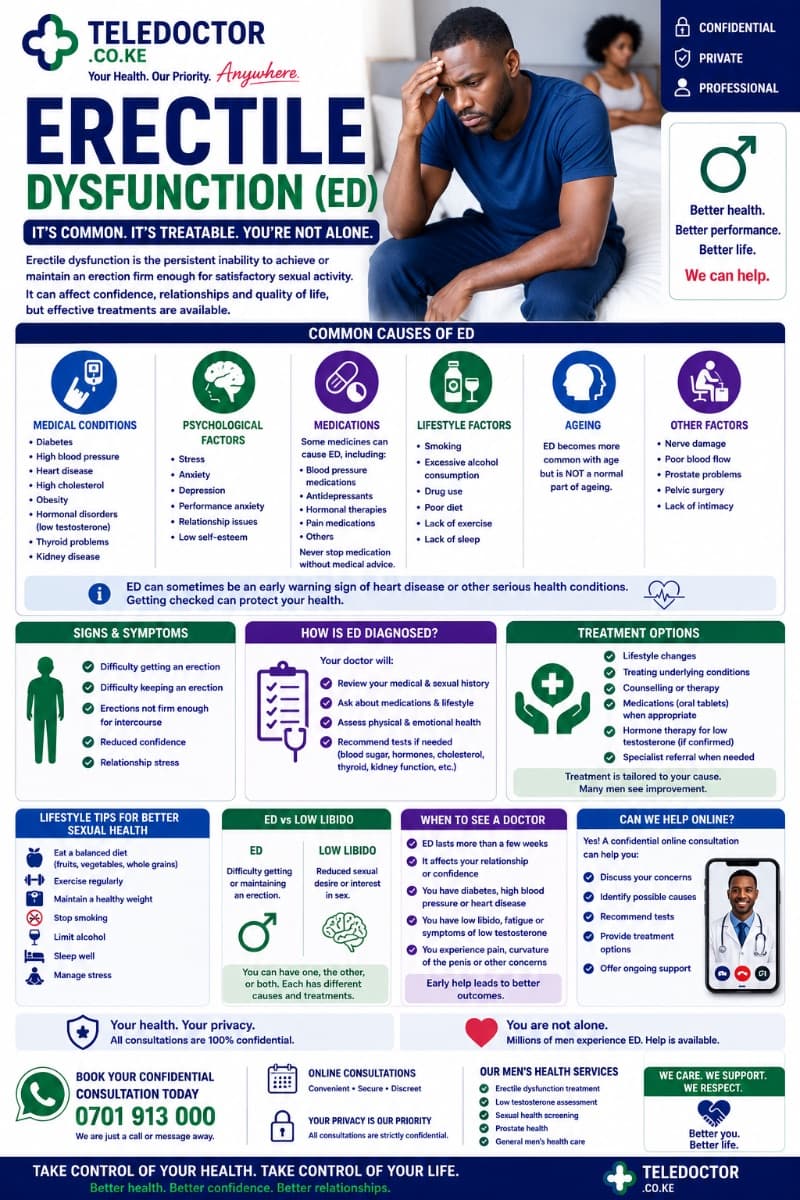
Erectile dysfunction (ED) is the persistent inability to achieve or maintain an erection that is firm enough for satisfactory sexual activity. It is one of the most common sexual health concerns among men and becomes more common with age, although it is not an inevitable part of ageing.
ED can affect confidence, relationships, and emotional wellbeing. The good news is that it is often treatable, especially when the underlying cause is identified.
What Is Erectile Dysfunction?
Occasional difficulty getting or maintaining an erection is common and may occur due to stress, fatigue, alcohol use, or temporary illness.
However, erectile dysfunction is diagnosed when erection problems occur repeatedly over several weeks or months and interfere with sexual activity.
How Does an Erection Occur?
An erection depends on healthy interaction between:
- The brain
- Nerves
- Blood vessels
- Hormones
- Muscles
- Emotional wellbeing
Sexual stimulation causes increased blood flow into the penis while reducing blood outflow, resulting in an erection. Problems affecting any part of this process can lead to erectile dysfunction.
⸻
Common Causes of Erectile Dysfunction
- Diabetes
Diabetes is one of the leading causes of ED.
High blood sugar can damage blood vessels and nerves needed for normal erections.
Good diabetes control may reduce the risk and severity of erectile dysfunction.
⸻
- High Blood Pressure
Hypertension can damage blood vessels and reduce blood flow to the penis.
Some blood pressure medications may also contribute to erection problems, although patients should never stop prescribed medication without medical advice.
⸻
- Heart Disease
The blood vessels supplying the penis are small. Reduced blood flow due to cardiovascular disease may cause ED before symptoms of heart disease become obvious.
For some men, ED may be an early warning sign of cardiovascular disease.
⸻
- Obesity
Being overweight increases the risk of:
- Diabetes
- Hypertension
- Hormonal imbalance
- Reduced testosterone
Weight loss and regular exercise can improve erectile function for many men.
⸻
- Low Testosterone
Low testosterone may reduce sexual desire and, in some cases, contribute to erectile dysfunction.
Symptoms may include:
- Reduced libido
- Fatigue
- Reduced muscle mass
- Mood changes
- Fewer morning erections
Testing should be guided by a healthcare professional.
⸻
- Stress, Anxiety, and Depression
Psychological factors are common causes of ED, especially in younger men.
Contributors include:
- Performance anxiety
- Relationship difficulties
- Work-related stress
- Depression
- Anxiety disorders
Addressing mental health concerns is often an important part of treatment.
⸻
- Smoking and Alcohol
Smoking damages blood vessels and reduces blood flow.
Excessive alcohol intake can interfere with nerve function, hormone levels, and erection quality.
Reducing or stopping these habits benefits both sexual and overall health.
⸻
- Certain Medications
Some medicines may contribute to ED, including certain:
- Blood pressure medications
- Antidepressants
- Hormonal treatments
- Some medicines for prostate conditions
Never stop prescribed medication without discussing alternatives with your healthcare provider.
⸻
Symptoms of Erectile Dysfunction
Men with ED may experience:
- Difficulty achieving an erection
- Difficulty maintaining an erection
- Erections that are not firm enough for intercourse
- Reduced confidence during sexual activity
- Relationship stress related to sexual function
Some men also have reduced libido, although these are separate conditions.
⸻
Erectile Dysfunction vs Low Libido
These terms are often confused.
Low libido means reduced interest in sexual activity.
Erectile dysfunction means difficulty getting or maintaining an erection despite sexual desire.
Some men experience one condition, while others have both.
⸻
How Is Erectile Dysfunction Diagnosed?
Your healthcare provider will discuss:
- Your symptoms
- Medical history
- Current medications
- Lifestyle habits
- Mental health
- Relationship concerns
Depending on your situation, investigations may include:
- Blood sugar testing
- Cholesterol testing
- Testosterone levels
- Kidney function tests
- Thyroid function tests
Additional investigations may be recommended if needed.
⸻
Treatment Options
Treatment depends on the underlying cause.
Lifestyle Changes
Improving general health often improves sexual health.
Recommended measures include:
- Regular physical activity
- Weight management
- Healthy diet
- Smoking cessation
- Limiting alcohol
- Adequate sleep
- Stress management
⸻
Managing Underlying Medical Conditions
Effective control of diabetes, hypertension, and heart disease may improve erectile function.
⸻
Counselling
Psychological support or couples counselling may benefit men whose ED is related to anxiety, depression, or relationship difficulties.
⸻
Oral Medications
Several prescription medicines can help improve erections by increasing blood flow to the penis.
These medications should only be used under medical supervision because they may not be safe for everyone, particularly people taking nitrate medications for heart disease or those with certain cardiovascular conditions.
⸻
Hormone Therapy
Testosterone replacement therapy may be considered for men with confirmed testosterone deficiency and appropriate symptoms.
It is not recommended unless low testosterone has been properly evaluated.
⸻
Specialist Referral
Some men may require assessment by a urologist or other specialist, particularly if initial treatment is unsuccessful or an underlying structural problem is suspected.
⸻
Can Erectile Dysfunction Be Prevented?
Although not all cases can be prevented, you can lower your risk by:
- Controlling blood pressure
- Managing diabetes
- Maintaining a healthy weight
- Exercising regularly
- Eating a balanced diet
- Avoiding smoking
- Limiting alcohol
- Managing stress
- Attending regular health check-ups
⸻
When Should You See a Doctor?
Arrange a medical consultation if:
- Erectile difficulties persist for more than a few weeks.
- ED affects your relationship or confidence.
- You have diabetes, hypertension, or heart disease.
- You experience reduced libido, fatigue, or symptoms of low testosterone.
- You notice pain, curvature of the penis, or other concerning symptoms.
Early assessment may identify treatable health conditions.
⸻
Can Erectile Dysfunction Be Managed Through an Online Consultation?
Yes.
Many men prefer discussing ED privately through an online consultation.
A licensed healthcare professional can:
- Review your symptoms
- Assess possible causes
- Recommend appropriate investigations
- Discuss lifestyle changes
- Prescribe treatment where clinically appropriate
- Arrange specialist referral if needed
Your consultation is confidential and handled with professionalism and respect.
⸻
Looking After Your Overall Health Improves Sexual Health
Erectile dysfunction is often a sign of an underlying health issue rather than simply a sexual problem.
Seeking medical advice early can improve sexual function while also identifying conditions such as diabetes, hypertension, or cardiovascular disease that benefit from prompt treatment.
Remember, ED is common, and effective help is available.
⸻
Book a Confidential Men’s Health Consultation with Teledoctor Kenya
If you are experiencing erectile dysfunction, reduced sexual confidence, or concerns about your sexual health, Teledoctor Kenya is here to help.
Our licensed healthcare professionals provide confidential online consultations, personalised assessments, appropriate investigations, treatment recommendations, and ongoing follow-up.
Call or WhatsApp: 0701 913 000
Book your confidential online consultation today and take the first step toward improving your sexual health and overall wellbeing.
⸻
Frequently Asked Questions
Is erectile dysfunction a normal part of ageing?
No. While ED becomes more common with age, it is not an inevitable part of getting older and should be evaluated if it is persistent.
Can diabetes cause erectile dysfunction?
Yes. Diabetes can damage the nerves and blood vessels involved in achieving an erection, making it one of the most common causes of ED.
Can stress alone cause erectile dysfunction?
Yes. Stress, anxiety, and performance concerns can interfere with the brain signals needed to achieve and maintain an erection.
Are erectile dysfunction medications safe?
They are safe for many men when prescribed appropriately, but they are not suitable for everyone. A healthcare professional should assess your medical history before prescribing them.
Can erectile dysfunction be treated online?
Yes. Teledoctor Kenya offers confidential online consultations to assess erectile dysfunction, recommend investigations, prescribe treatment where appropriate, and arrange specialist referral if needed.