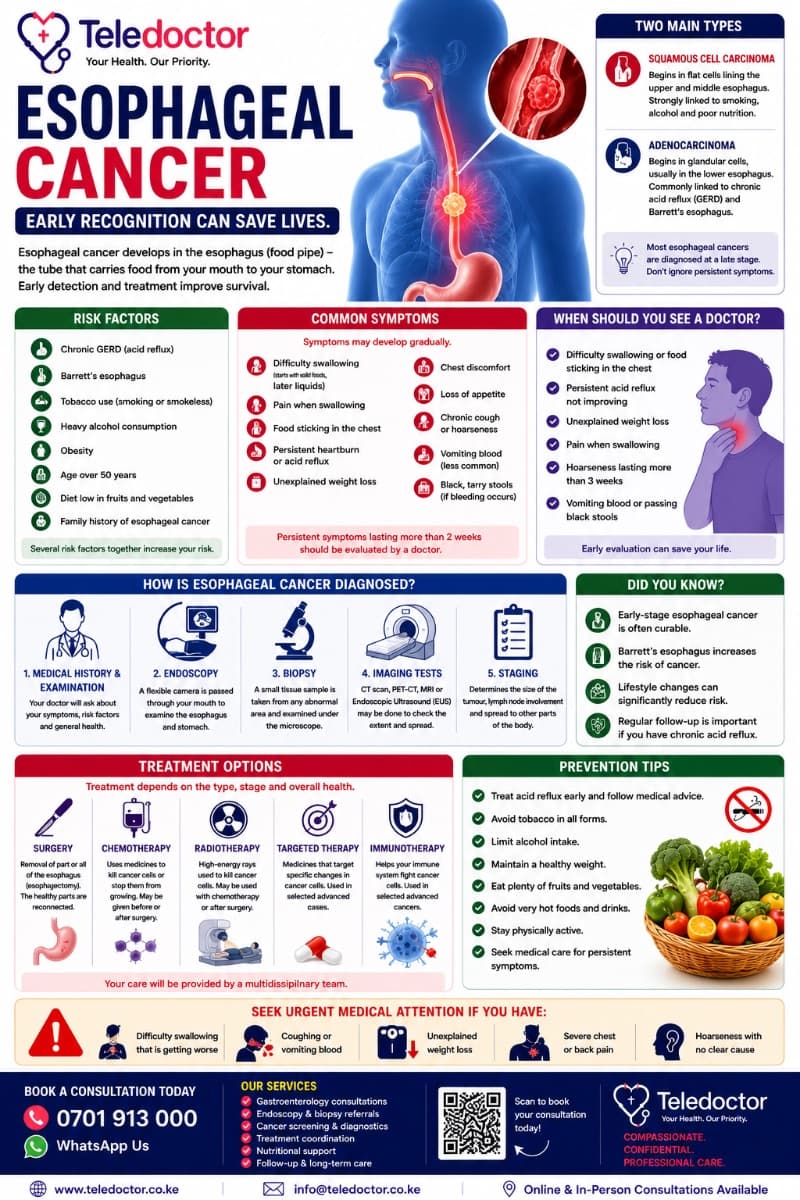
Esophageal Cancer: Early Recognition Can Save Lives
Esophageal cancer is a cancer that develops in the esophagus (food pipe), the muscular tube that carries food and liquids from the mouth to the stomach. Although it is less common than some other cancers, it is often diagnosed at a later stage because early symptoms can be subtle or mistaken for common digestive conditions.
Persistent difficulty swallowing, unexplained weight loss, or worsening reflux symptoms should never be ignored.
At Teledoctor Kenya, we help patients recognize early warning signs, arrange appropriate investigations, coordinate specialist referrals, and provide ongoing support throughout treatment.
What Is the Esophagus?
The esophagus is a muscular tube approximately 25 cm long that transports food from the throat to the stomach through coordinated muscle contractions.
Cancer develops when cells lining the esophagus grow uncontrollably and form a tumour.
Types of Esophageal Cancer
There are two main types.
Squamous Cell Carcinoma
This develops from the flat cells lining the upper and middle portions of the esophagus.
It is more strongly associated with:
- Tobacco use
- Heavy alcohol consumption
- Poor nutrition
Adenocarcinoma
This develops from glandular cells, usually in the lower esophagus.
It is commonly associated with:
- Chronic gastroesophageal reflux disease (GERD)
- Barrett’s esophagus
- Obesity
The pattern of disease varies across different regions of the world.
Risk Factors
Several factors increase the risk of esophageal cancer.
Chronic GERD
Long-standing acid reflux can damage the lining of the lower esophagus.
Barrett’s Esophagus
Repeated acid exposure may cause the normal lining of the lower esophagus to change. This condition, known as Barrett’s esophagus, increases the risk of developing adenocarcinoma.
Tobacco Use
Smoking and other forms of tobacco significantly increase the risk.
Heavy Alcohol Consumption
Excessive alcohol intake, especially when combined with smoking, greatly increases the risk of squamous cell carcinoma.
Obesity
Being overweight increases the likelihood of chronic acid reflux and Barrett’s esophagus.
Age and Sex
Esophageal cancer is more common in adults over the age of 50 and occurs more frequently in men.
Diet
A diet low in fruits and vegetables may contribute to increased risk.
Symptoms of Esophageal Cancer
Early cancer may cause few or no symptoms.
As the disease progresses, symptoms may include:
- Difficulty swallowing (initially solid foods, later liquids)
- Pain when swallowing
- Food sticking in the chest
- Persistent heartburn
- Worsening acid reflux
- Chest discomfort
- Unexplained weight loss
- Loss of appetite
- Persistent cough
- Hoarseness
- Vomiting blood (less common)
- Black, tarry stools if bleeding occurs
Difficulty swallowing that progressively worsens should always be evaluated promptly.
When Should You See a Doctor?
Arrange a medical consultation if you experience:
- Difficulty swallowing lasting more than two weeks
- Progressive swallowing problems
- Persistent reflux despite treatment
- Unexplained weight loss
- Persistent chest discomfort
- Hoarseness lasting more than three weeks
- Vomiting blood or passing black stools
How Is Esophageal Cancer Diagnosed?
Medical History and Physical Examination
Your healthcare provider will review your symptoms, risk factors, and general health.
Upper Gastrointestinal Endoscopy
An endoscope (a flexible camera) is passed through the mouth to examine the esophagus.
This allows the doctor to:
- Visualize abnormal areas
- Take tissue samples (biopsies)
- Assess the extent of disease
Biopsy
A biopsy confirms the diagnosis by examining tissue under a microscope.
Imaging
Additional investigations may include:
- CT scan
- PET-CT scan
- Endoscopic ultrasound (EUS)
- MRI in selected cases
These tests help determine whether the cancer has spread.
Staging
Cancer staging assesses:
- Tumour size and depth
- Involvement of nearby lymph nodes
- Spread to distant organs
The stage helps determine the most appropriate treatment plan.
Treatment
Treatment depends on the cancer type, stage, and overall health of the patient.
Surgery
For localized disease, surgery may involve removing part or all of the esophagus (esophagectomy) with reconstruction using part of the stomach or intestine.
Chemotherapy
Chemotherapy may be given:
- Before surgery (neoadjuvant therapy)
- After surgery (adjuvant therapy)
- As the main treatment for advanced disease
Radiotherapy
Radiotherapy may be used:
- Together with chemotherapy
- Before surgery
- To relieve symptoms in advanced cancer
Targeted Therapy and Immunotherapy
Some patients with advanced disease may benefit from targeted therapies or immunotherapy, depending on tumour characteristics and current treatment guidelines.
Nutrition During Treatment
Difficulty swallowing often affects nutrition.
Patients may require support from a dietitian, including:
- Soft or pureed foods
- High-calorie nutritional supplements
- Temporary feeding tubes in selected cases
Maintaining adequate nutrition is an important part of treatment.
Can Esophageal Cancer Be Prevented?
You can reduce your risk by:
- Treating chronic GERD appropriately
- Attending follow-up if you have Barrett’s esophagus
- Avoiding tobacco products
- Limiting alcohol intake
- Maintaining a healthy weight
- Eating a diet rich in fruits and vegetables
- Seeking evaluation for persistent swallowing difficulties.
Living With Esophageal Cancer
Many patients benefit from multidisciplinary care involving:
- Gastroenterologists
- Surgeons
- Oncologists
- Dietitians
- Speech and swallowing therapists
- Palliative care specialists when appropriate
Supportive care improves quality of life throughout treatment.
Can Teledoctor Help?
Yes.
Teledoctor Kenya provides comprehensive support for patients with symptoms suggestive of esophageal cancer.
Our healthcare professionals can:
- Assess swallowing difficulties and reflux symptoms
- Arrange referrals for endoscopy
- Coordinate imaging and biopsy referrals
- Refer to gastroenterologists and oncologists
- Provide nutritional guidance
- Coordinate follow-up care
Book a Consultation with Teledoctor Kenya
If you have difficulty swallowing, persistent acid reflux, unexplained weight loss, or other concerning symptoms, our healthcare professionals are here to help.
Our services include:
- Cancer risk assessment
- Gastroenterology consultations
- Endoscopy referrals
- Oncology referrals
- Nutritional counselling
- Long-term follow-up care
📞 Call or WhatsApp: 0701 913 000
🌐 Visit: www.teledoctor.co.ke
📍 Online and In-Person Consultations Available
Frequently Asked Questions
Is difficulty swallowing always caused by cancer?
No. Difficulty swallowing can result from GERD, esophageal strictures, infections, or motility disorders. However, progressive swallowing difficulty should always be evaluated.
Can acid reflux lead to esophageal cancer?
Most people with GERD do not develop cancer. However, long-standing reflux can lead to Barrett’s esophagus, which increases the risk of adenocarcinoma.
What is Barrett’s esophagus?
Barrett’s esophagus is a condition in which the normal lining of the lower esophagus changes because of chronic acid exposure. It increases the risk of esophageal adenocarcinoma and requires medical follow-up.
Is esophageal cancer curable?
Yes. Early-stage esophageal cancer can often be treated successfully with surgery, chemotherapy, radiotherapy, or a combination of these treatments. Outcomes are generally better when the disease is detected early.
Can lifestyle changes reduce the risk?
Yes. Avoiding tobacco, limiting alcohol, maintaining a healthy weight, treating GERD, and eating a balanced diet can help lower the risk of developing the malignancy.