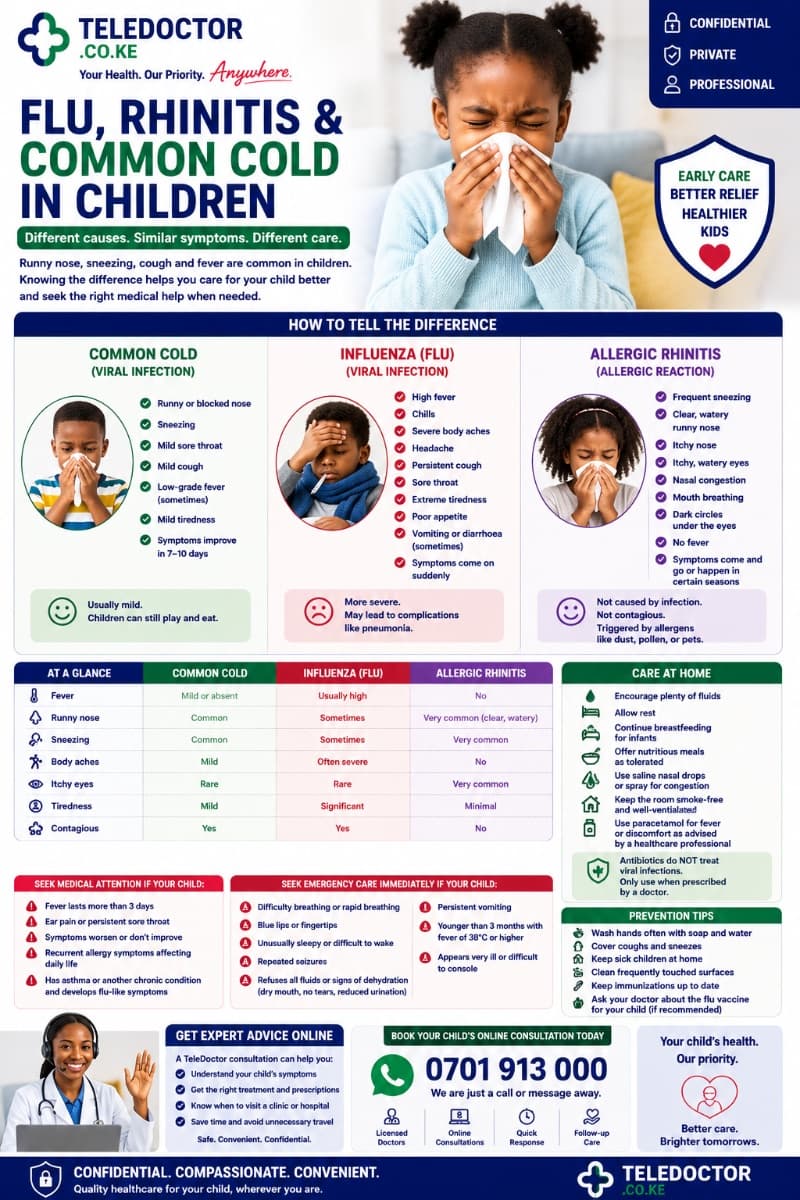
Runny noses, sneezing, and coughing are among the most common reasons children visit healthcare providers. While these symptoms often result from the common cold, they may also be caused by influenza (flu) or allergic rhinitis.
Because these conditions have similar symptoms, many parents find it difficult to know which one their child has. Understanding the differences can help you provide appropriate care and recognize when medical attention is needed.
What Is the Common Cold?
The common cold is a mild viral infection affecting the nose and throat. Young children may experience several colds each year because their immune systems are still developing.
Common Symptoms
- Runny or blocked nose
- Sneezing
- Mild sore throat
- Mild cough
- Low-grade fever (sometimes)
- Reduced appetite
- Mild tiredness
Symptoms usually improve within 7–10 days, although a cough may last a little longer.
What Is Influenza (Flu)?
Influenza is caused by influenza viruses and is generally more severe than the common cold.
Children with influenza often become ill quite suddenly.
Symptoms
- High fever
- Chills
- Severe body aches
- Headache
- Persistent cough
- Sore throat
- Extreme tiredness
- Poor appetite
- Vomiting or diarrhoea in some children
Flu can lead to complications such as pneumonia, especially in young children or those with underlying medical conditions.
What Is Allergic Rhinitis?
Allergic rhinitis occurs when the immune system reacts to allergens such as:
- Dust mites
- Pollen
- Animal dander
- Mould
Unlike colds and flu, allergic rhinitis is not caused by an infection and is not contagious.
Symptoms
- Frequent sneezing
- Clear watery nasal discharge
- Itchy nose
- Itchy eyes
- Watery eyes
- Nasal congestion
- Mouth breathing
- Dark circles under the eyes (“allergic shiners”)
Symptoms often occur repeatedly or seasonally and usually do not include fever.
Caring for Your Child at Home
Most mild viral illnesses can be managed at home.
Helpful measures include:
- Encourage plenty of fluids.
- Allow your child to rest.
- Continue breastfeeding infants.
- Offer nutritious meals as tolerated.
- Use saline nasal drops or spray for nasal congestion.
- Keep the room free from cigarette smoke.
- Use medicines for fever or discomfort as advised by a healthcare professional.
Avoid giving aspirin to children, as it has been associated with a rare but serious condition called Reye’s syndrome.
Antibiotics are not effective against viral infections such as the common cold or influenza unless there is a confirmed bacterial infection.
Managing Allergic Rhinitis
If allergies are suspected:
- Reduce exposure to known triggers where possible.
- Wash bedding regularly in hot water.
- Vacuum carpets and upholstered furniture frequently.
- Keep windows closed during periods of high pollen exposure if pollen is a trigger.
- Follow your healthcare provider’s advice regarding allergy medications if prescribed.
⸻
When Should You Seek Medical Attention?
Arrange a medical review if your child:
- Has a fever lasting more than three days.
- Develops ear pain or persistent sore throat.
- Has symptoms that are worsening rather than improving.
- Has recurrent episodes of allergic symptoms affecting daily life.
- Has asthma or another chronic medical condition and develops flu-like symptoms.
Seek Emergency Medical Care Immediately If Your Child:
- Has difficulty breathing or rapid breathing.
- Has blue lips or fingertips.
- Is unusually sleepy or difficult to wake.
- Has repeated seizures.
- Refuses all fluids or shows signs of dehydration (dry mouth, no tears, reduced urination).
- Has persistent vomiting.
- Is younger than 3 months with a fever of 38°C or higher.
- Appears very ill or difficult to console.
Preventing Respiratory Infections
You can reduce your child’s risk by:
- Encouraging regular hand washing.
- Teaching children to cover coughs and sneezes.
- Keeping sick children at home until they recover.
- Cleaning frequently touched surfaces.
- Ensuring routine childhood vaccinations are up to date.
- Discussing seasonal influenza vaccination with your healthcare provider if recommended for your child.
Can My Child Be Assessed Through an Online Consultation?
Yes.
Many mild respiratory illnesses can initially be assessed through a confidential online consultation.
A licensed healthcare professional can:
- Review your child’s symptoms.
- Help distinguish between flu, the common cold, and allergies.
- Advise on home treatment.
- Recommend appropriate medications when indicated.
- Identify warning signs that require an in-person examination or hospital care.
- Arrange referrals if necessary.
If your child appears seriously unwell, has difficulty breathing, or is very young with a fever, seek immediate in-person medical care.
Helping Your Child Recover
Most children recover fully from the common cold and influenza with supportive care. Allergic rhinitis, while not infectious, can often be effectively managed with avoidance of triggers and appropriate treatment.
Prompt medical advice can help relieve symptoms, prevent complications, and provide reassurance for parents.
Book an Online Paediatric Consultation with Teledoctor Kenya
If your child has a persistent cough, fever, runny nose, sneezing, or allergy symptoms, Teledoctor Kenya is here to help.
Our licensed healthcare professionals provide confidential online consultations, treatment advice, prescriptions where appropriate, and referrals for further evaluation when needed.
Call or WhatsApp: 0701 913 000
Book your child’s online consultation today and receive expert medical advice from the comfort of your home.
Frequently Asked Questions
Can my child catch the flu more than once?
Yes. Different influenza strains circulate each year, so previous infection does not provide lifelong protection.
Does green nasal mucus mean my child needs antibiotics?
Not necessarily. Green or yellow mucus can occur with viral infections. Antibiotics are only helpful for bacterial infections and should only be used when prescribed.
Is allergic rhinitis contagious?
No. Allergic rhinitis is an allergic reaction and cannot be spread from one person to another.
Should I give cough medicine to my young child?
Many over-the-counter cough and cold medicines are not recommended for young children, especially those under 6 years, unless advised by a healthcare professional. Always follow medical guidance and the product instructions.
When should I worry about my child’s fever?
Seek urgent medical attention if your child is younger than 3 months with a fever, has difficulty breathing, appears unusually drowsy, has a seizure, or shows signs of dehydration.