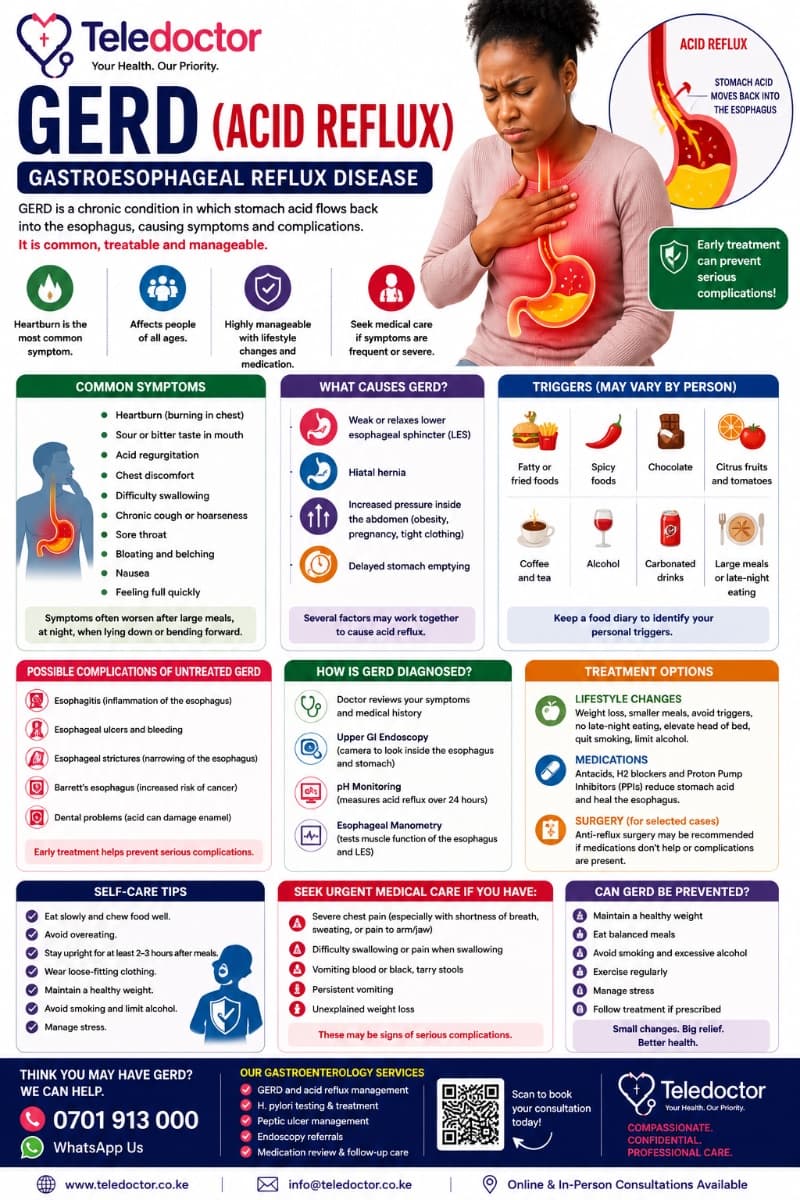
GERD (Acid Reflux): When Heartburn Becomes a Chronic Problem
Most people experience heartburn or acid reflux occasionally, especially after eating a large meal or certain foods. However, when acid reflux occurs frequently and begins to interfere with daily life, it may indicate Gastroesophageal Reflux Disease (GERD).
GERD is one of the most common digestive disorders worldwide and can affect people of all ages. Fortunately, it is highly manageable with lifestyle changes, medications, and, in some cases, specialized treatment.
At Teledoctor Kenya, we help patients diagnose, manage, and prevent complications of GERD through personalized treatment plans and ongoing follow-up.
What Is GERD?
GERD (Gastroesophageal Reflux Disease) is a chronic condition in which stomach acid or stomach contents repeatedly flow backward into the esophagus (food pipe).
Normally, a muscular valve called the lower esophageal sphincter (LES) prevents stomach contents from moving upward. In GERD, this valve becomes weak or relaxes inappropriately, allowing acid to reflux into the esophagus.
Repeated exposure to stomach acid irritates the lining of the esophagus, causing symptoms and, over time, potential complications.
What Is Heartburn?
Heartburn is the most common symptom of GERD.
Despite its name, it has nothing to do with the heart.
It is described as:
- A burning sensation behind the breastbone
- Pain that may rise toward the throat
- Symptoms that often worsen after meals or when lying down
Common Symptoms of GERD
Symptoms vary from person to person.
The most common include:
- Heartburn
- Sour or bitter taste in the mouth
- Acid regurgitation
- Chest discomfort related to reflux
- Difficulty swallowing
- Feeling of food sticking in the throat
- Chronic cough
- Hoarseness
- Frequent throat clearing
- Sore throat
- Bad breath
- Bloating
- Belching
- Nausea
Symptoms often worsen:
- After large meals
- At night
- When lying flat
- After bending forward
What Causes GERD?
Several factors increase the likelihood of acid reflux.
Weak Lower Esophageal Sphincter
The most common cause is a weakened or poorly functioning LES.
Hiatal Hernia
Part of the stomach moves upward through the diaphragm, making reflux more likely.
Increased Pressure Inside the Abdomen
This may occur due to:
- Obesity
- Pregnancy
- Tight clothing
Delayed Stomach Emptying
Food remains in the stomach longer, increasing the chance of reflux.
Risk Factors
You may be more likely to develop GERD if you:
- Are overweight or obese
- Smoke cigarettes
- Drink excessive alcohol
- Eat large meals late at night
- Frequently consume fatty or fried foods
- Eat spicy foods that trigger symptoms
- Consume excessive caffeine
- Drink carbonated beverages
- Are pregnant
- Take certain medications, such as some painkillers or calcium channel blockers.
Foods That May Trigger Symptoms
Not everyone has the same triggers.
Common ones include:
- Fried foods
- Fatty meals
- Chocolate
- Coffee
- Tea
- Alcohol
- Carbonated drinks
- Citrus fruits
- Tomatoes and tomato-based sauces
- Peppermint
- Spicy foods
Keeping a food diary can help identify your personal triggers.
Complications of Untreated GERD
Without treatment, chronic reflux may cause:
Esophagitis
Inflammation of the esophagus.
Esophageal Ulcers
Painful sores may develop due to repeated acid exposure.
Esophageal Strictures
Scarring may narrow the esophagus, making swallowing difficult.
Barrett’s Esophagus
Long-term acid exposure can cause changes in the cells lining the esophagus. Barrett’s esophagus increases the risk of esophageal adenocarcinoma and requires specialist monitoring.
Dental Problems
Stomach acid can gradually damage tooth enamel.
How Is GERD Diagnosed?
Many people are diagnosed based on their symptoms and response to treatment.
Additional investigations may include:
Upper Gastrointestinal Endoscopy
A flexible camera examines the esophagus, stomach, and upper small intestine.
It helps identify:
- Inflammation
- Ulcers
- Barrett’s esophagus
- Other causes of symptoms
Esophageal pH Monitoring
Measures how often acid enters the esophagus over a 24-hour period.
Esophageal Manometry
Evaluates the function of the esophageal muscles and lower esophageal sphincter.
Treatment
Treatment depends on symptom severity and the presence of complications.
Lifestyle Changes
Many people experience significant improvement by:
- Losing excess weight
- Eating smaller meals
- Avoiding late-night eating
- Waiting at least 2–3 hours before lying down after meals
- Raising the head of the bed by about 15–20 cm (using blocks under the bed legs or a wedge pillow)
- Avoiding smoking
- Limiting alcohol
- Identifying and avoiding trigger foods.
Medications
Antacids
Provide rapid, short-term relief by neutralizing stomach acid.
H2 Receptor Blockers
These reduce stomach acid production and may help people with mild or intermittent symptoms.
Proton Pump Inhibitors (PPIs)
Medicines such as:
- Omeprazole
- Esomeprazole
- Pantoprazole
- Lansoprazole
are the most effective medications for healing inflammation and controlling frequent GERD symptoms.
They should be used according to your healthcare provider’s recommendations.
Surgery
People with severe GERD who do not respond to medical treatment or who have selected complications may be candidates for anti-reflux surgery, such as fundoplication.
Surgery is recommended only after careful evaluation by a specialist.
Self-Care Tips
To help control reflux:
- Eat slowly.
- Avoid overeating.
- Stay upright after meals.
- Wear loose-fitting clothing.
- Maintain a healthy weight.
- Stop smoking.
- Limit alcohol intake.
- Sleep with your head elevated if nighttime symptoms occur.
When Should You Seek Urgent Medical Care?
Seek immediate medical attention if you experience:
- Severe chest pain (especially if accompanied by shortness of breath, sweating, or pain radiating to the arm or jaw)
- Difficulty swallowing that worsens
- Vomiting blood
- Black, tarry stools
- Persistent vomiting
- Unexplained weight loss
Important: Chest pain should always be assessed urgently to rule out a heart attack before assuming it is caused by acid reflux.
Can GERD Be Prevented?
You can reduce your risk by:
- Maintaining a healthy body weight
- Avoiding smoking
- Limiting alcohol
- Eating balanced meals
- Avoiding overeating
- Exercising regularly
- Managing stress
- Following prescribed treatment
Can Teledoctor Help?
Yes.
Teledoctor Kenya provides expert evaluation and treatment for GERD and other digestive disorders.
Our healthcare professionals can:
- Assess symptoms of acid reflux
- Recommend appropriate medications
- Arrange investigations when necessary
- Refer for endoscopy
- Monitor treatment response
- Manage long-term reflux disease
Living Well with GERD
GERD is a common condition, but it does not have to control your life.
Most people achieve excellent symptom control through healthy lifestyle habits, appropriate medication, and regular medical follow-up.
Early treatment also helps prevent complications and improves quality of life.
Book a Digestive Health Consultation with Teledoctor Kenya
If you have persistent heartburn, acid reflux, or difficulty swallowing, our healthcare professionals are here to help.
Our services include:
- GERD assessment
- Acid reflux treatment
- H. pylori evaluation
- Peptic ulcer management
- Medication review
- Endoscopy referrals
- Ongoing follow-up care
📞 Call or WhatsApp: 0701 913 000
🌐 Visit: www.teledoctor.co.ke
📍 Online and In-Person Consultations Available
Frequently Asked Questions
Is GERD the same as heartburn?
No. Heartburn is a symptom, while GERD is a chronic medical condition characterized by frequent acid reflux.
Can GERD be cured?
Many people control GERD effectively with lifestyle changes and medication. Some may require long-term treatment, while selected patients benefit from surgery.
Does spicy food cause GERD?
Spicy food does not cause GERD but can trigger symptoms in some people. Triggers vary between individuals.
Is milk good for acid reflux?
Milk may provide temporary relief for some people, but high-fat dairy products can worsen reflux in others. It is best to observe your own response.
Can GERD increase the risk of cancer?
Long-standing, untreated GERD can lead to Barrett’s esophagus, which increases the risk of esophageal adenocarcinoma. Regular follow-up is important for people with Barrett’s esophagus.