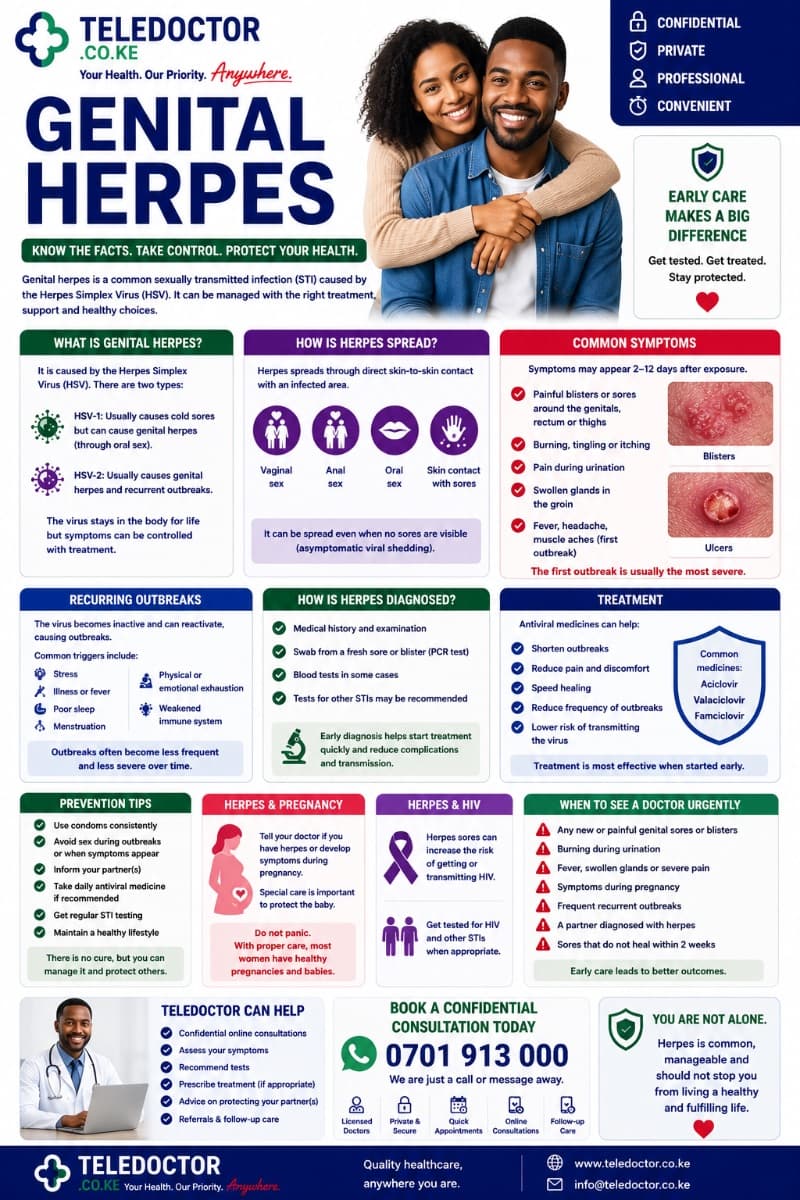
Genital Herpes: Understanding the Infection and Living Well
Genital herpes is a common sexually transmitted infection (STI) caused by the Herpes Simplex Virus (HSV). Although there is currently no cure for herpes, effective treatment can reduce symptoms, shorten outbreaks, and lower the risk of transmitting the virus to others.
Many people with herpes have mild symptoms or none at all, which means they may unknowingly pass the infection to their sexual partners.
With accurate information, appropriate treatment, and healthy lifestyle choices, most people with genital herpes can lead healthy and fulfilling lives.
What Causes Genital Herpes?
Genital herpes is caused by two closely related viruses:
- HSV-1 (Herpes Simplex Virus Type 1) – traditionally associated with cold sores around the mouth but increasingly responsible for genital herpes through oral-genital contact.
- HSV-2 (Herpes Simplex Virus Type 2) – more commonly associated with genital herpes and recurrent outbreaks.
Once infected, the virus remains dormant in nerve cells and can reactivate periodically.
How Is Herpes Spread?
Herpes spreads through direct skin-to-skin contact with an infected area.
Transmission can occur through:
- Vaginal sex
- Anal sex
- Oral sex
- Skin contact with herpes sores
- Contact with infected skin even when no sores are visible (asymptomatic viral shedding)
- From an infected mother to her baby during childbirth (rare but potentially serious)
Herpes is not spread through toilet seats, swimming pools, sharing utensils, or casual social contact.
Symptoms of Genital Herpes
Some people develop symptoms within 2–12 days after exposure, while others may not notice symptoms for months or years.
Common symptoms include:
- Small painful blisters
- Open sores (ulcers) after the blisters burst
- Burning or tingling before sores appear
- Pain during urination
- Itching around the genital area
- Tender swelling of the groin lymph nodes
- Fever, headache, muscle aches, and fatigue during the first outbreak
The first episode is often more severe than recurrent outbreaks.
What Do Herpes Sores Look Like?
Herpes lesions usually begin as:
- Small grouped blisters
- Fluid-filled bumps
- Painful ulcers after the blisters rupture
- Crusting before healing
They may appear on:
In Men
- Penis
- Scrotum
- Groin
- Buttocks
- Around the anus
In Women
- Vulva
- Vagina
- Cervix
- Buttocks
- Around the anus
Recurrent Outbreaks
Because HSV remains in the body, outbreaks may recur.
Common triggers include:
- Stress
- Fever or other illnesses
- Poor sleep
- Physical or emotional exhaustion
- Menstruation
- A weakened immune system
Many people notice that outbreaks become less frequent and less severe over time.
How Is Genital Herpes Diagnosed?
Diagnosis may be based on:
- Medical history
- Physical examination
- Swab from a fresh blister or ulcer for laboratory testing (PCR is commonly used)
- Blood tests in selected situations to detect HSV antibodies
Your healthcare provider will determine which tests are appropriate based on your symptoms and stage of infection.
Treatment
Although herpes cannot currently be cured, antiviral medications can help:
- Shorten outbreaks
- Reduce pain
- Speed healing
- Reduce viral shedding
- Lower the frequency of recurrent outbreaks
Common antiviral medications include:
- Acyclovir
- Valaciclovir
- Famciclovir
The choice of medication and duration of treatment depend on whether it is a first episode, a recurrent outbreak, or suppressive therapy.
People with frequent recurrences may benefit from daily suppressive antiviral treatment, as recommended by their healthcare provider.
Can Herpes Be Prevented?
You can reduce the risk of transmission by:
- Using condoms consistently (while recognising they do not completely eliminate the risk because herpes can affect areas not covered by a condom)
- Avoiding sexual contact during outbreaks or when symptoms such as tingling are present
- Informing sexual partner(s) about your diagnosis
- Taking suppressive antiviral therapy if recommended
- Attending regular sexual health reviews when appropriate
Herpes and Pregnancy
Women who have genital herpes during pregnancy should inform their healthcare provider.
Special care is important because herpes can, in some circumstances, be transmitted to the baby during delivery.
Your obstetric team will advise on the safest management based on whether the infection is new or recurrent and the timing during pregnancy.
Can Herpes Increase the Risk of HIV?
Yes.
Open herpes sores can make it easier to acquire or transmit HIV during sexual contact.
For this reason, people diagnosed with genital herpes are often advised to discuss HIV testing and prevention with their healthcare provider.
Emotional Wellbeing After a Herpes Diagnosis
A diagnosis of genital herpes can cause anxiety, embarrassment, or concern about future relationships.
It is important to remember:
- Herpes is very common.
- It does not define your worth or your relationships.
- Many people have healthy sexual relationships after diagnosis.
- Honest communication and appropriate treatment can reduce the risk of transmission.
If the diagnosis is affecting your emotional wellbeing, speak to a healthcare professional.
When Should You See a Doctor?
Seek medical advice if you have:
- Painful genital blisters or ulcers
- Burning during urination
- A new genital sore
- Fever with genital symptoms
- A sexual partner diagnosed with herpes
- Frequent recurrent outbreaks
- Symptoms during pregnancy
Prompt assessment helps confirm the diagnosis and guide appropriate treatment.
Can Teledoctor Help?
Yes.
Teledoctor Kenya provides confidential online consultations for genital herpes and other sexually transmitted infections.
Our licensed healthcare professionals can:
- Assess your symptoms
- Recommend appropriate laboratory tests
- Prescribe antiviral medication where clinically appropriate
- Explain treatment options
- Discuss strategies to reduce transmission
- Advise on partner notification
- Arrange referrals when necessary
- Provide follow-up care and support
Some patients may require an in-person examination or laboratory testing to confirm the diagnosis.
Living Well with Herpes
Although herpes is a lifelong viral infection, it is manageable.
With early diagnosis, appropriate treatment, and healthy lifestyle habits, most people experience fewer outbreaks and continue to enjoy healthy relationships and normal daily activities.
Book a Confidential Online Sexual Health Consultation with Teledoctor Kenya
If you have genital sores, blisters, or concerns about herpes, our experienced healthcare professionals are here to help.
Teledoctor Kenya offers:
- Confidential online consultations
- Expert assessment
- Antiviral treatment where appropriate
- STI testing advice
- Partner management guidance
- Ongoing follow-up care
📞 Call or WhatsApp: 0701 913 000
🌐 Book your consultation today at www.teledoctor.co.ke
⸻
Frequently Asked Questions
Can herpes be cured?
There is currently no cure for herpes. However, antiviral medications can effectively reduce symptoms, shorten outbreaks, and decrease the risk of transmission.
Can I spread herpes without having sores?
Yes. HSV can be transmitted even when no visible sores are present due to asymptomatic viral shedding.
Will I always have frequent outbreaks?
Not necessarily. Many people experience fewer and milder outbreaks over time.
Can I have children if I have herpes?
Yes. Most people with herpes can have healthy pregnancies and babies. It is important to inform your healthcare provider if you are pregnant or planning a pregnancy.
Should my partner be tested?
Your healthcare provider can advise whether testing is appropriate based on your partner’s symptoms, exposure, and individual circumstances. Open communication with partners is important.