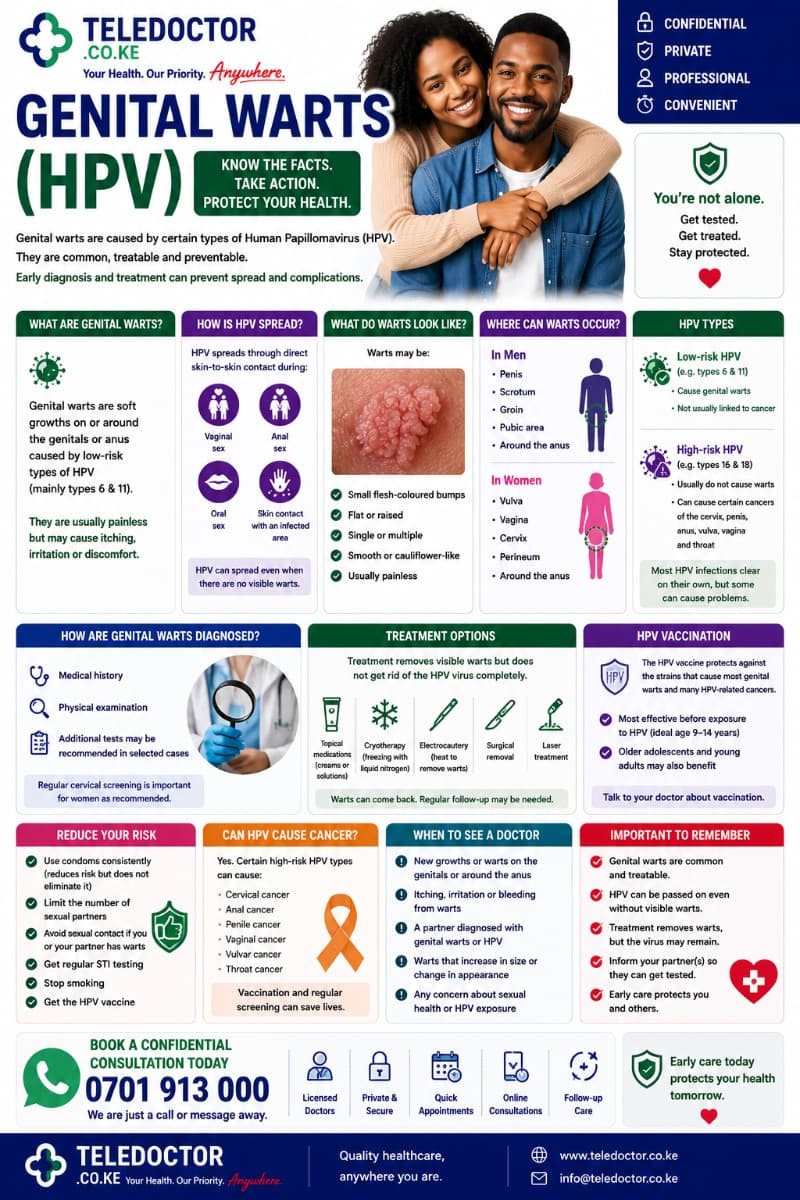
Genital Warts (HPV): A Common Sexually Transmitted Infection
Genital warts are one of the most common sexually transmitted infections (STIs) worldwide. They are caused by certain types of the Human Papillomavirus (HPV) and appear as small growths on or around the genitals and anus.
Although genital warts are usually not dangerous, they can be distressing, may spread to sexual partners, and often require medical treatment. Some types of HPV are also associated with cancers of the cervix, penis, anus, vulva, vagina, and throat.
Early diagnosis, appropriate treatment, and vaccination can help reduce the impact of HPV.
What Is HPV?
Human Papillomavirus (HPV) is a group of more than 200 related viruses.
These are broadly divided into:
Low-risk HPV
These strains commonly cause:
- Genital warts
- Anal warts
The most common types are HPV 6 and HPV 11.
High-risk HPV
Certain HPV types, especially HPV 16 and HPV 18, usually do not cause visible warts but can increase the risk of:
- Cervical cancer
- Penile cancer
- Anal cancer
- Vaginal cancer
- Vulvar cancer
- Oropharyngeal (throat) cancer
Most HPV infections resolve naturally, but persistent infection with high-risk strains requires medical follow-up.
How Is HPV Spread?
HPV spreads through:
- Vaginal sex
- Anal sex
- Oral sex
- Direct skin-to-skin genital contact
- Close intimate contact, even when no visible warts are present
Because HPV can be transmitted without symptoms, people may unknowingly infect their partners.
What Do Genital Warts Look Like?
Genital warts may be:
- Small flesh-coloured bumps
- Flat or raised lesions
- Soft growths
- Single or multiple
- Smooth or cauliflower-like in appearance
They are usually painless but may sometimes cause:
- Itching
- Mild discomfort
- Bleeding after intercourse
- Irritation
Where Can Warts Occur?
In Men
Genital warts may appear on the:
- Penis
- Scrotum
- Groin
- Pubic area
- Around the anus
In Women
They may occur on the:
- Vulva
- Vagina
- Cervix
- Perineum
- Around the anus
Some warts are so small they are only detected during a medical examination.
Do Genital Warts Hurt?
Most genital warts are painless.
However, larger or irritated warts may cause:
- Itching
- Burning
- Mild pain
- Bleeding after friction or sexual activity
How Are Genital Warts Diagnosed?
Diagnosis is usually based on:
- Medical history
- Sexual history
- Physical examination
Additional tests may be recommended in selected cases.
Women should continue routine cervical cancer screening according to national guidelines, as recommended by their healthcare provider.
Treatment Options
Treatment removes visible warts but does not eliminate HPV completely. The virus may remain in the skin, so warts can recur.
Treatment options include:
Prescription creams or solutions
Certain topical medications may be suitable for selected patients.
Cryotherapy
Liquid nitrogen is used to freeze the warts.
Electrocautery
Electric current is used to remove warts.
Surgical removal
Larger or persistent warts may require minor surgery.
Laser treatment
Laser therapy may be used for difficult or extensive cases.
The most appropriate treatment depends on the size, number, and location of the warts.
Will the Warts Come Back?
Possibly.
Although treatment removes visible warts, HPV can remain in nearby skin cells. Some people experience recurrent warts, especially during the first year after treatment.
Recurrence usually becomes less frequent as the immune system suppresses the virus.
HPV Vaccination
HPV vaccination is one of the most effective ways to prevent infection with the HPV types responsible for most genital warts and many HPV-related cancers.
Vaccination is most effective before exposure to HPV, but some older adolescents and adults may also benefit depending on individual circumstances.
Speak with your healthcare provider about whether HPV vaccination is appropriate for you.
Can HPV Cause Cancer?
Yes.
Persistent infection with certain high-risk HPV types increases the risk of several cancers, including:
- Cervical cancer
- Penile cancer
- Anal cancer
- Vulvar cancer
- Vaginal cancer
- Some throat cancers
Importantly, the HPV types that cause genital warts are usually different from the high-risk types that cause cancer.
How Can You Reduce Your Risk?
You can lower your risk by:
- Receiving the HPV vaccine if eligible
- Using condoms consistently (while recognising they do not provide complete protection because HPV can infect uncovered skin)
- Limiting the number of sexual partners
- Attending regular cervical cancer screening where recommended
- Avoiding smoking, which may reduce the body’s ability to clear HPV
- Seeking medical evaluation for any new genital growth
Common Warts vs Genital Warts
Not all warts are sexually transmitted.
Common skin warts often occur on the hands, fingers, knees, or feet and are caused by different HPV types than those responsible for genital warts.
These are generally spread through direct skin contact or contaminated surfaces and are not considered STIs.
When Should You See a Doctor?
Arrange a medical assessment if you notice:
- New growths on the penis, vulva, vagina, or around the anus
- Itching or irritation in the genital area
- Bleeding from genital growths
- A partner diagnosed with genital warts
- Any concern about possible HPV exposure
Early evaluation helps confirm the diagnosis and identify the most appropriate treatment.
Can Teledoctor Help?
Yes.
Teledoctor Kenya provides confidential online consultations for genital warts and other sexually transmitted infections.
Our healthcare professionals can:
- Assess your symptoms
- Recommend appropriate investigations
- Discuss treatment options
- Prescribe suitable medications where appropriate
- Arrange referral for procedures such as cryotherapy or surgical removal if needed
- Provide advice on HPV vaccination and prevention
- Offer follow-up care
Some patients may require an in-person examination to confirm the diagnosis or perform treatment.
Protect Your Health Through Early Action
Genital warts are common and treatable. Early diagnosis, appropriate treatment, and preventive measures such as HPV vaccination can reduce complications and lower the risk of transmission.
If you notice any unusual genital growths or have concerns about HPV, seek medical advice promptly.
Book a Confidential Online Sexual Health Consultation with Teledoctor Kenya
If you have genital warts or any concerns about your sexual health, Teledoctor Kenya is here to help.
We provide:
- Confidential online consultations
- Expert medical advice
- STI assessment
- HPV vaccination counselling
- Referral for procedures where needed
- Follow-up support
📞 Call or WhatsApp: 0701 913 000
🌐 Book your consultation today at www.teledoctor.co.ke
Frequently Asked Questions
Are genital warts cancer?
No. Genital warts are usually caused by low-risk HPV types that do not cause cancer. However, some other HPV types are associated with several cancers, which is why vaccination and regular screening are important.
Can genital warts disappear without treatment?
Yes. In some people, the immune system clears the infection and the warts resolve over time. However, treatment may be recommended to relieve symptoms, reduce spread, or remove persistent warts.
Can I get genital warts more than once?
Yes. Even after successful treatment, HPV may remain in the skin, and new infections with different HPV types are also possible.
Does using a condom completely prevent HPV?
No. Condoms reduce the risk of HPV transmission but do not provide complete protection because HPV can affect areas of skin not covered by a condom.
Should my partner be examined?
Yes. If you have genital warts, it is advisable for your sexual partner(s) to seek medical advice, even if they have no visible symptoms.