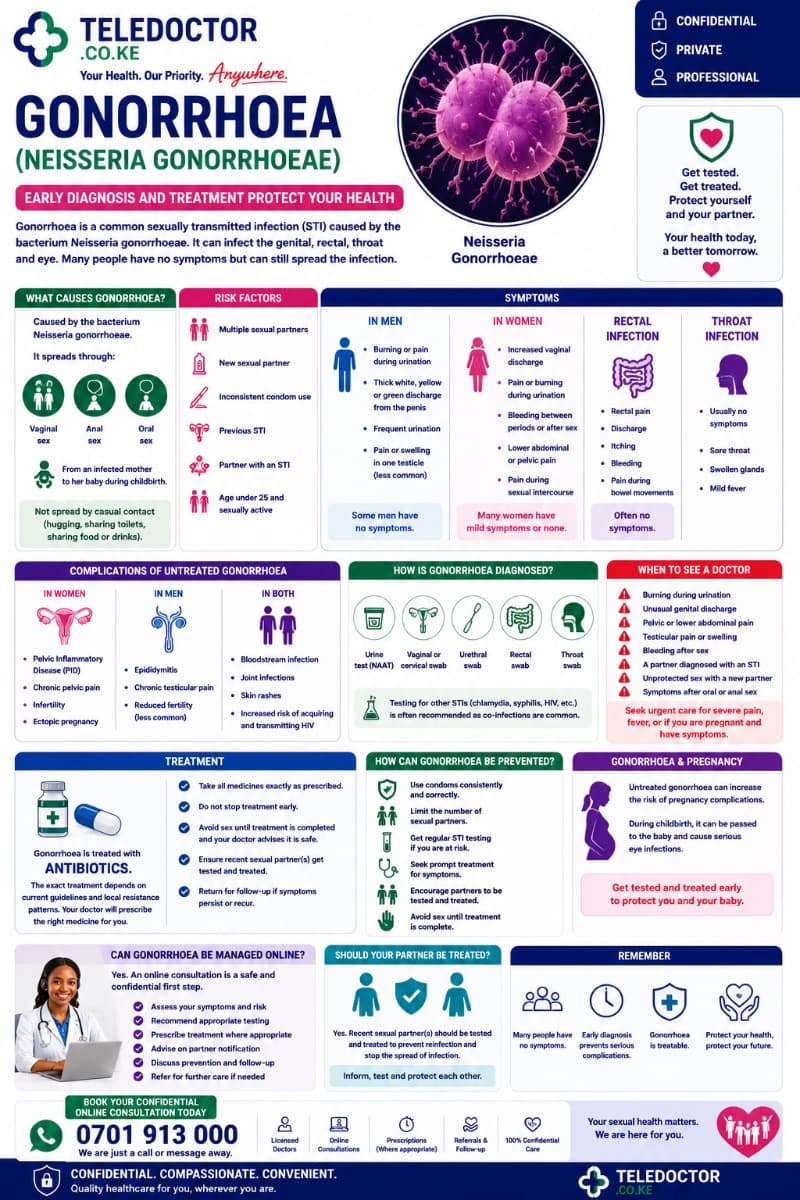
Gonorrhoea is a common sexually transmitted infection (STI) caused by the bacterium Neisseria gonorrhoeae. It can infect both men and women and commonly affects the urethra, cervix, rectum, throat, and eyes.
Many people with gonorrhoea have no symptoms, allowing the infection to spread unknowingly. If left untreated, it can lead to serious health complications, including infertility and an increased risk of acquiring or transmitting HIV.
Fortunately, gonorrhoea is treatable, especially when diagnosed early.
What Causes Gonorrhoea?
Gonorrhoea is caused by the bacterium Neisseria gonorrhoeae.
It spreads through:
- Vaginal sex
- Anal sex
- Oral sex
- From an infected mother to her baby during childbirth
The infection is not spread through casual contact such as hugging, shaking hands, sharing toilets, or sharing food.
Who Is at Risk?
Anyone who is sexually active can develop gonorrhoea.
Risk factors include:
- Multiple sexual partners
- A new sexual partner
- Inconsistent condom use
- Previous STI
- Having a partner diagnosed with an STI
- Being under 25 years and sexually active
Symptoms in Men
Symptoms usually appear within 2–14 days after exposure, although some men remain asymptomatic.
Common symptoms include:
- Burning or pain during urination
- Thick white, yellow, or green discharge from the penis
- Frequent urination
- Pain or swelling in one testicle (less common)
Some infections cause no symptoms at all.
Symptoms in Women
Many women have mild symptoms or none.
When symptoms occur, they may include:
- Increased vaginal discharge
- Pain or burning during urination
- Bleeding between periods
- Bleeding after sexual intercourse
- Lower abdominal or pelvic pain
- Pain during sexual intercourse
Because symptoms may be mild, gonorrhoea is sometimes mistaken for a urinary tract infection or vaginal infection.
Rectal Gonorrhoea
Rectal infection may occur after receptive anal sex.
Symptoms may include:
- Rectal pain
- Discharge
- Itching
- Bleeding
- Pain during bowel movements
Some people have no symptoms.
Throat Gonorrhoea
Oral sex can transmit gonorrhoea to the throat.
Most infections cause no symptoms.
Others may experience:
- Sore throat
- Swollen glands
- Mild fever
What Happens If Gonorrhoea Is Left Untreated?
Untreated gonorrhoea can lead to serious complications.
In Women
- Pelvic Inflammatory Disease (PID)
- Chronic pelvic pain
- Infertility
- Ectopic pregnancy
In Men
- Epididymitis
- Chronic testicular pain
- Reduced fertility (less common)
In Both Men and Women
- Infection of the bloodstream (disseminated gonococcal infection)
- Joint infections
- Skin rashes
- Increased risk of HIV acquisition and transmission
Gonorrhoea During Pregnancy
Pregnant women with untreated gonorrhoea may have an increased risk of certain pregnancy complications.
During childbirth, the infection can be passed to the baby, potentially causing a serious eye infection (ophthalmia neonatorum), which is why prompt diagnosis and treatment are important.
How Is Gonorrhoea Diagnosed?
Your healthcare provider may recommend:
- Urine test (urinalysis )
- Vaginal or cervical swab
- Urethral swab
- Rectal swab (if indicated)
- Throat swab (if indicated)
Testing for other STIs, including chlamydia, syphilis, and HIV, is often recommended because co-infections are common.
Treatment
Gonorrhoea is treated with antibiotics.
Because antibiotic resistance has become a global concern, treatment recommendations change over time. Your healthcare provider will prescribe the current guideline-recommended antibiotic regimen based on national or international guidance and local resistance patterns.
It is important to:
- Complete the prescribed treatment.
- Avoid sexual activity until treatment is completed and your healthcare provider advises it is safe.
- Ensure recent sexual partner(s) are informed, tested, and treated where appropriate.
- Return for follow-up if symptoms persist or recur.
Do not self-medicate or rely on outdated antibiotic regimens.
Can Gonorrhoea Be Prevented?
Yes.
Reduce your risk by:
- Using condoms consistently and correctly.
- Limiting the number of sexual partners.
- Having regular STI screening if you are sexually active and at increased risk.
- Seeking prompt treatment for symptoms.
- Encouraging partners to be tested and treated.
- Avoiding sexual contact until treatment is complete.
When Should You See a Doctor?
Seek medical advice if you have:
- Burning during urination
- Unusual genital discharge
- Pelvic pain
- Testicular pain or swelling
- Bleeding after sex
- A partner diagnosed with an STI
- Unprotected sex with a new partner
- Symptoms after oral or anal sex
Even if you feel well, testing is recommended if you think you may have been exposed.
Can Gonorrhoea Be Managed Through an Online Consultation?
Yes.
A confidential online consultation is often the first step.
A licensed healthcare professional can:
- Assess your symptoms and exposure history.
- Recommend appropriate STI testing.
- Arrange treatment where clinically appropriate.
- Advise on partner notification.
- Discuss HIV prevention and testing.
- Arrange referrals if complications are suspected.
Some patients may need an in-person examination or laboratory testing to confirm the diagnosis and guide treatment.
Early Treatment Protects Your Fertility and Health
Gonorrhoea is common, treatable, and often preventable. Early diagnosis reduces the risk of complications and helps prevent transmission to others.
If you have symptoms or think you may have been exposed, do not delay seeking medical advice.
Book a Confidential STI Consultation with Teledoctor Kenya
If you have symptoms of gonorrhoea or another sexually transmitted infection, Teledoctor Kenya offers discreet, confidential online consultations.
Our licensed healthcare professionals provide:
- Confidential assessment
- STI testing advice
- Prescriptions where appropriate
- Partner management guidance
- Follow-up support
- Referrals when needed
Call or WhatsApp: 0701 913 000
Book your confidential online consultation today and receive expert care from the privacy of your home.
Frequently Asked Questions
Can I have gonorrhoea without symptoms?
Yes. Many people, especially women, have no symptoms, making regular STI screening important if you are at increased risk.
Can gonorrhoea be cured?
Yes. Gonorrhoea can usually be cured with the appropriate antibiotics prescribed according to current treatment guidelines.
Should my partner be treated?
Yes. Recent sexual partner(s) should be informed, evaluated, and treated where appropriate to prevent reinfection and further spread.
Can I get gonorrhoea more than once?
Yes. Previous infection does not provide immunity. You can become infected again if exposed.
Should I also be tested for other STIs?
Yes. People diagnosed with gonorrhoea are often advised to be tested for chlamydia, HIV, syphilis, and other STIs because co-infections can occur.