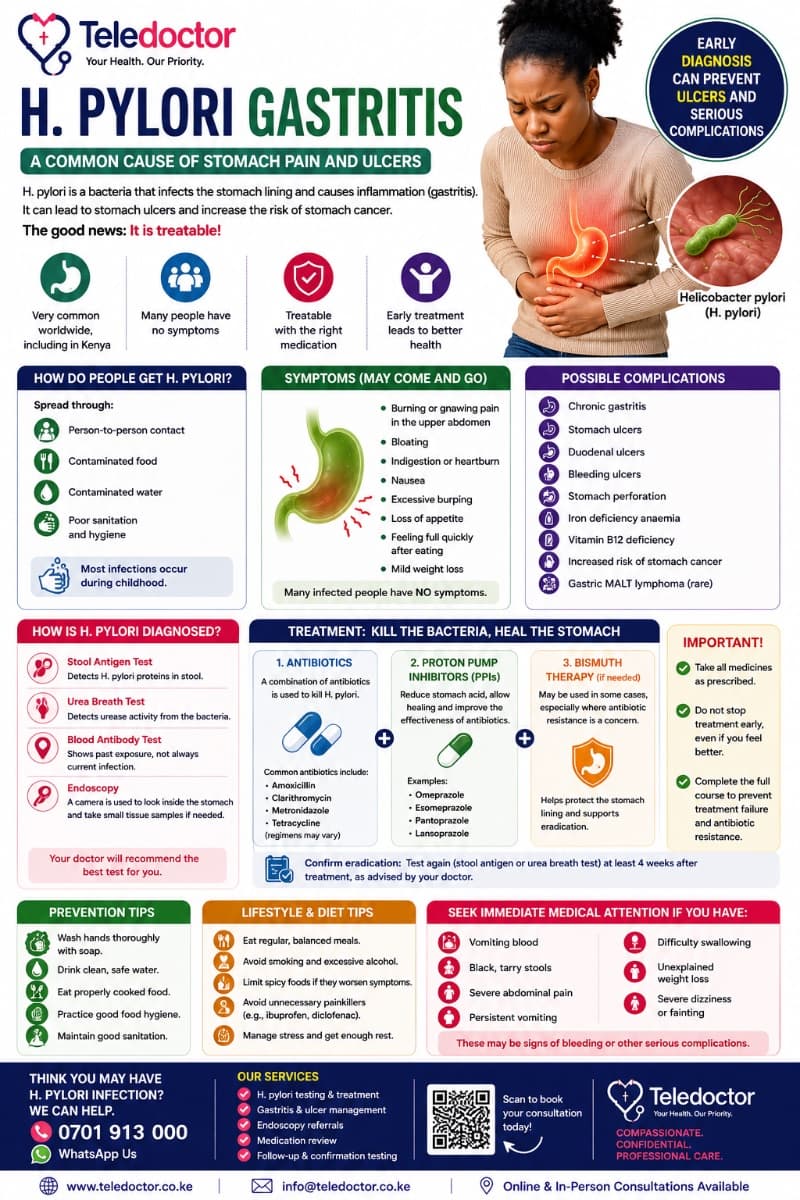
H. pylori Gastritis: A Common Cause of Stomach Pain and Ulcers
Many people experience persistent upper abdominal discomfort, bloating, nausea, or recurrent indigestion without knowing the underlying cause. One of the most common causes is infection with Helicobacter pylori (H. pylori), a bacterium that lives in the lining of the stomach.
H. pylori infection is common worldwide, including in Kenya. While many infected people have no symptoms, others develop chronic gastritis, peptic ulcers, and, in some cases, an increased risk of stomach cancer.
The good news is that H. pylori infection is treatable, and early diagnosis can prevent serious complications.
At Teledoctor Kenya, we provide comprehensive assessment, testing, treatment, and follow-up care for H. pylori infection and other digestive disorders.
What Is H. pylori?
Helicobacter pylori is a spiral-shaped bacterium that survives in the acidic environment of the stomach by producing an enzyme called urease, which helps protect it from stomach acid.
Over time, the bacteria damage the stomach’s protective lining, leading to inflammation (gastritis) and sometimes ulcers.
What Is Gastritis?
Gastritis refers to inflammation of the stomach lining.
It may develop suddenly (acute gastritis) or gradually over months or years (chronic gastritis).
H. pylori is one of the leading causes of chronic gastritis worldwide.
How Do People Get H. pylori?
The exact route of transmission is not always clear, but infection is believed to spread through:
- Person-to-person contact
- Contaminated food
- Contaminated drinking water
- Poor sanitation
- Shared eating utensils in some settings
Many people become infected during childhood.
Who Is at Risk?
Risk factors include:
- Living in crowded conditions
- Poor sanitation
- Unsafe drinking water
- Living with someone infected
- Limited access to clean hygiene facilities
However, anyone can become infected.
Symptoms of H. pylori Gastritis
Many infected individuals have no symptoms.
When symptoms occur, they may include:
- Burning or gnawing pain in the upper abdomen
- Pain that may improve or worsen after eating
- Indigestion
- Bloating
- Excessive burping
- Nausea
- Loss of appetite
- Feeling full quickly after meals
- Mild weight loss
Symptoms may come and go.
When H. pylori Causes Stomach Ulcers
Untreated infection may lead to ulcers in the stomach or the first part of the small intestine (duodenum).
Symptoms of an ulcer include:
- Persistent burning stomach pain
- Pain that wakes you at night
- Pain between meals
- Nausea
- Vomiting
- Loss of appetite
- Weight loss
Serious Warning Signs
Seek urgent medical attention if you develop:
- Vomiting blood
- Black, tarry stools
- Severe abdominal pain
- Persistent vomiting
- Difficulty swallowing
- Unexplained weight loss
- Severe dizziness or fainting
These symptoms may indicate bleeding ulcers or other serious conditions requiring emergency care.
Possible Complications
If left untreated, H. pylori infection may cause:
- Chronic gastritis
- Stomach ulcers
- Duodenal ulcers
- Bleeding ulcers
- Stomach perforation (a hole in the stomach wall)
- Iron deficiency anaemia
- Vitamin B12 deficiency (in some individuals)
- Increased risk of gastric (stomach) cancer
- Gastric MALT lymphoma (a rare type of lymphoma)
Fortunately, treating the infection significantly reduces these risks. How Is H. pylori Diagnosed?
Several reliable tests are available.
Stool Antigen Test
This detects H. pylori proteins in the stool and is commonly used to diagnose active infection and confirm eradication after treatment.
Urea Breath Test
This highly accurate test detects urease activity produced by H. pylori.
It is useful both before and after treatment.
Blood Antibody Test
Blood tests detect antibodies to H. pylori but cannot reliably distinguish between current and past infection, so they are less useful for confirming active infection.
Endoscopy
For people with severe symptoms, bleeding, persistent symptoms, or alarm features, a gastroenterologist may perform an upper gastrointestinal endoscopy.
During the procedure:
- A thin flexible camera is passed through the mouth into the stomach.
- The stomach lining is examined.
- Small tissue samples (biopsies) may be taken for testing.
Treatment
Treatment aims to completely eradicate the bacteria.
Antibiotics
Because H. pylori is a bacterial infection, treatment requires a combination of antibiotics to reduce the risk of antibiotic resistance.
Common regimens may include combinations of:
- Amoxicillin
- Clarithromycin
- Metronidazole
- Tetracycline (in selected regimens)
The exact choice depends on local antibiotic resistance patterns, previous antibiotic exposure, allergies, and current clinical guidelines.
Proton Pump Inhibitors (PPIs)
Medicines such as:
- Omeprazole
- Esomeprazole
- Pantoprazole
- Lansoprazole
reduce stomach acid, allowing the stomach lining to heal and improving the effectiveness of antibiotics.
Bismuth-Based Therapy
In some cases, particularly where antibiotic resistance is suspected, bismuth-containing regimens may be recommended.
Why Completing Treatment Is Important
Even if symptoms improve after a few days:
- Complete the entire course of antibiotics.
- Do not stop treatment early.
- Take medications exactly as prescribed.
Incomplete treatment increases the risk of treatment failure and antibiotic resistance.
Should You Be Tested Again?
In many cases, yes.
A stool antigen test or urea breath test is often recommended at least four weeks after completing antibiotics (and after stopping PPIs for an appropriate period, as advised by your clinician) to confirm that the infection has been eradicated, especially in people with ulcers, persistent symptoms, or other high-risk features.
Diet and Lifestyle Tips
Although diet alone cannot eliminate H. pylori, healthy habits can support healing.
Consider:
- Eating regular balanced meals
- Avoiding excessive alcohol
- Limiting spicy foods if they worsen symptoms
- Avoiding smoking
- Reducing excessive caffeine if it aggravates discomfort
- Avoiding unnecessary use of painkillers such as ibuprofen or diclofenac unless advised by your doctor
Can H. pylori Be Prevented?
There is currently no vaccine.
You can reduce your risk by:
- Washing hands thoroughly with soap
- Drinking safe, clean water
- Eating properly prepared food
- Practicing good food hygiene
- Maintaining good sanitation
When Should You See a Doctor?
Arrange a consultation if you experience:
- Persistent upper abdominal pain
- Frequent indigestion
- Recurrent stomach ulcers
- Persistent nausea
- Bloating that does not improve
- Unexplained weight loss
- Black stools
- Vomiting blood
- Difficulty swallowing
Early diagnosis can prevent serious complications.
Can Teledoctor Help?
Yes.
Teledoctor Kenya offers expert assessment and treatment for digestive disorders.
Our healthcare professionals can:
- Evaluate symptoms of gastritis
- Arrange H. pylori testing
- Prescribe appropriate eradication therapy
- Monitor treatment response
- Arrange follow-up testing
- Refer for endoscopy when necessary
- Manage peptic ulcer disease
Recovery and Outlook
Most people recover completely after successful treatment.
Symptoms often improve within days to weeks, although healing of ulcers may take longer.
Attending follow-up appointments and confirming eradication of the infection are important steps in preventing recurrence and complications.
Book a Gastrointestinal Consultation with Teledoctor Kenya
If you have persistent stomach pain, indigestion, or symptoms of gastritis, our healthcare professionals are here to help.
Our services include:
- H. pylori assessment
- Gastritis treatment
- Peptic ulcer management
- Diagnostic referrals
- Medication review
- Follow-up care
📞 Call or WhatsApp: 0701 913 000
🌐 Visit: www.teledoctor.co.ke
📍 Online and In-Person Consultations Available
Frequently Asked Questions
Is H. pylori contagious?
H. pylori can spread from person to person, likely through contaminated food, water, or close contact, although the exact routes are not fully understood.
Can H. pylori go away on its own?
The infection usually persists unless treated with appropriate antibiotics.
Can H. pylori cause stomach cancer?
Most people with H. pylori do not develop stomach cancer. However, chronic infection increases the risk, which is why treatment is recommended when the infection is confirmed.
Can I get H. pylori again after treatment?
Yes. Reinfection is possible, although it is relatively uncommon in adults. Good hygiene practices can help reduce the risk.
Can probiotics cure H. pylori?
No. Probiotics alone do not eradicate H. pylori, but they may help reduce antibiotic-related side effects when used alongside prescribed medications.