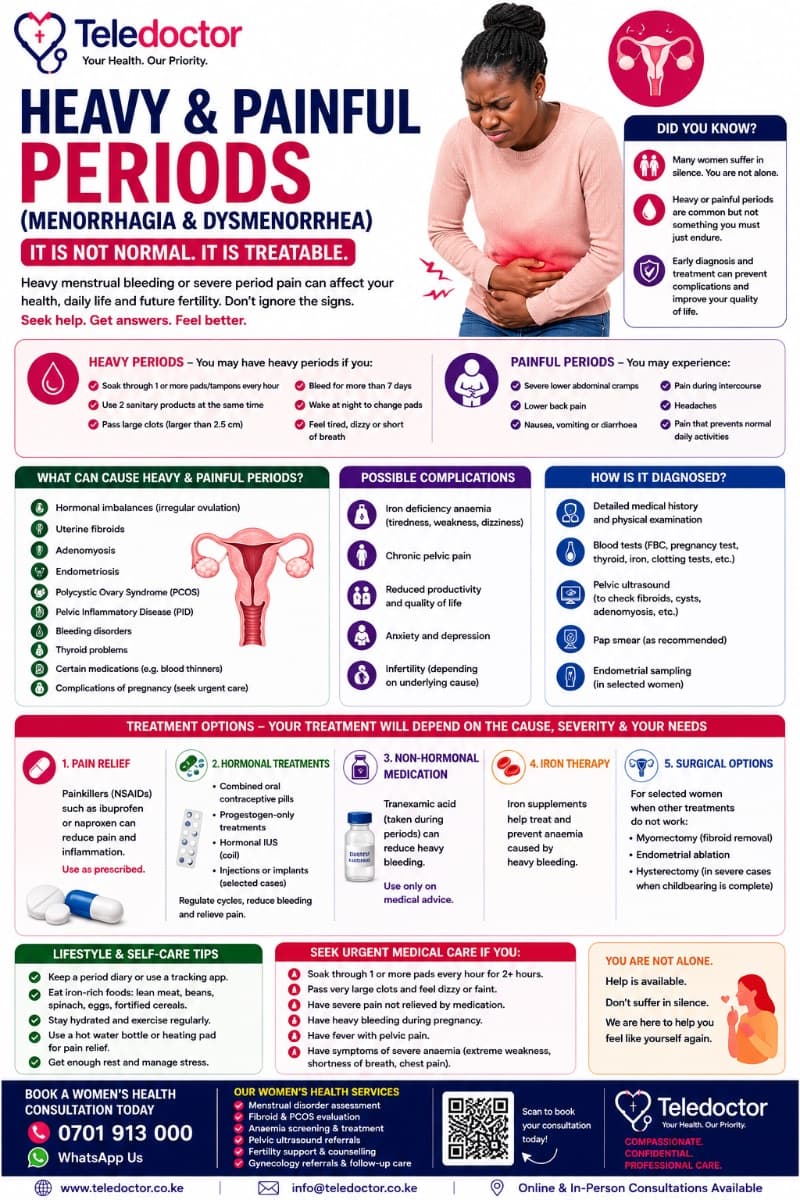
Heavy and Painful Periods: When Menstruation Affects Your Quality of Life
Many women experience some discomfort during their menstrual periods. However, if your periods are extremely heavy, very painful, or interfere with work, school, or daily activities, it is important to seek medical attention.
Heavy menstrual bleeding (menorrhagia) and painful periods (dysmenorrhea) are common gynecological conditions that can significantly affect physical health, emotional wellbeing, and quality of life. Fortunately, effective treatments are available once the underlying cause is identified.
At Teledoctor Kenya, we provide confidential assessment and treatment for menstrual disorders, helping women manage symptoms and improve their overall reproductive health.
What Is Heavy Menstrual Bleeding (Menorrhagia)?
Heavy menstrual bleeding refers to menstrual blood loss that is excessive enough to interfere with daily activities or cause health problems such as iron-deficiency anaemia.
You may have heavy periods if you:
- Soak through one or more sanitary pads or tampons every hour for several consecutive hours.
- Need to use two sanitary products at the same time.
- Wake up at night to change pads.
- Pass large blood clots (larger than about 2.5 cm).
- Bleed for more than seven days.
- Feel tired, dizzy, or short of breath due to blood loss. What Are Painful Periods (Dysmenorrhea)?
Dysmenorrhea refers to painful menstrual cramps that occur before or during menstruation.
There are two main types:
Primary Dysmenorrhea
This is the most common type and is not caused by another pelvic disease.
Pain results from prostaglandins—natural chemicals that cause the uterus to contract during menstruation.
It usually begins during adolescence and may improve with age or after pregnancy.
Secondary Dysmenorrhea
This type is caused by an underlying medical condition.
Pain often begins later in life and may worsen over time.
Common causes include:
- Endometriosis
- Adenomyosis
- Uterine fibroids
- Pelvic inflammatory disease (PID)
- Cervical stenosis
- Intrauterine devices (in some women)
What Causes Heavy Menstrual Bleeding?
Several conditions can cause heavy periods.
Hormonal Imbalances
Hormonal changes may prevent regular ovulation, leading to heavy or irregular bleeding.
Uterine Fibroids
Fibroids are non-cancerous growths in the uterus that can cause:
- Heavy bleeding
- Pelvic pressure
- Pain
- Frequent urination
Adenomyosis
This occurs when the lining of the uterus grows into the muscle wall, causing:
- Heavy periods
- Severe cramps
- Enlarged uterus
Endometriosis
Endometrial tissue grows outside the uterus, leading to:
- Severe menstrual pain
- Heavy bleeding
- Pain during intercourse
- Infertility
Bleeding Disorders
Conditions such as von Willebrand disease can contribute to excessive menstrual bleeding.
Polycystic Ovary Syndrome (PCOS)
Irregular ovulation in PCOS may lead to prolonged or heavy bleeding.
Pregnancy-Related Problems
Heavy bleeding during pregnancy is never normal and requires urgent medical assessment. Certain Medications
Some medicines, including anticoagulants (blood thinners), may increase menstrual bleeding.
Symptoms
Women may experience:
- Heavy bleeding
- Severe lower abdominal cramps
- Lower back pain
- Pelvic pain
- Blood clots
- Fatigue
- Weakness
- Dizziness
- Shortness of breath
- Nausea
- Diarrhea (sometimes associated with menstrual cramps)
- Headaches Complications
Untreated heavy periods may result in:
- Iron-deficiency anaemia
- Chronic fatigue
- Reduced productivity
- Anxiety
- Depression
- Infertility (depending on the underlying cause)
How Are Heavy and Painful Periods Diagnosed?
Your healthcare provider will begin with a detailed history and physical examination.
Questions may include:
- When did symptoms begin?
- How many pads or tampons do you use each day?
- Are your cycles regular?
- Are you sexually active?
- Do you have pain during intercourse?
- Are you planning pregnancy?
Investigations
Depending on your symptoms, your doctor may recommend:
Blood Tests
These may include:
- Full blood count (to check for anaemia)
- Pregnancy test (when appropriate)
- Thyroid function tests
- Iron studies
- Coagulation profile (if a bleeding disorder is suspected)
Pelvic Ultrasound
Ultrasound helps identify:
- Fibroids
- Ovarian cysts
- Adenomyosis
- Endometrial abnormalities
Cervical Screening
A Pap smear may be recommended according to national screening guidelines if you are eligible.
Endometrial Sampling
Women over 45 years or those with risk factors for endometrial disease may require a sample of the uterine lining for further evaluation.
Treatment
Treatment depends on the cause, severity of symptoms, age, and whether pregnancy is desired.
Pain Relief
Non-steroidal anti-inflammatory drugs (NSAIDs), such as ibuprofen or naproxen, can reduce both menstrual pain and blood loss in many women. These medicines should be used under medical guidance, particularly if you have stomach ulcers, kidney disease, or other contraindications.
Hormonal Treatments
Hormonal options may include:
- Combined oral contraceptive pills
- Progestogen-only treatments
- Hormonal intrauterine system (LNG-IUS)
- Injectable or implantable hormonal contraception in selected cases
These treatments can reduce bleeding and improve pain.
Tranexamic Acid
Tranexamic acid is a non-hormonal medication that can significantly reduce menstrual blood loss when taken during menstruation. It should only be used under medical advice.
Iron Supplements
Women with iron-deficiency anaemia may require oral or intravenous iron therapy.
Surgical Treatment
Some women may benefit from procedures such as:
- Hysteroscopic removal of polyps
- Myomectomy (fibroid removal)
- Endometrial ablation (for selected women who have completed childbearing)
- Hysterectomy (in severe cases when other treatments have failed)
Your gynecologist will discuss the most appropriate option.
Self-Care Tips
You can help manage symptoms by:
- Keeping a menstrual diary or using a period-tracking app.
- Taking medications as prescribed.
- Eating iron-rich foods such as lean meat, beans, spinach, and fortified cereals.
- Staying hydrated.
- Applying a warm heating pad to the lower abdomen.
- Exercising regularly, if comfortable.
- Getting adequate sleep.
When Should You Seek Urgent Medical Attention?
Seek immediate medical care if you:
- Soak through one or more pads every hour for two or more consecutive hours.
- Feel faint or collapse.
- Have severe abdominal pain that is not relieved by pain medication.
- Experience heavy bleeding during pregnancy.
- Develop fever with pelvic pain.
- Pass very large clots with severe dizziness.
- Have symptoms of severe anaemia such as chest pain, breathlessness at rest, or extreme weakness.
Can Teledoctor Help?
Yes.
Teledoctor Kenya offers comprehensive evaluation and treatment for menstrual disorders.
Our healthcare professionals can:
- Assess heavy or painful periods.
- Arrange blood tests and pelvic ultrasound referrals.
- Screen for anaemia.
- Prescribe appropriate medications.
- Refer to a gynecologist when necessary.
- Provide long-term follow-up care.
Living Well with Menstrual Disorders
Heavy or painful periods should never be dismissed as something you simply have to endure.
Effective treatment is available for most causes, and many women experience significant improvement after receiving the correct diagnosis and personalized care.
Seeking help early can improve your health, energy levels, fertility, and overall quality of life.
Book a Women’s Health Consultation with Teledoctor Kenya
If your periods are unusually heavy, very painful, irregular, or affecting your daily life, our healthcare professionals are here to help.
Our services include:
- Menstrual disorder assessment
- Pelvic pain evaluation
- Fibroid screening
- PCOS assessment
- Anaemia screening
- Fertility counselling
- Gynecology referrals
- Ongoing follow-up care
📞 Call or WhatsApp: 0701 913 000
🌐 Visit: www.teledoctor.co.ke
📍 Online and In-Person Consultations Available
Frequently Asked Questions
Are painful periods normal?
Mild cramping is common, but severe pain that prevents you from carrying out normal activities is not considered normal and should be assessed by a healthcare professional.
Can fibroids cause heavy periods?
Yes. Fibroids are one of the most common causes of heavy menstrual bleeding, especially in women aged 30–50 years.
When should I worry about heavy periods?
You should seek medical attention if you bleed for more than seven days, soak through pads very quickly, pass large clots, or develop symptoms of anaemia.
Can heavy periods affect fertility?
Heavy bleeding itself does not always affect fertility, but some underlying causes—such as endometriosis or fibroids—may reduce fertility if left untreated.
Can painful periods improve with treatment?
Yes. Most women experience significant relief with the appropriate combination of medication, hormonal therapy, lifestyle measures, or treatment of the underlying condition.