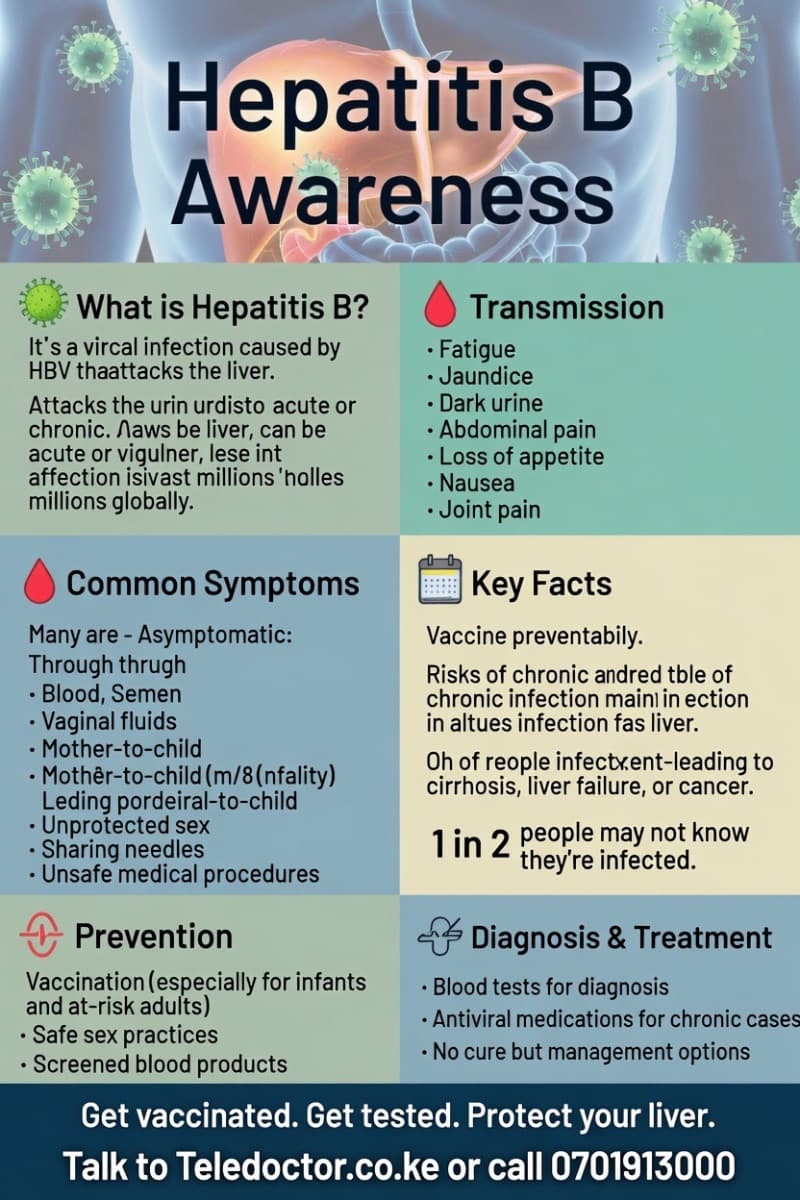
Hepatitis B: Protecting Your Liver Through Early Testing and Vaccination
Hepatitis B is a viral infection that attacks the liver. It is one of the most common infectious diseases worldwide and remains an important public health concern in Kenya and across sub-Saharan Africa.
While many people recover completely after an acute infection, others develop chronic Hepatitis B, which can lead to liver cirrhosis, liver failure, and liver cancer if left untreated.
The good news is that Hepatitis B is preventable through vaccination, can be detected with simple blood tests, and many people with chronic infection can be successfully monitored or treated.
At Teledoctor Kenya, we provide Hepatitis B screening, counselling, vaccination advice, treatment referrals, and long-term monitoring.
What Is Hepatitis B?
Hepatitis B is caused by the Hepatitis B virus (HBV), which infects liver cells and causes inflammation.
The infection may be:
Acute Hepatitis B
A short-term infection occurring within the first six months after exposure.
Many adults recover completely and develop lifelong immunity.
Chronic Hepatitis B
When the infection persists for more than six months, it is considered chronic.
Chronic infection increases the risk of:
- Liver cirrhosis
- Liver failure
- Liver cancer (hepatocellular carcinoma)
The risk of chronic infection is highest in babies infected at birth and decreases with increasing age at infection.
How Is Hepatitis B Spread?
HBV is transmitted through contact with infected blood and certain body fluids.
Common routes include:
Mother-to-Child Transmission
An infected mother can transmit the virus to her baby during childbirth if preventive measures are not taken.
Unprotected Sexual Contact
HBV can spread through vaginal, anal, or oral sex with an infected person.
Sharing Needles or Syringes
This includes:
- Injection drug use
- Unsafe medical injections
- Tattooing or body piercing with unsterile equipment
Blood Exposure
Although donated blood is routinely screened in Kenya, exposure to contaminated blood or blood products remains a risk in settings where screening is inadequate.
Household Exposure
Sharing personal items that may contain blood, such as:
- Razors
- Nail clippers
- Toothbrushes
can rarely transmit the virus.
Hepatitis B Is NOT Spread By
HBV is not spread through:
- Hugging
- Handshakes
- Sharing food or utensils
- Casual contact
- Sneezing
- Coughing
- Mosquito bites
- Breastfeeding (provided appropriate infant vaccination and prophylaxis are given where indicated)
Symptoms of Acute Hepatitis B
Many people have no symptoms.
When symptoms occur, they may include:
- Fever
- Fatigue
- Loss of appetite
- Nausea
- Vomiting
- Right upper abdominal pain
- Joint pain
- Dark urine
- Pale stools
- Yellowing of the skin and eyes (jaundice)
- Itchy skin
Symptoms usually appear 1–4 months after exposure.
Chronic Hepatitis B
Many people with chronic HBV feel completely well for years.
However, ongoing liver damage may occur silently.
Some patients eventually develop:
- Chronic fatigue
- Abdominal swelling
- Leg swelling
- Easy bruising
- Confusion due to advanced liver disease
- Jaundice
- Unexplained weight loss
Regular monitoring is essential, even when you feel healthy.
Who Should Be Tested?
Testing is recommended for:
- Pregnant women
- Sexual partners of infected individuals
- Household contacts of infected persons
- Healthcare workers
- People with multiple sexual partners
- People living with HIV
- Individuals with unexplained liver disease
- People who inject drugs
- Anyone who requests screening
How Is Hepatitis B Diagnosed?
Diagnosis is made using blood tests.
These may include:
Hepatitis B Surface Antigen (HBsAg)
A positive result indicates current infection.
Hepatitis B Surface Antibody (Anti-HBs)
This indicates immunity due to vaccination or recovery from past infection.
Hepatitis B Core Antibody (Anti-HBc)
Helps determine previous exposure to HBV.
HBV DNA (Viral Load)
Measures the amount of virus in the blood and helps guide treatment decisions.
Liver Function Tests
These assess liver inflammation and damage.
Liver Ultrasound and Fibrosis Assessment
Some patients require imaging or non-invasive assessment of liver scarring as part of long-term management.
Treatment
Acute Hepatitis B
Most adults recover without antiviral medication.
Treatment usually focuses on:
- Adequate hydration
- Good nutrition
- Rest
- Avoiding alcohol
- Monitoring liver function
Chronic Hepatitis B
Not everyone with chronic HBV requires immediate treatment.
Treatment decisions depend on:
- Viral load
- Liver enzyme levels
- Degree of liver damage
- Age
- Family history of liver cancer
- Other medical conditions
When indicated, antiviral medicines can suppress the virus and reduce the risk of complications. Monitoring
Even when medication is not required, regular follow-up is important.
This may include:
- Liver function tests
- HBV DNA testing
- Ultrasound screening for liver cancer
- Assessment for liver fibrosis
Hepatitis B Vaccination
Vaccination is the most effective way to prevent Hepatitis B.
The vaccine is:
- Safe
- Highly effective
- Recommended for infants
- Recommended for healthcare workers
- Recommended for household contacts of infected individuals
- Recommended for people at increased risk of infection
People who have completed the vaccine series generally develop long-lasting protection.
Preventing Hepatitis B
You can reduce your risk by:
- Receiving the Hepatitis B vaccine
- Practicing safer sex
- Avoiding sharing needles
- Avoiding sharing razors or toothbrushes
- Ensuring tattoos and piercings are performed with sterile equipment
- Attending antenatal care during pregnancy
- Ensuring newborns receive recommended Hepatitis B vaccination according to national immunization schedules.
Complications
Untreated chronic Hepatitis B may lead to:
- Liver cirrhosis
- Liver failure
- Portal hypertension
- Liver cancer (hepatocellular carcinoma)
- Premature death
Early diagnosis and appropriate monitoring greatly reduce these risks.
Can Teledoctor Help?
Yes.
Teledoctor Kenya offers comprehensive Hepatitis B services.
Our healthcare professionals can:
- Arrange Hepatitis B screening
- Interpret test results
- Assess liver health
- Recommend vaccination where appropriate
- Refer patients for specialist care
- Monitor chronic Hepatitis B
- Provide counselling for patients and families
Book a Hepatitis Consultation with Teledoctor Kenya
Whether you need screening, vaccination advice, interpretation of blood tests, or long-term monitoring, our healthcare professionals are ready to help.
Our services include:
- Hepatitis B testing
- Liver health assessment
- Vaccination advice
- Chronic Hepatitis B follow-up
- Specialist referrals
- Preventive health counselling
📞 Call or WhatsApp: 0701 913 000
🌐 Visit: www.teledoctor.co.ke
📍 Online and In-Person Consultations Available
Frequently Asked Questions
Can Hepatitis B be cured?
Acute Hepatitis B often resolves completely in adults. Chronic Hepatitis B usually cannot be completely eradicated with current treatments, but antiviral therapy can effectively suppress the virus and reduce the risk of liver damage and liver cancer.
Can I live a normal life with chronic Hepatitis B?
Yes. With regular medical follow-up, healthy lifestyle choices, and treatment when indicated, many people with chronic Hepatitis B live long, healthy lives.
Should my family members be tested?
Yes. Household members and sexual partners of someone with Hepatitis B should be tested and vaccinated if they are not already immune.
Can Hepatitis B cause liver cancer?
Yes. Chronic Hepatitis B is one of the leading causes of hepatocellular carcinoma. Regular surveillance is recommended for people at increased risk.
Is the Hepatitis B vaccine safe?
Yes. The vaccine has an excellent safety record and is highly effective at preventing infection.