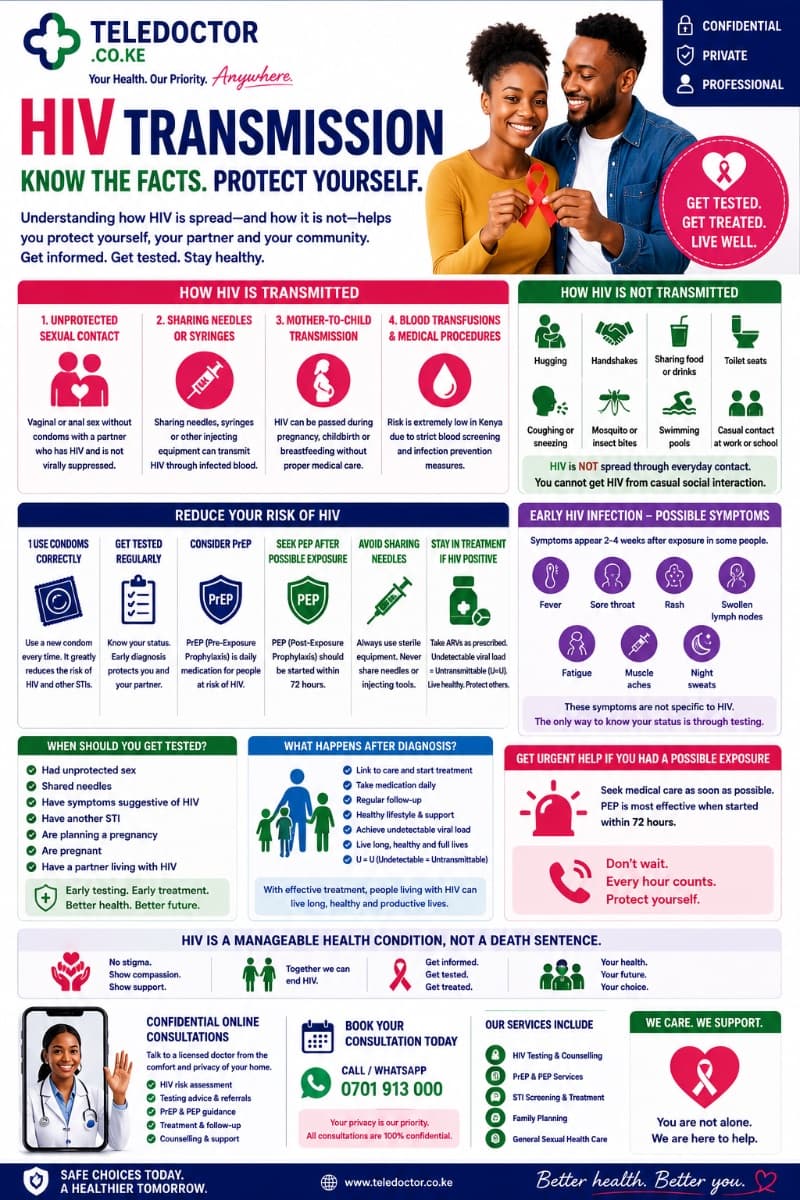
Human Immunodeficiency Virus (HIV) remains an important public health concern, but advances in prevention, testing, and treatment mean that people living with HIV can live long, healthy, and productive lives.
Unfortunately, myths and misinformation still cause fear and stigma. Understanding exactly how HIV is transmitted—and how it is not transmitted—helps people protect themselves and support those living with HIV.
⸻
What Is HIV?
HIV is a virus that attacks the body’s immune system, particularly CD4 (T-helper) cells, making it harder to fight infections.
Without treatment, HIV can gradually weaken the immune system and may progress to Acquired Immunodeficiency Syndrome (AIDS). However, with modern antiretroviral therapy (ART), many people with HIV maintain good health and never develop AIDS.
⸻
How Is HIV Transmitted?
HIV is spread when certain body fluids from a person living with HIV enter another person’s bloodstream or come into contact with vulnerable mucous membranes.
These body fluids include:
- Blood
- Semen
- Vaginal fluids
- Rectal fluids
- Breast milk
The main routes of transmission are:
- Unprotected Sexual Contact
The most common route of HIV transmission is vaginal or anal sex without appropriate protection with a partner who has HIV and is not virally suppressed.
The risk varies depending on the type of sexual activity and other factors, such as the presence of untreated STIs.
⸻
- Sharing Needles or Syringes
Sharing needles, syringes, or other injecting equipment can transmit HIV because infected blood may remain on the equipment.
Always use sterile injecting equipment.
⸻
- Mother-to-Child Transmission
Without appropriate medical care, HIV can be passed from mother to baby:
- During pregnancy
- During labour and delivery
- Through breastfeeding
However, with early diagnosis, antiretroviral treatment, and appropriate medical care, the risk of transmission can be greatly reduced.
⸻
- Blood Transfusions and Medical Procedures
In countries with rigorous blood screening, including Kenya, the risk of acquiring HIV through blood transfusion is extremely low.
Healthcare facilities follow strict infection prevention and sterilisation procedures.
⸻
How HIV Is NOT Spread
HIV cannot be transmitted through everyday social contact.
You cannot get HIV from:
- Hugging
- Handshakes
- Sharing food or drinks
- Sharing toilets
- Sharing utensils
- Coughing or sneezing
- Mosquito or insect bites
- Swimming pools
- Casual workplace or school contact
- Tears or sweat
Understanding these facts helps reduce unnecessary fear and stigma.
⸻
How Can You Reduce Your Risk of HIV?
Several effective strategies can help prevent HIV.
Use Condoms Correctly
Male and female condoms significantly reduce the risk of HIV and many other sexually transmitted infections when used consistently and correctly.
⸻
Get Tested Regularly
Knowing your HIV status is one of the most important steps in protecting yourself and your partner.
Testing is recommended if you:
- Have had unprotected sex
- Have a new sexual partner
- Have multiple sexual partners
- Think you may have been exposed to HIV
- Are pregnant
- Have another STI
⸻
Consider PrEP
Pre-Exposure Prophylaxis (PrEP) is medication taken by HIV-negative individuals at ongoing risk of HIV infection to reduce the chance of acquiring the virus.
It should only be taken under medical supervision.
⸻
Seek PEP After Possible Exposure
Post-Exposure Prophylaxis (PEP) is emergency medication that can reduce the risk of HIV after a possible exposure.
PEP should be started as soon as possible, ideally within 72 hours of the exposure.
Seek urgent medical advice immediately if you think you may need PEP.
⸻
Avoid Sharing Needles
Never share needles or other injecting equipment.
Healthcare procedures should always use sterile equipment.
⸻
What Is “Undetectable = Untransmittable (U=U)”?
People living with HIV who take antiretroviral treatment consistently and maintain an undetectable viral load do not sexually transmit HIV to their partners.
This concept is known as Undetectable = Untransmittable (U=U).
Regular medical follow-up and adherence to treatment are essential.
⸻
Symptoms of Early HIV Infection
Some people develop symptoms 2–4 weeks after acquiring HIV, while others have no symptoms.
Possible early symptoms include:
- Fever
- Sore throat
- Rash
- Swollen lymph nodes
- Fatigue
- Muscle aches
- Night sweats
These symptoms are not specific to HIV and can occur with many other illnesses. The only way to know your HIV status is through testing.
⸻
When Should You Get Tested?
Consider HIV testing if you:
- Had unprotected sex
- Shared needles
- Have symptoms suggestive of HIV
- Have another sexually transmitted infection
- Are planning a pregnancy
- Are pregnant
- Have a partner living with HIV
Your healthcare provider can advise you on the appropriate timing of testing after a potential exposure.
⸻
Living Well with HIV
With early diagnosis and effective treatment, people living with HIV can:
- Live long, healthy lives
- Work and study
- Have healthy relationships
- Have children safely with appropriate medical care
- Achieve an undetectable viral load
Early diagnosis and treatment benefit both individual health and public health.
⸻
Can HIV Concerns Be Discussed During an Online Consultation?
Yes.
A confidential online consultation can help you:
- Assess your risk
- Decide whether testing is appropriate
- Discuss HIV prevention
- Learn about PrEP and PEP
- Interpret test results
- Receive counselling and referrals
- Access ongoing medical support
Your privacy is always respected.
⸻
Reducing Stigma Saves Lives
Stigma discourages people from getting tested and seeking treatment.
HIV is a medical condition—not a moral judgement.
Supporting people living with HIV, encouraging regular testing, and promoting accurate information help build healthier communities.
⸻
Book a Confidential HIV Consultation with Teledoctor Kenya
Whether you have questions about HIV transmission, need advice after a possible exposure, want to arrange confidential testing, or would like information about PrEP or PEP, Teledoctor Kenya is here to help.
Our licensed healthcare professionals provide confidential online consultations, personalised advice, testing guidance, treatment support, and referrals when needed.
Call or WhatsApp: 0701 913 000
Book your confidential online consultation today and take control of your health with confidence.
⸻
Frequently Asked Questions
Can I get HIV from kissing?
Closed-mouth kissing does not transmit HIV. HIV is not spread through saliva. Deep kissing is not considered a route of transmission under normal circumstances, though situations involving significant blood exposure may require individual medical assessment.
Can mosquitoes spread HIV?
No. Mosquitoes and other insects do not transmit HIV.
Can HIV be cured?
There is currently no cure for HIV, but effective treatment allows people living with HIV to lead long, healthy lives.
What should I do if I think I was exposed to HIV?
Seek medical advice immediately. If appropriate, PEP should be started as soon as possible and ideally within 72 hours of the exposure.
Can I discuss HIV concerns online?
Yes. Teledoctor Kenya offers confidential online consultations for HIV risk assessment, prevention advice, testing guidance, and ongoing follow up.