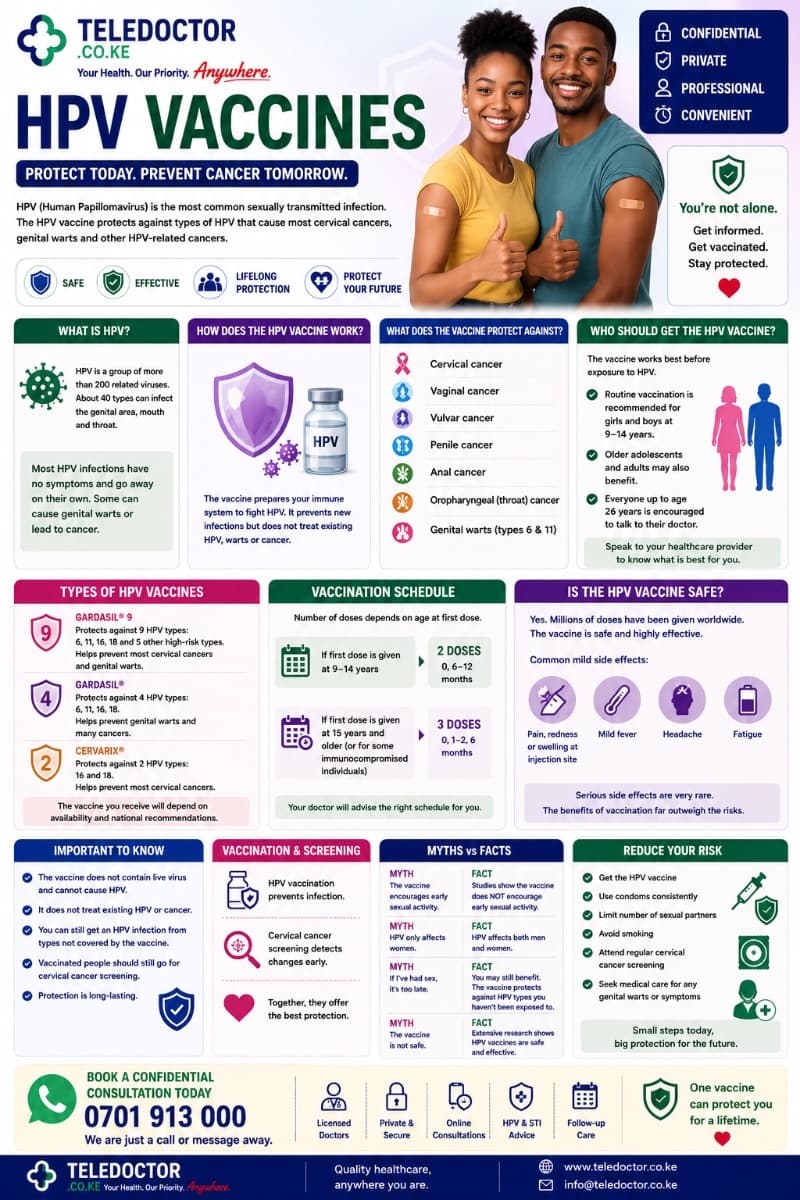
HPV Vaccines: One of the Most Effective Ways to Prevent Cancer
The Human Papillomavirus (HPV) vaccine is one of the most important advances in preventive medicine. It protects against several types of HPV that are responsible for most cases of cervical cancer, many genital warts, and a number of other HPV-related cancers.
Millions of people around the world have safely received the HPV vaccine. It has been shown to significantly reduce HPV infections, precancerous cervical changes, and genital warts.
Vaccination works best before exposure to HPV, but some older adolescents and adults may also benefit.
What Is HPV?
Human Papillomavirus (HPV) is the most common sexually transmitted viral infection worldwide.
There are more than 200 HPV types, of which about 40 infect the genital area.
Some HPV types cause:
- Genital warts
- Anal warts
Other HPV types can cause cancers affecting the:
- Cervix
- Penis
- Vulva
- Vagina
- Anus
- Mouth and throat (oropharynx)
Most HPV infections cause no symptoms and clear naturally, but persistent infection with high-risk HPV types can lead to cancer over time.
How Do HPV Vaccines Work?
HPV vaccines stimulate the body’s immune system to produce antibodies against HPV.
If a vaccinated person is later exposed to the virus, these antibodies help prevent infection before it becomes established.
The vaccines prevent new HPV infections but do not treat existing HPV infections, genital warts, or cervical cancer.
Which HPV Vaccines Are Available?
Several HPV vaccines have been used internationally, including:
Gardasil® 9
Protects against nine HPV types, including those responsible for most cervical cancers and most genital warts.
It protects against:
- HPV 6
- HPV 11
- HPV 16
- HPV 18
- Five additional high-risk HPV types
Gardasil 9 is widely used in many countries.
Gardasil®
Protects against:
- HPV 6
- HPV 11
- HPV 16
- HPV 18
It helps prevent both genital warts and many HPV-related cancers.
Cervarix®
Protects mainly against:
- HPV 16
- HPV 18
These two types cause approximately 70% of cervical cancers worldwide.
The vaccine used in your area depends on national immunization policies and availability.
Who Should Receive the HPV Vaccine?
The vaccine is most effective before a person becomes sexually active, as it prevents infection rather than treating existing disease.
Many national immunization programmes recommend routine vaccination for girls aged 9–14 years, before exposure to HPV.
Some countries also recommend vaccination for boys to reduce HPV transmission and protect against HPV-related diseases.
Older adolescents and adults may also benefit in certain situations. Discuss your individual circumstances with your healthcare provider.
Can Adults Still Benefit?
Yes, in some cases.
Adults who have not been vaccinated may still receive protection against HPV types they have not previously encountered.
The decision to vaccinate adults should be made after discussing age, vaccination history, and risk factors with a healthcare professional.
HPV Vaccination in Kenya
Kenya includes HPV vaccination in the national immunization programme for eligible children, aiming to reduce cervical cancer and other HPV-related diseases.
If you are unsure whether you or your child is eligible, speak with a healthcare provider or visit your nearest vaccination centre for current recommendations.
How Many Doses Are Needed?
The number of doses depends on factors such as:
- Age at vaccination
- Immune status
- National vaccination guidelines
Many younger adolescents require fewer doses than older individuals. Your healthcare provider will advise the appropriate schedule for you or your child.
Is the HPV Vaccine Safe?
Yes.
The HPV vaccine has been extensively studied and is considered safe.
Millions of doses have been administered worldwide.
The most common side effects are mild and temporary, including:
- Pain, redness, or swelling at the injection site
- Mild fever
- Headache
- Fatigue
- Muscle aches
Some people may feel faint after any vaccination, so it is common practice to remain under observation for a short period afterward.
Serious allergic reactions are very rare.
How Effective Is the HPV Vaccine?
The HPV vaccine is highly effective in preventing infection with the HPV types it targets.
Studies have shown that vaccination substantially reduces:
- HPV infections
- Genital warts
- Precancerous cervical lesions
- Cervical cancer risk
- Other HPV-related cancers
The greatest protection is achieved when vaccination occurs before HPV exposure.
Does Vaccination Replace Cervical Cancer Screening?
No.
Women should continue cervical cancer screening according to national guidelines, even if they have been vaccinated.
This is because:
- Vaccines do not protect against every HPV type.
- Some women may have been exposed to HPV before vaccination.
Vaccination and screening work together to reduce the risk of cervical cancer.
Can the Vaccine Cause HPV Infection?
No.
The HPV vaccine does not contain live virus and cannot cause HPV infection or cancer.
It simply teaches the immune system how to recognize and fight the virus.
Who Should Delay Vaccination?
Speak with your healthcare provider if you:
- Have had a severe allergic reaction to a previous HPV vaccine dose or one of its components
- Are currently unwell with a moderate or severe illness (vaccination may be postponed until recovery)
- Are pregnant (routine HPV vaccination is generally deferred until after pregnancy, unless advised otherwise)
How Can You Reduce Your Risk of HPV?
Vaccination is only one part of prevention.
Additional measures include:
- Using condoms consistently (although they do not provide complete protection)
- Limiting the number of sexual partners
- Attending cervical cancer screening
- Avoiding smoking
- Seeking early medical evaluation for genital warts or abnormal symptoms
Can Teledoctor Help?
Yes.
Teledoctor Kenya provides confidential consultations for HPV vaccination and sexual health.
Our healthcare professionals can:
- Explain HPV vaccination
- Discuss vaccine eligibility
- Provide cervical cancer screening advice
- Assess genital warts
- Interpret HPV test results
- Refer you to vaccination centres where appropriate
- Arrange follow-up care
Protect Your Future
HPV vaccination is one of the most effective ways to reduce the risk of cervical cancer, genital warts, and several other HPV-related cancers.
Combined with regular screening and healthy lifestyle choices, vaccination offers long-term protection for you and your family.
⸻
Book a Preventive Health Consultation with Teledoctor Kenya
If you have questions about HPV vaccination, cervical cancer prevention, or sexual health, our experienced healthcare professionals are ready to help.
We provide:
- Confidential online consultations
- HPV vaccine counselling
- Cervical cancer screening advice
- Sexual health education
- Specialist referrals when needed
- Follow-up support
📞 Call or WhatsApp: 0701 913 000
🌐 Book your online consultation today at www.teledoctor.co.ke
Frequently Asked Questions
Can boys receive the HPV vaccine?
Yes. In many countries, boys are also offered HPV vaccination to protect against genital warts and HPV-related cancers and to reduce transmission.
If I’ve already had HPV, should I still be vaccinated?
Possibly. The vaccine may still protect against HPV types you have not previously been exposed to. Discuss your individual situation with your healthcare provider.
Is the HPV vaccine safe?
Yes. Extensive research has shown that HPV vaccines have an excellent safety profile, with most side effects being mild and short-lived.
Does the HPV vaccine encourage early sexual activity?
No. Research has found no evidence that HPV vaccination changes sexual behaviour. The vaccine is recommended at a young age because it works best before exposure to the virus.
Do vaccinated women still need cervical cancer screening?
Yes. Vaccination does not eliminate the need for routine cervical cancer screening because it does not protect against every cancer-causing HPV type.