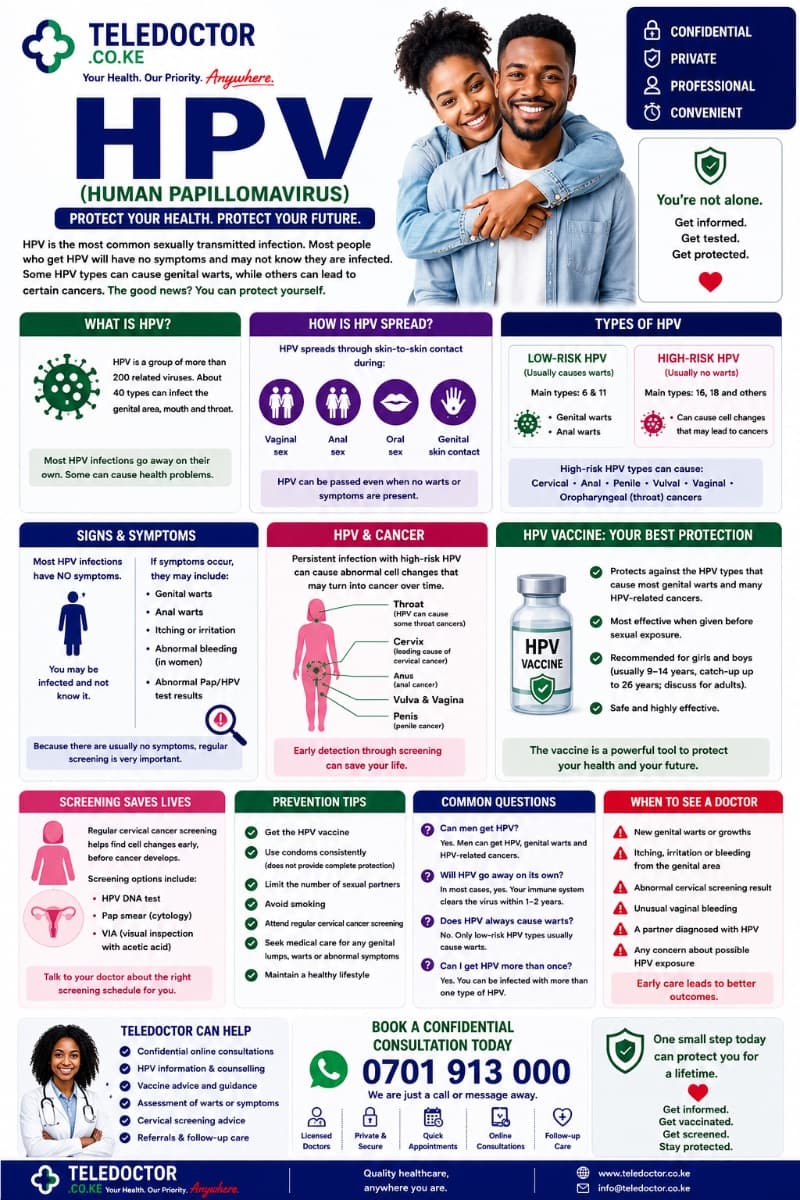
Human Papillomavirus (HPV): What Everyone Should Know
Human Papillomavirus (HPV) is the most common sexually transmitted infection (STI) worldwide. Most sexually active people will be infected with HPV at some point in their lives, often without knowing it.
While many HPV infections resolve naturally without causing problems, some strains can cause genital warts, while others increase the risk of cervical cancer and several other cancers.
The good news is that HPV vaccination, regular screening, and safer sexual practices can significantly reduce the risk of HPV-related diseases.
What Is HPV?
Human Papillomavirus (HPV) is a group of more than 200 related viruses.
Approximately 40 HPV types infect the genital area, mouth, and throat.
HPV types are classified into:
Low-Risk HPV
These types usually cause:
- Genital warts
- Anal warts
The most common low-risk types are HPV 6 and HPV 11.
High-Risk HPV
These types usually do not cause visible warts but can lead to abnormal cell changes that may develop into cancer if persistent.
High-risk HPV types include:
- HPV 16
- HPV 18
- Several other high-risk strains
These are responsible for most HPV-related cancers.
How Is HPV Spread?
HPV spreads through:
- Vaginal sex
- Anal sex
- Oral sex
- Skin-to-skin genital contact
- Intimate sexual contact, even when no symptoms are present
HPV can be transmitted by someone who has no visible signs of infection.
Who Is at Risk?
Anyone who is sexually active can become infected.
Risk factors include:
- Multiple sexual partners
- Early sexual debut
- Unprotected sex
- A weakened immune system
- Smoking
- Previous sexually transmitted infections
Having HPV is common and should not be viewed as a sign of poor hygiene or promiscuity.
What Are the Symptoms?
Most HPV infections cause no symptoms.
When symptoms do occur, they depend on the HPV type.
Low-risk HPV may cause:
- Genital warts
- Anal warts
High-risk HPV usually causes:
- No symptoms
- Abnormal cervical screening results
- Precancerous cell changes
This is why routine screening is important.
HPV and Genital Warts
Genital warts are caused mainly by HPV types 6 and 11.
They usually appear as:
- Small flesh-coloured bumps
- Flat or raised growths
- Cauliflower-like clusters
- Painless lesions
They may occur on:
Men
- Penis
- Scrotum
- Groin
- Around the anus
Women
- Vulva
- Vagina
- Cervix
- Around the anus
Genital warts are treatable, although they may recur.
HPV and Cancer
Persistent infection with certain high-risk HPV types increases the risk of:
- Cervical cancer
- Penile cancer
- Anal cancer
- Vulval cancer
- Vaginal cancer
- Oropharyngeal (throat) cancer
It is important to note that most HPV infections do not progress to cancer, especially when detected early through screening.
Cervical Cancer Screening
Women should attend routine cervical cancer screening according to Kenyan healthcare recommendations and their healthcare provider’s advice.
Screening helps detect abnormal cervical cells before cancer develops.
Depending on age and clinical circumstances, screening may involve:
- HPV testing
- Cervical cytology (Pap smear)
- Visual inspection with acetic acid (VIA), where appropriate
Regular screening saves lives.
HPV Vaccination
The HPV vaccine is one of the most effective methods of preventing HPV infection and its complications.
The vaccine protects against HPV types responsible for:
- Most cervical cancers
- Many anal cancers
- Many penile cancers
- Many throat cancers
- Most genital warts (depending on the vaccine used)
Vaccination works best before exposure to HPV, but some older adolescents and adults may also benefit after discussion with their healthcare provider.
Is the HPV Vaccine Safe?
Yes.
The HPV vaccine has been extensively studied and is considered safe and effective.
Common side effects are usually mild and may include:
- Pain at the injection site
- Mild fever
- Fatigue
- Headache
Serious side effects are very uncommon.
Can HPV Be Treated?
There is no treatment that removes HPV itself, but the conditions caused by HPV can often be managed effectively.
Treatment options include:
- Removal of genital warts
- Monitoring abnormal cervical cells
- Treatment of precancerous lesions
- Cancer treatment when necessary
Many HPV infections clear naturally as the immune system suppresses the virus.
How Can You Reduce Your Risk?
You can lower your risk by:
- Receiving the HPV vaccine if eligible
- Using condoms consistently (although they do not provide complete protection)
- Limiting the number of sexual partners
- Avoiding smoking
- Attending regular cervical cancer screening
- Seeking prompt medical assessment for any genital growths or abnormal symptoms.
HPV During Pregnancy
HPV usually does not affect pregnancy.
However:
- Existing genital warts may enlarge during pregnancy.
- Very rarely, HPV may be transmitted to the baby during delivery.
Pregnant women should continue routine antenatal care and discuss any genital lesions with their healthcare provider.
When Should You See a Doctor?
Arrange a medical consultation if you have:
- Genital warts
- A new genital growth
- Abnormal vaginal bleeding
- An abnormal cervical screening result
- A partner diagnosed with HPV
- Concerns about HPV vaccination
- Questions about cervical cancer screening
Early assessment helps prevent complications.
Can Teledoctor Help?
Yes.
Teledoctor Kenya offers confidential consultations for HPV-related concerns.
Our licensed healthcare professionals can:
- Assess symptoms
- Advise on HPV vaccination
- Interpret cervical screening results
- Recommend appropriate investigations
- Refer for cervical cancer screening when needed
- Manage genital warts
- Arrange specialist referrals when appropriate
- Provide follow-up care
Some patients may require an in-person examination or procedures depending on their condition.
Protect Yourself Through Vaccination and Screening
HPV infection is common, but its most serious complications are often preventable.
Vaccination, routine cervical cancer screening, safer sexual practices, and early medical care are key to reducing the burden of HPV-related disease.
Book a Confidential Consultation with Teledoctor Kenya
If you have questions about HPV, genital warts, vaccination, or cervical cancer screening, our experienced healthcare professionals are here to help.
We provide:
- Confidential online consultations
- HPV education and counselling
- Genital wart assessment
- Vaccination guidance
- Cervical screening advice
- Specialist referrals when needed
- Ongoing follow-up care
📞 Call or WhatsApp: 0701 913 000
🌐 Book your online consultation at www.teledoctor.co.ke
Frequently Asked Questions
Can men get HPV?
Yes. HPV affects both men and women. Men can develop genital warts and HPV-related cancers, although most infections cause no symptoms.
Does HPV always cause cancer?
No. Most HPV infections resolve naturally. Persistent infection with certain high-risk HPV types may increase the risk of cancer over time, which is why vaccination and screening are important.
If I have HPV, will I definitely get genital warts?
No. Only certain low-risk HPV types commonly cause genital warts. High-risk HPV types usually do not produce visible warts.
Can condoms completely prevent HPV?
No. Condoms reduce the risk of transmission but do not eliminate it because HPV can infect skin not covered by a condom.
Can I still receive the HPV vaccine if I am an adult?
Possibly. Some adults may benefit from vaccination depending on their age, vaccination history, and risk factors. Discuss this with your healthcare provider.