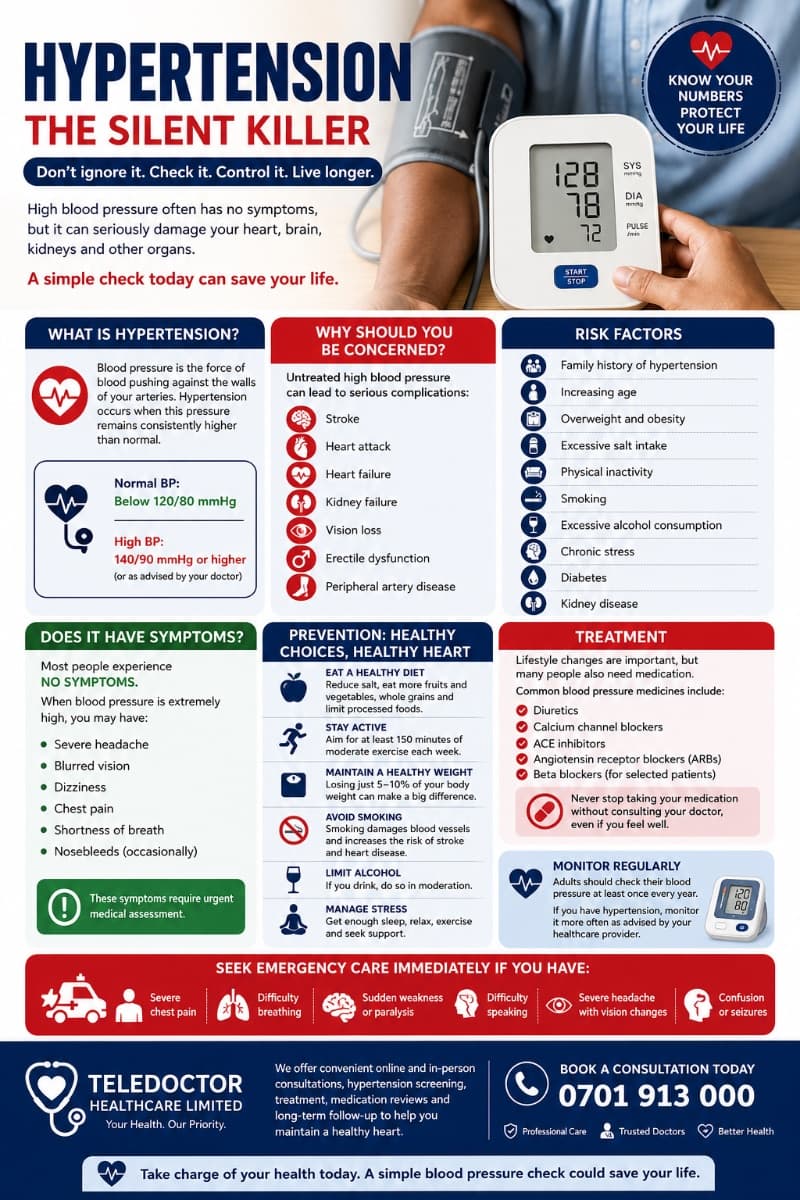
Hypertension: The Silent Killer You Should Never Ignore
High blood pressure, also known as hypertension, is one of the most common health conditions affecting adults in Kenya and around the world. It is often called the “silent killer” because it usually causes no symptoms until serious complications develop. Many people feel perfectly healthy while their blood pressure is dangerously high.
What is Hypertension?
Blood pressure is the force of blood pushing against the walls of your arteries. Hypertension occurs when this pressure remains consistently higher than normal, making the heart work harder and damaging blood vessels over time.
A normal blood pressure is generally below 120/80 mmHg. Persistent readings of 140/90 mmHg or higher usually require medical evaluation and treatment. For people with diabetes, kidney disease, or other high-risk conditions, lower blood pressure targets may be recommended by a healthcare provider.
Why Should You Be Concerned?
If left untreated, hypertension can quietly damage vital organs and significantly increase the risk of:
- Stroke
- Heart attack
- Heart failure
- Kidney failure
- Vision loss
- Erectile dysfunction
- Peripheral artery disease
Many of these complications can be prevented through early diagnosis and proper treatment.
What Causes High Blood Pressure?
In most people, there is no single identifiable cause. However, several factors increase the risk, including:
- Family history of hypertension
- Increasing age
- Overweight and obesity
- Excessive salt intake
- Physical inactivity
- Smoking
- Excessive alcohol consumption
- Chronic stress
- Diabetes
- Kidney disease
Does Hypertension Have Symptoms?
Most people experience no symptoms at all.
When blood pressure becomes extremely high, some individuals may develop:
- Severe headaches
- Blurred vision
- Dizziness
- Chest pain
- Shortness of breath
- Nosebleeds (occasionally)
These symptoms require urgent medical assessment, especially if accompanied by weakness, confusion, or difficulty speaking.
How is Hypertension Diagnosed?
The only reliable way to know your blood pressure is to have it measured using a validated blood pressure machine.
Doctors may recommend:
- Repeated blood pressure measurements on different days
- Home blood pressure monitoring
- 24-hour ambulatory blood pressure monitoring in selected patients
Additional tests may include:
- Blood sugar testing
- Kidney function tests
- Cholesterol profile
- Urinalysis
- Electrocardiogram (ECG)
- Eye examination
These investigations help identify organ damage and guide treatment.
Can Hypertension Be Prevented?
Yes. Healthy lifestyle choices greatly reduce your risk.
Eat a Heart-Healthy Diet
- Reduce salt intake.
- Eat plenty of fruits and vegetables.
- Choose whole grains.
- Limit processed foods.
- Reduce saturated fats and sugary drinks.
Stay Physically Active
Aim for at least 150 minutes of moderate exercise each week, such as brisk walking, cycling, swimming, or jogging.
Maintain a Healthy Weight
Even losing 5–10% of your body weight can significantly lower blood pressure.
Avoid Smoking
Smoking damages blood vessels and dramatically increases the risk of heart disease and stroke.
Limit Alcohol
If you drink alcohol, do so in moderation.
Manage Stress
Good sleep, relaxation techniques, regular exercise, and social support all contribute to healthier blood pressure.
Treatment
Lifestyle changes are the foundation of treatment, but many patients also require medication.
Common blood pressure medicines include:
- Diuretics
- Calcium channel blockers
- ACE inhibitors
- Angiotensin receptor blockers (ARBs)
- Beta blockers (for selected patients)
Treatment is individualized. Never stop taking your medication without consulting your healthcare provider, even if you feel well.
Monitor Your Blood Pressure Regularly
Adults should have their blood pressure checked at least once every year. People with hypertension should monitor it more frequently as advised by their healthcare provider.
Home blood pressure monitors are increasingly affordable and help patients track their progress.
When Should You Seek Emergency Care?
Go to the nearest hospital immediately if you have high blood pressure together with:
- Severe chest pain
- Difficulty breathing
- Sudden weakness or paralysis
- Difficulty speaking
- Loss of consciousness
- Severe headache with vision changes
- Confusion or seizures
These may indicate a life-threatening hypertensive emergency.
The Bottom Line
Hypertension is common, but it is also one of the most preventable and treatable chronic diseases. Early detection, healthy living, regular monitoring, and taking prescribed medication can dramatically reduce the risk of stroke, heart attack, kidney failure, and premature death.
Take charge of your health today. A simple blood pressure check could save your life.
Need a blood pressure check or consultation?
Our experienced healthcare professionals at Teledoctor Healthcare Limited provide convenient online and in-person consultations, hypertension screening, treatment, medication reviews, and long-term follow-up to help you maintain a healthy heart.
Call us today: 0701 913 000