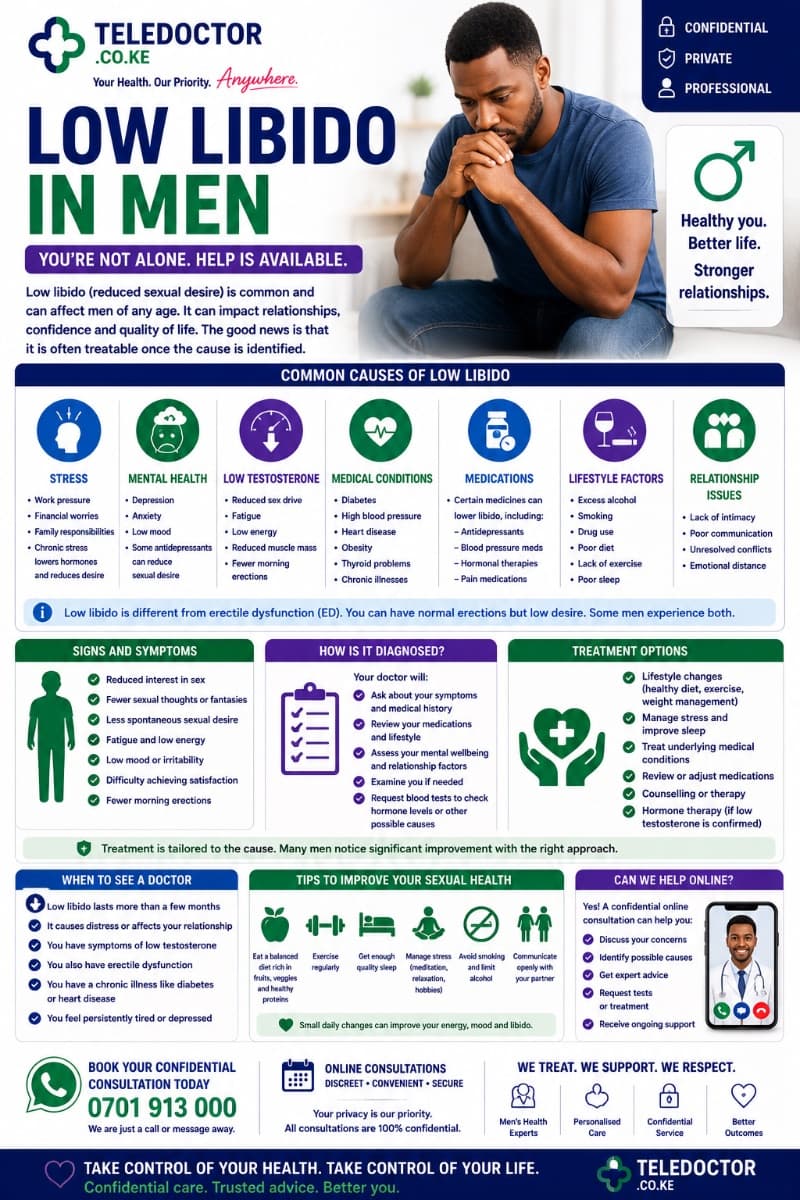
Every man’s sex drive is different, and it is normal for sexual desire to fluctuate over time. Stress, work pressures, relationship changes, ageing, and health conditions can all affect libido.
However, if a reduced interest in sex persists for several months, causes personal distress, or affects your relationship, it may be time to seek medical advice. Low libido is common and often treatable once the underlying cause is identified.
⸻
What Is Low Libido?
Libido refers to a person’s interest in sexual activity.
Low libido means a noticeable decrease in sexual desire that is different from what is normal for you and persists over time.
It is important to distinguish low libido from erectile dysfunction (ED). A man with low libido has reduced desire for sexual activity, whereas a man with ED may have a normal desire but difficulty achieving or maintaining an erection. Some men experience both conditions.
⸻
Common Causes of Low Libido
Low libido is often caused by a combination of physical, psychological, and lifestyle factors.
- Stress
Ongoing stress from work, finances, family responsibilities, or other life challenges can reduce sexual desire by affecting hormone levels, mood, and energy.
⸻
- Depression and Anxiety
Mental health conditions commonly affect sexual interest. Low mood, anxiety, and emotional exhaustion can all reduce libido.
Some medications used to treat depression may also affect sexual desire. If this happens, speak with your healthcare provider rather than stopping medication on your own.
⸻
- Low Testosterone
Testosterone is the primary male sex hormone.
Low testosterone levels may lead to:
- Reduced sexual desire
- Fatigue
- Reduced muscle mass
- Mood changes
- Difficulty concentrating
- Fewer spontaneous morning erections
Not all men with low libido have low testosterone, so testing should be guided by a healthcare professional.
⸻
- Chronic Medical Conditions
Certain health conditions can affect libido, including:
- Diabetes
- High blood pressure
- Heart disease
- Chronic kidney disease
- Obesity
- Thyroid disorders
Managing these conditions effectively can improve overall health and sexual wellbeing.
⸻
- Certain Medications
Some medicines may reduce sexual desire, including certain:
- Antidepressants
- Blood pressure medications
- Hormonal therapies
- Opioid pain medications
Never stop prescribed medication without consulting your healthcare provider.
⸻
- Alcohol, Smoking, and Recreational Drugs
Excessive alcohol use, smoking, and recreational drug use can negatively affect sexual health by impacting hormone levels, circulation, and overall wellbeing.
Reducing or avoiding these substances may improve libido.
⸻
- Relationship Difficulties
Communication problems, unresolved conflict, lack of intimacy, or emotional distance can contribute to reduced sexual desire.
Addressing relationship concerns together can be an important part of treatment.
⸻
Symptoms That May Accompany Low Libido
Depending on the underlying cause, men may also notice:
- Less interest in sexual activity
- Reduced sexual thoughts or fantasies
- Fatigue
- Low mood
- Reduced confidence
- Difficulty achieving or maintaining erections
- Reduced frequency of morning erections
- Decreased satisfaction with sexual activity
⸻
How Is Low Libido Diagnosed?
Your healthcare provider will ask about:
- Your symptoms and when they started
- Your medical history
- Current medications
- Mental wellbeing
- Lifestyle habits
- Relationship concerns
- Sleep quality
A physical examination and, if appropriate, blood tests may be recommended to assess hormone levels or identify other medical conditions.
⸻
Treatment Options
Treatment depends on the underlying cause.
Possible approaches include:
Lifestyle Changes
Healthy habits can improve sexual health:
- Exercise regularly
- Maintain a healthy weight
- Eat a balanced diet
- Get enough sleep
- Limit alcohol
- Stop smoking
- Manage stress
⸻
Treating Underlying Medical Conditions
Managing diabetes, hypertension, thyroid disease, or other health conditions may improve libido.
⸻
Mental Health Support
Counselling or therapy may help if stress, anxiety, depression, or relationship difficulties are contributing factors.
⸻
Hormone Treatment
If testing confirms significantly low testosterone and symptoms are consistent with testosterone deficiency, your healthcare provider may discuss whether testosterone replacement therapy is appropriate.
This treatment is not suitable for everyone and should only be used under medical supervision.
⸻
Medication Review
If a prescribed medicine may be contributing to low libido, your healthcare provider may consider suitable alternatives where appropriate.
⸻
When Should You See a Doctor?
Arrange a medical consultation if:
- Low libido persists for several months
- It causes distress or relationship difficulties
- You have symptoms of low testosterone
- You experience erectile dysfunction
- You have diabetes or heart disease and notice changes in sexual function
- You feel persistently tired or depressed
Early assessment can identify treatable causes and improve quality of life.
⸻
Can Low Libido Be Discussed During an Online Consultation?
Yes.
A confidential online consultation allows you to discuss sensitive concerns privately with a licensed healthcare professional.
During the consultation, your clinician can:
- Assess your symptoms
- Review your medical history and medications
- Recommend appropriate investigations
- Discuss possible causes
- Advise on lifestyle changes
- Arrange referrals or treatment when needed
Some evaluations, such as blood tests or physical examinations, may require an in-person visit.
⸻
Looking After Your Sexual Health
Low libido is a common medical concern and is not something to feel embarrassed about. Many men experience changes in sexual desire at different stages of life, and effective treatments are often available.
Seeking professional advice early can help identify underlying health conditions and improve both physical and emotional wellbeing.
⸻
Book a Confidential Men’s Health Consultation with Teledoctor Kenya
If you are experiencing reduced sexual desire, concerns about testosterone, erectile dysfunction, or other men’s health issues, Teledoctor Kenya is here to help.
Our licensed healthcare professionals provide confidential online consultations, personalised advice, appropriate investigations, and treatment recommendations tailored to your needs.
Call or WhatsApp: 0701 913 000
Book your confidential men’s health consultation today and take the first step toward improving your wellbeing.
⸻
Frequently Asked Questions
Is low libido the same as erectile dysfunction?
No. Low libido refers to reduced sexual desire, while erectile dysfunction is difficulty achieving or maintaining an erection. Some men experience one condition, while others experience both.
Can stress reduce sex drive?
Yes. Chronic stress can affect hormones, sleep, mood, and energy levels, all of which may reduce libido.
Can low testosterone cause low libido?
Yes. Low testosterone is one possible cause of reduced sexual desire, but not all men with low libido have low testosterone.
Can lifestyle changes improve libido?
Often, yes. Regular exercise, healthy eating, adequate sleep, stress management, limiting alcohol, and stopping smoking can all support sexual health.
Can I discuss low libido online?
Yes. Teledoctor Kenya offers confidential online consultations for men’s sexual health, including low libido, erectile dysfunction, hormone concerns, and overall wellness.