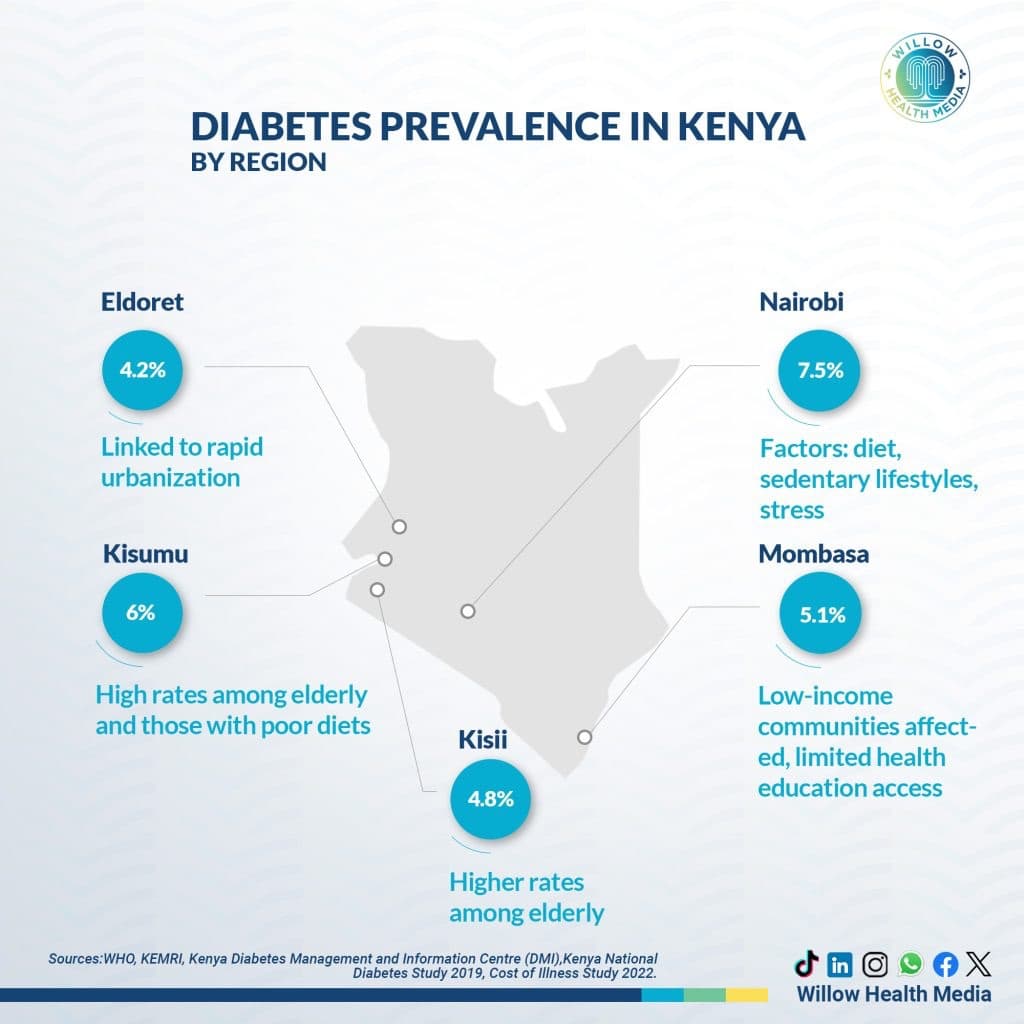
Diabetes is one of the fastest-growing chronic diseases in Kenya, affecting people of all ages. Whether you have recently been diagnosed or have lived with diabetes for years, effective daily management is the key to preventing complications and maintaining a healthy, active life.
The good news is that many aspects of diabetes care can be successfully managed from home with the support of your healthcare team. Modern telemedicine services also make it easier than ever to consult a doctor, review blood sugar readings, adjust medications when appropriate, and receive ongoing guidance without frequent hospital visits.
What Is Diabetes?
Diabetes mellitus is a condition in which the body cannot properly regulate blood glucose (blood sugar).
The two most common types are:
Type 1 Diabetes
- Usually develops in childhood or early adulthood.
- The body produces little or no insulin.
- Lifelong insulin treatment is required.
Type 2 Diabetes
- The most common form of diabetes in Kenya.
- The body becomes resistant to insulin or does not produce enough of it.
- It is often associated with excess weight, family history, physical inactivity, and increasing age, although it can affect younger adults as well.
Gestational diabetes occurs during pregnancy and requires close monitoring to protect both mother and baby.
⸻
Why Good Diabetes Control Matters
Poorly controlled diabetes can damage blood vessels and nerves over time, increasing the risk of:
- Heart disease
- Stroke
- Kidney disease
- Vision loss
- Nerve damage (neuropathy)
- Foot ulcers and infections
- Poor wound healing
Maintaining healthy blood sugar levels significantly reduces the risk of these complications and improves quality of life.
⸻
Monitor Your Blood Sugar Regularly
Home blood glucose monitoring helps you understand how food, exercise, illness, and medication affect your blood sugar.
Your doctor will advise how often you should check your glucose levels based on your treatment plan.
Keep a simple record of:
- Blood glucose readings
- Medication doses
- Meals
- Physical activity
- Episodes of low blood sugar
Sharing this information during follow-up consultations helps your healthcare provider make informed decisions about your care.
⸻
Eat a Balanced Diet
Healthy eating is one of the most effective ways to manage diabetes.
You do not need expensive “diabetic foods.” Instead, focus on balanced meals using locally available foods.
Aim to include:
- Plenty of vegetables such as sukuma wiki, spinach, cabbage, and traditional leafy greens
- Whole grains like brown rice, millet, sorghum, and whole maize
- Lean proteins such as beans, lentils, fish, eggs, and skinless chicken
- Healthy fats from avocados, nuts, and seeds
- Fresh fruits in appropriate portions
Try to limit:
- Sugary drinks
- Cakes and pastries
- Sweets and confectionery
- Highly processed snacks
- Excessive alcohol
Eating regular meals and controlling portion sizes can also help prevent large fluctuations in blood sugar.
⸻
Stay Physically Active
Exercise improves the body’s ability to use insulin and helps lower blood glucose levels.
Most adults should aim for at least 150 minutes of moderate-intensity physical activity each week, such as:
- Brisk walking
- Cycling
- Swimming
- Dancing
- Gardening
If you have diabetes-related complications such as severe neuropathy or heart disease, consult your doctor before starting a new exercise programme.
⸻
Take Your Medication as Prescribed
Whether you take tablets, insulin, or other diabetes medications, consistency is essential.
Do not stop or adjust your medication without discussing it with your healthcare provider.
If you experience side effects or have difficulty obtaining your medication, speak with your doctor promptly. Often, adjustments can be made to improve your treatment plan.
⸻
Recognise Low Blood Sugar
Low blood sugar (hypoglycaemia) can occur in people taking insulin or certain diabetes medications.
Symptoms include:
- Sweating
- Shaking
- Hunger
- Dizziness
- Confusion
- Blurred vision
- Palpitations
If possible, check your blood sugar. If it is low, consume a fast-acting source of glucose such as glucose tablets or a sugary drink, then follow with a snack or meal as advised by your healthcare provider.
Seek urgent medical attention if symptoms are severe or do not improve.
⸻
Look After Your Feet
Diabetes can reduce sensation and slow wound healing.
Check your feet every day for:
- Cuts
- Blisters
- Swelling
- Redness
- Cracks
- Nail problems
Wear well-fitting shoes, keep your feet clean and dry, and report any wounds or infections to your doctor promptly.
⸻
Keep Up With Regular Health Checks
Even when you feel well, routine reviews are important.
Your doctor may recommend regular monitoring of:
- HbA1c (long-term blood sugar control)
- Blood pressure
- Kidney function
- Cholesterol levels
- Eye health
- Foot health
These assessments help detect complications early, when they are often easier to treat.
⸻
How Telemedicine Supports Diabetes Care
Managing diabetes does not always require travelling to a clinic.
Online consultations can help you:
- Review blood sugar records
- Discuss medication adjustments
- Interpret laboratory results
- Receive dietary and lifestyle advice
- Manage new symptoms
- Plan follow-up care
Telemedicine is especially valuable for people living far from specialist services or those with busy schedules.
⸻
When Should You Seek Urgent Medical Care?
Although many aspects of diabetes can be managed at home, seek immediate medical attention if you experience:
- Severe chest pain
- Difficulty breathing
- Loss of consciousness
- Persistent vomiting
- Severe dehydration
- Confusion
- Very high blood sugar with drowsiness
- Signs of diabetic ketoacidosis, such as deep rapid breathing, abdominal pain, or a fruity-smelling breath
- A foot wound that is spreading or showing signs of severe infection
Do not delay emergency care if you develop these symptoms.
⸻
Living Well With Diabetes
A diagnosis of diabetes does not prevent you from living a healthy and fulfilling life.
With regular monitoring, healthy lifestyle choices, appropriate medication, and ongoing medical support, most people with diabetes can reduce their risk of complications and maintain excellent long-term health.
Small, consistent daily habits often make the greatest difference.
⸻
Book an Online Diabetes Consultation Today
If you have diabetes, high blood sugar, or concerns about your treatment, Teledoctor Kenya can help.
Our licensed healthcare professionals provide confidential online consultations, medication reviews, interpretation of laboratory results, and personalised advice to support your diabetes management.
Whether you are newly diagnosed or have been living with diabetes for years, expert care is only a consultation away.
Book your online consultation today and take the next step towards better diabetes control.
⸻
Frequently Asked Questions
Can diabetes be managed entirely at home?
Many aspects of diabetes care, including medication reviews, blood sugar monitoring, nutrition counselling, and routine follow-up, can be managed from home with regular input from a healthcare professional. However, some complications require in-person assessment.
Can I consult a doctor online for diabetes?
Yes. Online consultations are appropriate for many routine diabetes reviews, medication discussions, and interpretation of blood sugar records and laboratory results.
What foods should people with diabetes avoid?
Limit foods and drinks high in added sugars, refined carbohydrates, and unhealthy fats. A balanced diet rich in vegetables, whole grains, lean protein, and healthy fats is recommended.
How often should I check my blood sugar?
The ideal frequency depends on your type of diabetes, medications, and overall health. Your healthcare provider will advise a monitoring schedule that is right for you.