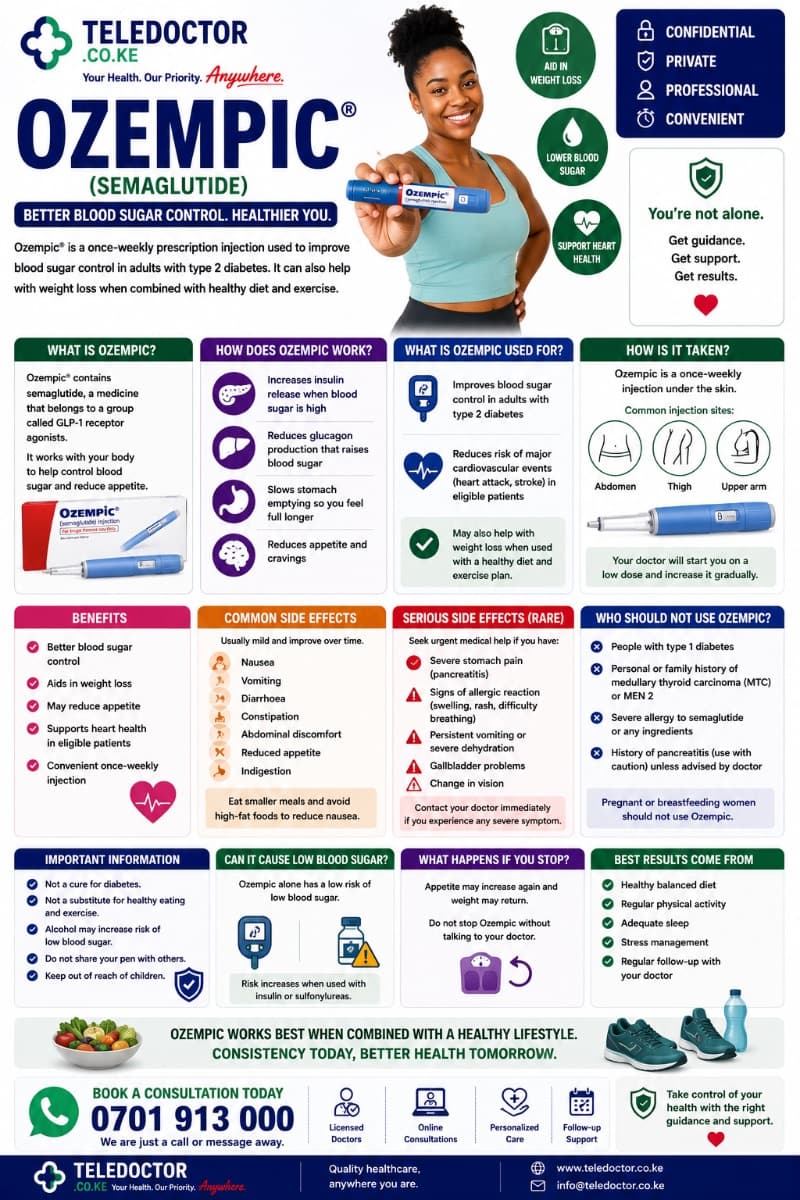
Ozempic® (Semaglutide): More Than Just a Weight Loss Injection
Ozempic® (generic name semaglutide) has become one of the most talked-about medications in recent years. Although many people know it as a weight loss injection, Ozempic was originally developed to help adults with type 2 diabetes improve blood sugar control.
Many people taking Ozempic also experience significant weight loss, making it an important treatment option for selected individuals living with obesity or overweight with weight-related health conditions.
However, Ozempic is not suitable for everyone and should only be used under the guidance of a qualified healthcare professional.
What Is Ozempic?
Ozempic is a once-weekly injectable prescription medication containing semaglutide, a medicine that belongs to a group called GLP-1 receptor agonists.
It mimics a natural hormone (GLP-1) that helps regulate:
- Blood sugar
- Appetite
- Digestion
How Does Ozempic Work?
Ozempic helps the body by:
- Increasing insulin release
It stimulates insulin production when blood sugar levels are elevated.
- Reducing glucagon production
Glucagon raises blood sugar. Ozempic helps reduce unnecessary glucagon release.
- Slowing stomach emptying
Food remains in the stomach longer, helping you feel full sooner and for longer.
- Reducing appetite
Many people naturally eat less because they feel satisfied with smaller meals.
What Is Ozempic Used For?
Ozempic is approved in many countries for:
- Improving blood sugar control in adults with type 2 diabetes
- Reducing the risk of major cardiovascular events (such as heart attack and stroke) in eligible people with type 2 diabetes and established cardiovascular disease
Because semaglutide can also promote significant weight loss, it may be prescribed in certain circumstances for weight management. In some countries, a higher-dose formulation of semaglutide is marketed specifically for chronic weight management under a different brand name.
How Much Weight Can Someone Lose?
Weight loss varies from person to person.
When combined with:
- A healthy diet
- Regular exercise
- Lifestyle changes
many people experience meaningful weight reduction over several months.
Your results depend on:
- Starting weight
- Diet
- Physical activity
- Dose prescribed
- Individual response
Ozempic is not a “magic injection.” Healthy habits remain essential.
Who May Benefit?
Your healthcare provider may consider semaglutide if you:
- Have type 2 diabetes that is not adequately controlled with lifestyle measures and/or other medications
- Have obesity or overweight with weight-related medical conditions, where appropriate and in accordance with local prescribing guidance
Treatment decisions are individualized after considering your overall health, medical history, and treatment goals.
Who Should Not Use Ozempic?
Ozempic is not appropriate for everyone.
It is generally not recommended for people who:
- Have type 1 diabetes
- Have had a serious allergic reaction to semaglutide or any ingredient in the medication
- Have a personal or family history of medullary thyroid carcinoma (MTC) or Multiple Endocrine Neoplasia syndrome type 2 (MEN2)
Use may also require caution in people with certain gastrointestinal disorders or a history of pancreatitis. Always discuss your medical history with your healthcare provider.
How Is Ozempic Taken?
Ozempic is given as a once-weekly injection under the skin of the:
- Abdomen
- Thigh
- Upper arm
Treatment is usually started at a lower dose and increased gradually to help reduce gastrointestinal side effects.
Your healthcare provider will advise the correct dosing schedule.
Common Side Effects
Most side effects are mild to moderate and often improve over time.
Common side effects include:
- Nausea
- Vomiting
- Diarrhoea
- Constipation
- Abdominal discomfort
- Reduced appetite
- Indigestion
Eating smaller meals and avoiding large, fatty meals may help reduce these symptoms. Serious Side Effects
Although uncommon, serious side effects can occur.
Seek urgent medical attention if you develop:
- Severe or persistent abdominal pain (which may indicate pancreatitis)
- Signs of a serious allergic reaction (such as swelling of the face or difficulty breathing)
- Persistent vomiting with inability to keep fluids down
- Symptoms of dehydration
Discuss any concerning symptoms promptly with your healthcare provider.
Can Ozempic Cause Low Blood Sugar?
Ozempic alone has a low risk of causing hypoglycaemia (low blood sugar).
However, the risk increases if it is used together with medications such as insulin or sulfonylureas.
Your healthcare provider may adjust other diabetes medications if necessary.
Ozempic vs Lifestyle Changes
Ozempic works best when combined with:
- A balanced diet
- Regular exercise
- Adequate sleep
- Stress management
- Long-term healthy habits
Medication should support—not replace—a healthy lifestyle.
What Happens If You Stop Ozempic?
If Ozempic is stopped, appetite may increase again, and some people regain weight over time.
Maintaining healthy eating and regular physical activity is important, whether or not you continue medication.
Do not stop Ozempic without discussing it with your healthcare provider.
Ozempic During Pregnancy
Ozempic is not recommended during pregnancy.
If you are pregnant, planning a pregnancy, or breastfeeding, discuss alternative treatment options with your healthcare provider.
Can Teledoctor Help?
Yes.
Teledoctor Kenya provides personalized consultations for diabetes and weight management.
Our healthcare professionals can:
- Assess whether semaglutide is appropriate for you
- Review your medical history
- Screen for diabetes and obesity-related complications
- Develop a personalized nutrition and exercise plan
- Monitor your progress
- Adjust treatment where appropriate
- Arrange specialist referrals if needed.
Healthy Weight Loss Is About More Than Medication
Ozempic has transformed the treatment of type 2 diabetes and has become an important option for weight management in selected individuals.
However, the best long-term results come from combining medication with healthy eating, regular exercise, good sleep, and ongoing medical follow-up.
Never start Ozempic without medical assessment, and avoid purchasing it from unverified sources.
Book a Diabetes or Weight Management Consultation with Teledoctor Kenya
If you would like to know whether Ozempic or another treatment may be suitable for you, our experienced healthcare professionals are here to help.
We offer:
- Diabetes assessment
- Weight management consultations
- Personalized treatment plans
- Lifestyle counselling
- Medication review
- Ongoing follow-up and support
📞 Call or WhatsApp: 0701 913 000
🌐 Book your consultation today at www.teledoctor.co.ke
Frequently Asked Questions
Is Ozempic approved for weight loss?
Ozempic is approved in many countries for the treatment of type 2 diabetes. Semaglutide is also available in a higher-dose formulation specifically approved for chronic weight management in eligible individuals in some countries. Your healthcare provider can advise which treatment is appropriate.
How long does it take to lose weight with Ozempic?
Results vary, but many people begin noticing changes within the first few weeks to months when combined with healthy lifestyle changes.
Can I stop taking Ozempic once I reach my goal weight?
Do not stop treatment without consulting your healthcare provider. Some people regain weight after discontinuing the medication, and ongoing lifestyle measures remain important.
Does Ozempic cure diabetes?
No. Ozempic helps manage blood sugar but does not cure type 2 diabetes. It should be used as part of a comprehensive diabetes care plan.
Can I buy Ozempic without a prescription?
Ozempic is a prescription-only medicine in many countries. It should only be used after assessment by a qualified healthcare professional to ensure it is safe and appropriate.