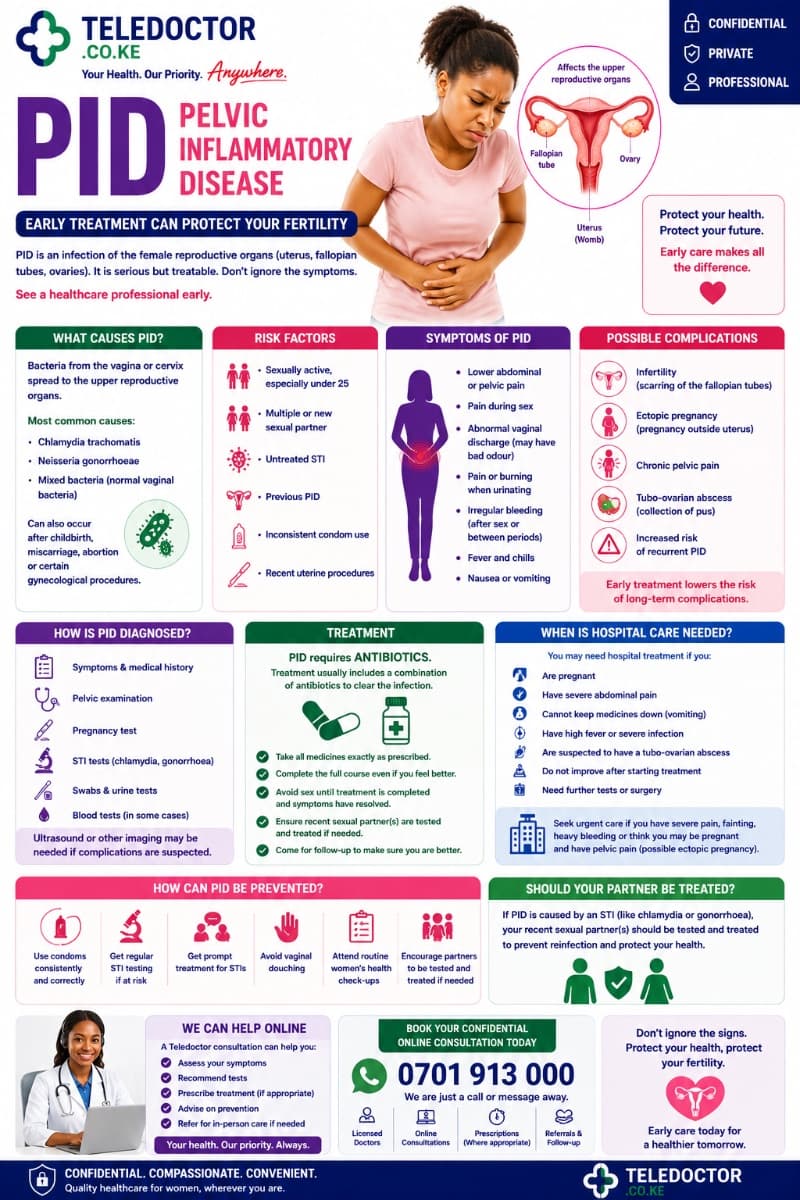
Pelvic Inflammatory Disease (PID) is an infection of the female upper reproductive tract, including the uterus (womb), fallopian tubes, ovaries, and surrounding pelvic tissues. It is a serious condition that can lead to chronic pelvic pain, ectopic pregnancy, and infertility if not treated promptly.
Many women with PID have mild or subtle symptoms, making early recognition and medical assessment especially important.
What Causes PID?
PID usually develops when bacteria from the vagina or cervix spread upwards into the reproductive organs.
The most common sexually transmitted bacteria associated with PID are:
- Chlamydia trachomatis
- Neisseria gonorrhoeae
However, many cases are caused by a mixture of bacteria that normally live in the vagina. Occasionally, PID can occur after childbirth, miscarriage, abortion, or certain gynecological procedures.
Who Is at Risk?
You may have a higher risk of developing PID if you:
- Are sexually active, especially under 25 years of age
- Have multiple sexual partners
- Have a new sexual partner
- Have an untreated sexually transmitted infection (STI)
- Have previously had PID
- Do not consistently use condoms
- Have recently undergone certain uterine procedures
Having one or more risk factors does not mean you will develop PID, but it increases the likelihood.
Symptoms of PID
Symptoms can range from mild to severe and may include:
- Lower abdominal or pelvic pain
- Pain during sexual intercourse
- Abnormal vaginal discharge, sometimes with an unpleasant smell
- Pain or burning during urination
- Irregular vaginal bleeding, including bleeding after sex or between periods
- Fever and chills
- Nausea and vomiting (particularly in more severe infections)
Some women have very mild symptoms or none at all, which is why untreated infections can silently damage the fallopian tubes.
Possible Complications
Without prompt treatment, PID can lead to:
- Infertility due to scarring of the fallopian tubes
- Ectopic pregnancy, where a pregnancy develops outside the uterus
- Chronic pelvic pain
- Tubo-ovarian abscess, a collection of pus that may require hospital treatment
- Increased risk of recurrent PID
The earlier treatment is started, the lower the risk of long-term complications.
How Is PID Diagnosed?
Diagnosis is based on:
- Your symptoms
- Sexual and medical history
- Pelvic examination
- Pregnancy test (to exclude ectopic pregnancy)
- STI testing for chlamydia and gonorrhoea
- Vaginal or cervical swabs where indicated
- Urine tests
- Blood tests in selected cases
If complications are suspected, your doctor may recommend:
- Pelvic ultrasound
- Further imaging
- Referral to a gynecologist
There is no single test that confirms PID in every case. Doctors often diagnose and treat based on the overall clinical picture to avoid delays.
Treatment
PID requires prompt antibiotic treatment. Delaying treatment increases the risk of permanent damage.
Treatment commonly includes antibiotics that cover the bacteria most often responsible for PID. The exact regimen depends on local guidelines, allergy history, pregnancy status, and the severity of illness.
It is important to:
- Complete the full course of antibiotics
- Avoid sexual intercourse until treatment is completed and symptoms have resolved, or as advised by your healthcare provider
- Ensure recent sexual partner(s) are assessed and treated if appropriate to reduce the risk of reinfection
- Attend follow-up appointments to confirm improvement
Do not stop treatment early, even if you start feeling better.
When Is Hospital Treatment Needed?
Hospital assessment or admission may be recommended if you:
- Are pregnant
- Have severe abdominal pain
- Have persistent vomiting and cannot keep medicines down
- Have a high fever or signs of severe infection
- Are suspected to have a tubo-ovarian abscess
- Do not improve after starting outpatient treatment
- Have an uncertain diagnosis that may require surgery
Can PID Be Prevented?
Many cases of PID are preventable.
Reduce your risk by:
- Using condoms consistently and correctly
- Having regular STI screening if you are at increased risk
- Seeking prompt treatment for STIs
- Encouraging sexual partners to be tested and treated when appropriate
- Avoiding vaginal douching, which may alter the normal vaginal environment
- Attending routine reproductive health check-ups
When Should You See a Doctor?
Arrange medical assessment promptly if you experience:
- Persistent pelvic or lower abdominal pain
- Pain during sex
- Abnormal vaginal discharge
- Fever with pelvic pain
- Bleeding between periods or after sex
- Painful urination with pelvic discomfort
Early diagnosis and treatment can help prevent complications.
Seek emergency medical care if you have severe abdominal pain, fainting, heavy vaginal bleeding, or think you may be pregnant and have significant pelvic pain, as these symptoms may indicate an ectopic pregnancy or another emergency.
Can PID Be Assessed Through an Online Consultation?
Yes.
A confidential online consultation is an excellent first step if you have symptoms suggestive of PID.
A licensed healthcare professional can:
- Review your symptoms and medical history
- Assess whether PID or another condition is likely
- Recommend appropriate investigations, including STI testing
- Prescribe treatment when clinically appropriate
- Advise whether an urgent in-person examination or hospital assessment is needed
- Arrange referral to a gynecologist if necessary
Because PID often requires a physical examination and, in some cases, laboratory tests or imaging, some patients will need an in-person review.
Protecting Your Reproductive Health
Pelvic Inflammatory Disease is treatable, but delaying treatment increases the risk of infertility and chronic pelvic pain. If you have persistent pelvic pain, unusual vaginal discharge, or other concerning symptoms, seek medical advice promptly.
Early care can protect your fertility and improve long-term health.
Book a Confidential Women’s Health Consultation with Teledoctor Kenya
If you are experiencing pelvic pain, abnormal vaginal discharge, painful sex, or other symptoms that may suggest PID, Teledoctor Kenya is here to help.
Our licensed healthcare professionals provide confidential online consultations, assessment of women’s health concerns, treatment advice, prescriptions where appropriate, and referrals for investigations or specialist care when needed.
Call or WhatsApp: 0701 913 000
Book your confidential online consultation today and receive expert medical care from the comfort of your home.
Frequently Asked Questions
Can PID occur without an STI?
Yes. While chlamydia and gonorrhoea are common causes, PID can also result from bacteria that normally live in the vagina or after childbirth, miscarriage, abortion, or certain gynecological procedures.
Can PID cause infertility?
Yes. Untreated PID can scar the fallopian tubes, increasing the risk of infertility and ectopic pregnancy. Early treatment reduces this risk.
Should my partner be treated?
If PID is associated with a sexually transmitted infection, recent sexual partner(s) should be evaluated and treated according to current medical guidelines to reduce the risk of reinfection.
Can I become pregnant after having PID?
Many women go on to have healthy pregnancies after treatment. However, previous PID may increase the risk of infertility or ectopic pregnancy, particularly if treatment was delayed or infections recurred.
Can PID be treated online?
An online consultation can provide an initial assessment, treatment advice, and referrals. Some women will also require an in-person examination, STI testing, or imaging to confirm the diagnosis and guide management.