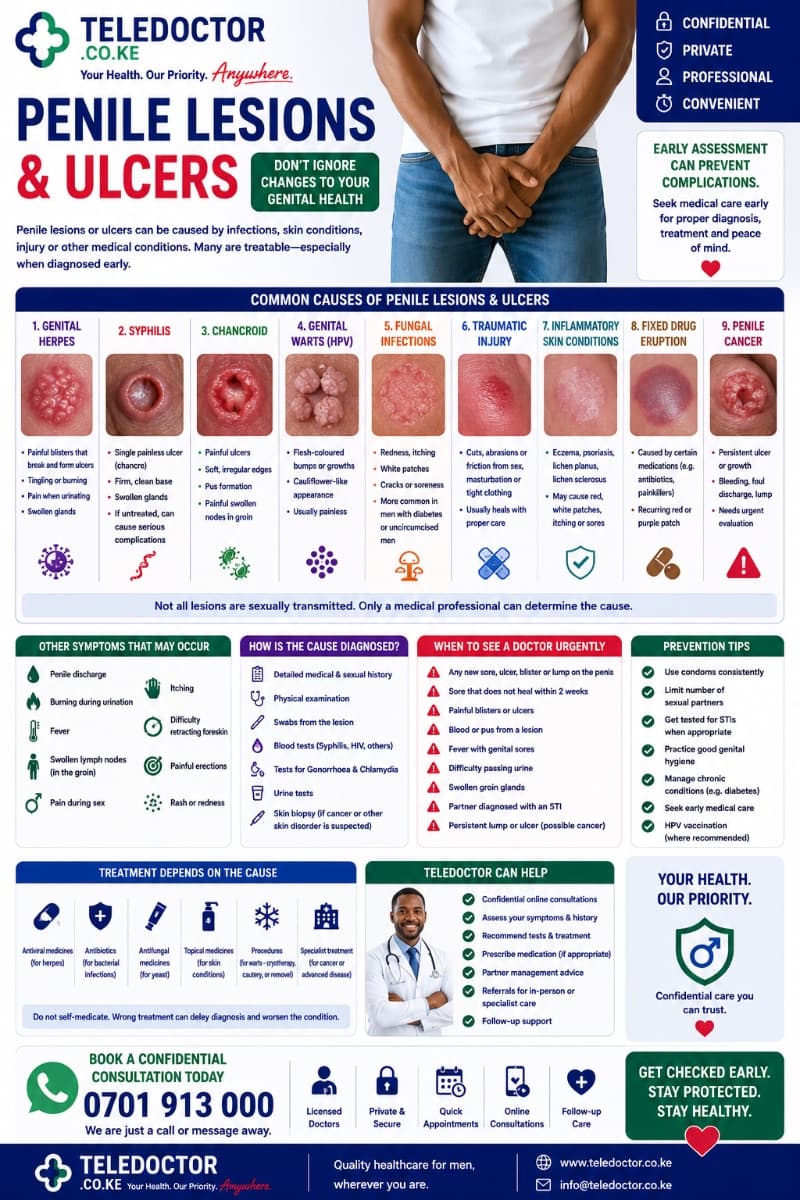
Penile Lesions and Ulcers: Don’t Ignore Changes to Your Genital Health
Discovering a sore, ulcer, blister, lump, or unusual growth on the penis can be alarming. While some penile lesions are harmless, others may be caused by sexually transmitted infections (STIs), skin conditions, or, less commonly, cancer.
The good news is that many penile lesions are treatable, especially when diagnosed early. Prompt medical assessment helps identify the cause, relieve symptoms, and reduce the risk of complications or transmission to sexual partners.
What Is a Penile Lesion?
A penile lesion is any abnormal change affecting the skin or tissues of the penis.
It may appear as:
- An ulcer (open sore)
- A blister
- A painless sore
- A painful sore
- A lump or nodule
- A wart-like growth
- A patch of discoloured skin
- A rash
- Cracked or inflamed skin
Some lesions are painless, while others may cause pain, itching, burning, or discharge.
Common Causes of Penile Lesions
- Genital Herpes
Genital herpes is caused by the Herpes Simplex Virus (HSV).
Typical features include:
- Small painful blisters
- Ulcers after the blisters burst
- Burning or tingling sensation
- Pain during urination
- Swollen groin lymph nodes
- Fever during the first episode
Herpes remains in the body and can recur, but antiviral medication can reduce symptoms and outbreaks.
- Syphilis
Syphilis commonly begins with:
- A single painless ulcer (chancre)
- Firm edges
- Clean base
- Swollen lymph nodes in the groin
Because the ulcer is usually painless, many people ignore it. Without treatment, syphilis progresses through later stages and can affect the brain, heart, and other organs.
- Chancroid
Chancroid is a bacterial STI that is less common but still occurs in some regions.
It typically causes:
- Painful genital ulcers
- Soft, irregular edges
- Pus formation
- Painful swollen groin lymph nodes
Prompt antibiotic treatment is important.
- Genital Warts
Genital warts are caused by certain types of the Human Papillomavirus (HPV).
They may appear as:
- Small flesh-coloured bumps
- Cauliflower-like growths
- Single or multiple lesions
They are usually painless but can increase in size if untreated.
- Fungal Infections
Yeast infections can cause:
- Redness
- Itching
- Small cracks in the skin
- White patches
- Soreness beneath the foreskin
These infections are more common in men with diabetes or those who are uncircumcised.
- Traumatic Injuries
Minor injuries from:
- Vigorous sexual activity
- Masturbation
- Friction
- Tight clothing
may produce ulcers or abrasions that usually heal with proper care.
- Fixed Drug Eruption
Some medications can cause a recurring, well-defined red or purple patch on the penis that appears after taking the same medicine. Common triggers include certain antibiotics and painkillers.
- Inflammatory Skin Conditions
Conditions such as eczema, psoriasis, lichen planus, and lichen sclerosus can affect the penis and cause redness, itching, white patches, or sores.
- Penile Cancer
Although uncommon, persistent penile ulcers or growths that do not heal require urgent evaluation.
Warning signs include:
- A persistent ulcer
- Bleeding
- Foul-smelling discharge
- A lump on the penis
- Thickened skin
- Enlarged groin lymph nodes
Early diagnosis greatly improves treatment outcomes.
Other Symptoms That May Occur
Depending on the cause, you may also experience:
- Penile discharge
- Burning during urination
- Fever
- Swollen lymph nodes in the groin
- Pain during sex
- Itching
- Difficulty retracting the foreskin
- Painful erections
How Is the Cause Diagnosed?
Your healthcare provider may recommend:
- A detailed medical and sexual history
- Physical examination
- Swabs from the lesion
- Blood tests for syphilis and HIV
- Tests for gonorrhoea and chlamydia
- Urine tests
- Skin biopsy if cancer or another skin disorder is suspected
The recommended investigations depend on the appearance of the lesion and your symptoms.
Treatment
Treatment depends entirely on the underlying cause.
Examples include:
- Antiviral medicines for genital herpes
- Antibiotics for bacterial infections such as syphilis or chancroid
- Antifungal medicines for yeast infections
- Topical medications for inflammatory skin conditions
- Procedures such as cryotherapy, cautery, or surgical removal for genital warts in selected cases
- Specialist treatment for suspected penile cancer
Avoid self-medicating, as inappropriate treatment may delay diagnosis or worsen the condition.
Can Penile Lesions Be Prevented?
You can reduce your risk by:
- Using condoms consistently (while recognising they do not completely eliminate the risk of infections spread by skin-to-skin contact, such as herpes or HPV)
- Limiting the number of sexual partners
- Getting tested for STIs when appropriate
- Practising good genital hygiene
- Managing chronic conditions such as diabetes
- Seeking early medical care if symptoms develop
- Considering HPV vaccination where recommended
When Should You See a Doctor Urgently?
Arrange prompt medical review if you have:
- Any new genital ulcer or sore
- Painful blisters
- A sore that does not heal within two weeks
- Blood or pus from a lesion
- Fever with genital sores
- Difficulty passing urine
- Swollen groin glands
- A partner diagnosed with an STI
- A persistent lump or ulcer on the penis
Can Teledoctor Help?
Yes.
A confidential online consultation is often the first step if you notice a penile lesion or ulcer.
Our licensed healthcare professionals can:
- Review your symptoms and medical history
- Assess the likely cause
- Recommend appropriate laboratory tests
- Prescribe treatment when clinically appropriate
- Arrange referral for an in-person examination or specialist care if required
- Provide advice on protecting your sexual partner(s) and preventing reinfection
Some conditions require a physical examination or laboratory testing to confirm the diagnosis.
Early Assessment Protects Your Health
Many penile lesions are caused by treatable conditions. However, delaying medical assessment can lead to complications, ongoing transmission of infections, or delayed diagnosis of more serious conditions.
If you notice a new sore, ulcer, blister, or unusual growth on your penis, seek medical advice promptly.
Book a Confidential Men’s Sexual Health Consultation with Teledoctor Kenya
If you have a penile ulcer, genital sore, rash, or any other concern affecting your genital health, Teledoctor Kenya offers confidential online consultations with licensed healthcare professionals.
We provide:
- Private assessment
- STI testing advice
- Prescriptions where appropriate
- Partner management guidance
- Referrals for specialist care when needed
- Follow-up support
📞 Call or WhatsApp: 0701 913 000
🌐 Book your online consultation today at www.teledoctor.co.ke
Frequently Asked Questions
Are all penile ulcers caused by sexually transmitted infections?
No. While STIs such as herpes and syphilis are common causes, penile ulcers can also result from fungal infections, inflammatory skin diseases, trauma, medication reactions, or, less commonly, cancer.
Can a painless ulcer be serious?
Yes. A painless genital ulcer can be a sign of syphilis or, rarely, penile cancer. Any persistent ulcer should be assessed by a healthcare professional.
Should my partner be tested?
If your lesion is suspected to be caused by an STI, your recent sexual partner(s) should be informed, evaluated, and treated if necessary to reduce the risk of reinfection and further transmission.
Can I have sex if I have a penile ulcer?
It is advisable to avoid sexual activity until you have been assessed, received appropriate treatment, and your healthcare provider advises that it is safe to resume sexual activity.
Can penile cancer be cured?
When diagnosed early, penile cancer is often treatable. Early medical evaluation of persistent sores, ulcers, or growths.