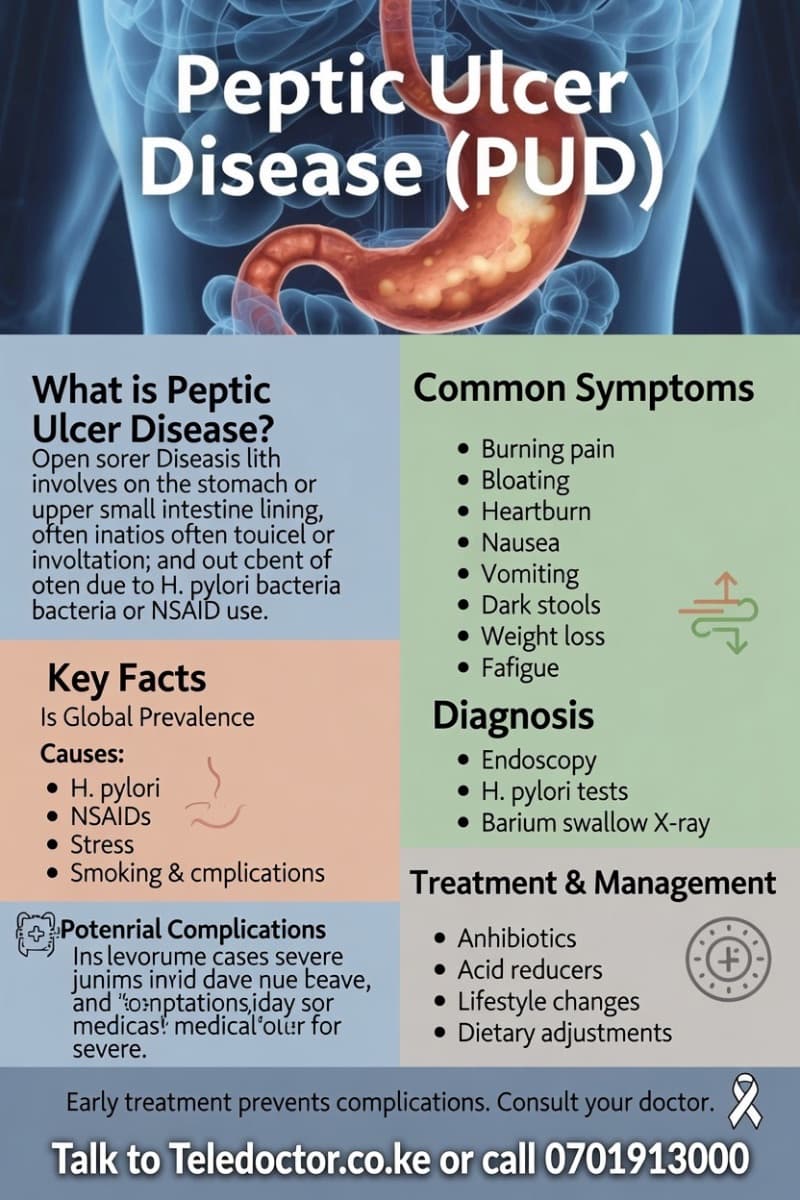
Peptic Ulcer Disease (PUD): Understanding Stomach and Duodenal Ulcers
Peptic Ulcer Disease (PUD) is a common digestive condition in which sores (ulcers) develop in the lining of the stomach or the first part of the small intestine (duodenum). Although ulcers were once thought to be caused mainly by stress or spicy foods, we now know that most cases are due to Helicobacter pylori (H. pylori) infection or long-term use of certain pain-relieving medicines.
When diagnosed early, peptic ulcers can usually be treated successfully with medication and lifestyle changes. Untreated ulcers, however, may lead to serious complications such as bleeding or perforation.
At Teledoctor Kenya, we provide expert assessment, diagnosis, treatment, and follow-up care for patients with peptic ulcer disease.
What Is a Peptic Ulcer?
A peptic ulcer is an open sore that develops when the protective lining of the stomach or duodenum becomes damaged by stomach acid and digestive enzymes.
There are two main types:
Gastric Ulcer
A gastric ulcer develops in the lining of the stomach.
Duodenal Ulcer
A duodenal ulcer develops in the first part of the small intestine (the duodenum).
Duodenal ulcers are generally more common than gastric ulcers.
What Causes Peptic Ulcers?
- Helicobacter pylori Infection
H. pylori is the leading cause of peptic ulcers worldwide.
The bacteria weaken the stomach’s protective lining, allowing acid to damage the tissue and form ulcers.
- Non-Steroidal Anti-Inflammatory Drugs (NSAIDs)
Regular use of pain-relieving medicines such as:
- Ibuprofen
- Diclofenac
- Naproxen
- Aspirin
can damage the stomach lining and increase ulcer risk, especially when used long term or at high doses.
Other Contributing Factors
While they do not usually cause ulcers on their own, these factors may worsen symptoms or delay healing:
- Smoking
- Excessive alcohol intake
- Severe physical illness
- Chronic stress
- Corticosteroid use (particularly when combined with NSAIDs)
Symptoms of Peptic Ulcer Disease
Symptoms vary depending on the location and severity of the ulcer.
Common symptoms include:
- Burning or gnawing pain in the upper abdomen
- Pain between meals
- Pain during the night
- Indigestion
- Bloating
- Nausea
- Belching
- Feeling full quickly
- Loss of appetite
- Mild weight loss
Some ulcers cause no symptoms until complications occur.
Gastric Ulcer vs Duodenal Ulcer
Although symptoms often overlap:
Gastric Ulcer
Pain may worsen shortly after eating.
Duodenal Ulcer
Pain often improves temporarily after eating but returns a few hours later or during the night.
These patterns are not always reliable, so medical assessment is important.
Complications of Untreated Ulcers
Without treatment, ulcers can become life-threatening.
Possible complications include:
Bleeding
An ulcer may erode into a blood vessel causing:
- Vomiting blood
- Black, tarry stools
- Dizziness
- Fainting
- Anaemia
Perforation
The ulcer creates a hole in the stomach or intestinal wall.
Symptoms include:
- Sudden severe abdominal pain
- Rigid abdomen
- Fever
- Shock
This is a surgical emergency.
Gastric Outlet Obstruction
Inflammation or scarring may block food from leaving the stomach.
Symptoms include:
- Persistent vomiting
- Early fullness
- Weight loss
- Abdominal swelling
How Is Peptic Ulcer Disease Diagnosed?
Medical History and Examination
Your healthcare provider will ask about:
- Symptoms
- Medication use
- Smoking
- Alcohol intake
- Previous ulcers
H. pylori Testing
Testing may include:
- Stool antigen test
- Urea breath test
- Biopsy during endoscopy (if performed)
These tests help determine whether H. pylori is present and guide treatment.
Upper Gastrointestinal Endoscopy
A thin flexible camera is passed through the mouth to examine the esophagus, stomach, and duodenum.
Endoscopy can:
- Confirm an ulcer
- Identify bleeding
- Obtain biopsies when indicated
- Exclude stomach cancer, particularly in gastric ulcers
Treatment
Treatment depends on the underlying cause.
Eradication of H. pylori
If H. pylori is confirmed, treatment usually includes:
- A proton pump inhibitor (PPI)
- Two or more antibiotics, chosen according to current treatment guidelines and local resistance patterns
Completing the full course of medication is essential.
Proton Pump Inhibitors (PPIs)
PPIs reduce stomach acid and promote healing.
Examples include:
- Omeprazole
- Pantoprazole
- Esomeprazole
- Lansoprazole
Stopping NSAIDs
If possible, NSAIDs should be discontinued or replaced with safer alternatives under medical guidance.
Never stop prescribed aspirin or other medications without discussing this with your healthcare provider.
Follow-Up Testing
Patients treated for H. pylori may need repeat testing to confirm eradication, particularly if they have persistent symptoms, ulcers, or other risk factors.
Diet and Lifestyle
Diet does not directly cause ulcers, but healthy habits support healing.
Helpful measures include:
- Eating regular meals
- Avoiding smoking
- Limiting alcohol
- Avoiding unnecessary NSAIDs
- Managing stress
- Limiting foods that consistently worsen your symptoms
There is no universal “ulcer diet”; trigger foods vary from person to person.
Can Peptic Ulcers Be Prevented?
You can reduce your risk by:
- Treating H. pylori infection when diagnosed
- Avoiding unnecessary NSAID use
- Taking NSAIDs with medical advice and protective medication when appropriate
- Avoiding smoking
- Limiting alcohol
- Practicing good hygiene to reduce H. pylori transmission
When Should You Seek Urgent Medical Attention?
Seek immediate medical care if you develop:
- Vomiting blood
- Black, tarry stools
- Sudden severe abdominal pain
- Persistent vomiting
- Difficulty swallowing
- Unexplained weight loss
- Severe dizziness or fainting
These symptoms may indicate a serious complication requiring emergency treatment.
Can Teledoctor Help?
Yes.
Teledoctor Kenya provides comprehensive digestive health services.
Our healthcare professionals can:
- Assess upper abdominal pain
- Arrange H. pylori testing
- Prescribe appropriate treatment
- Manage gastritis and peptic ulcer disease
- Refer for endoscopy
- Provide follow-up care and prevention advice
Recovery and Outlook
Most peptic ulcers heal completely with appropriate treatment.
Symptoms often improve within days, but healing may take several weeks.
Completing treatment, attending follow-up appointments, and addressing underlying causes help reduce the risk of recurrence.
Book a Gastroenterology Consultation with Teledoctor Kenya
If you have persistent upper abdominal pain, indigestion, or symptoms of an ulcer, our healthcare professionals are here to help.
Our services include:
- Peptic ulcer assessment
- H. pylori testing and treatment
- Gastritis management
- Medication review
- Endoscopy referrals
- Ongoing follow-up care
📞 Call or WhatsApp: 0701 913 000
🌐 Visit: www.teledoctor.co.ke
📍 Online and In-Person Consultations Available
Frequently Asked Questions
Is a stomach ulcer the same as gastritis?
No. Gastritis is inflammation of the stomach lining, while an ulcer is an open sore. Gastritis can sometimes progress to an ulcer if left untreated.
Can stress cause ulcers?
Stress alone is not considered a primary cause of peptic ulcers. Most ulcers are caused by H. pylori infection or NSAID use, although stress may worsen symptoms or slow healing.
Are spicy foods responsible for ulcers?
No. Spicy foods do not cause ulcers, but they may aggravate symptoms in some people.
Can ulcers heal without treatment?
Some ulcers may temporarily improve, but untreated H. pylori infection or continued NSAID use often leads to recurrence or complications. Medical evaluation and treatment are recommended.
Can peptic ulcers lead to cancer?
Most peptic ulcers do not become cancerous. However, some gastric ulcers may resemble stomach cancer, which is why endoscopy and biopsy may be recommended in certain cases.