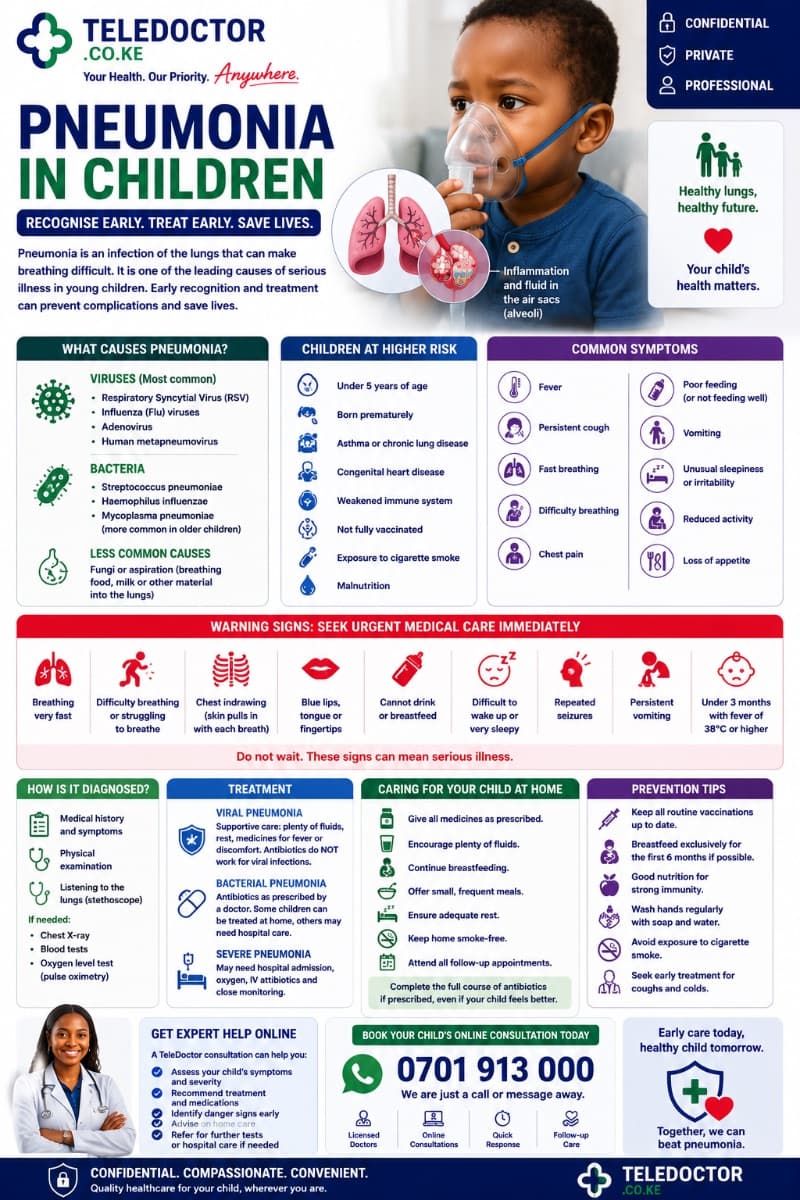
Pneumonia is an infection of the lungs that can affect children of all ages. It is one of the leading causes of serious illness in children worldwide, particularly in those under five years of age. While many children recover completely with appropriate treatment, pneumonia can become life-threatening if not recognised and treated promptly.
Knowing the warning signs can help parents seek medical care before complications develop.
What Is Pneumonia?
Pneumonia occurs when the tiny air sacs (alveoli) in the lungs become inflamed and fill with fluid or pus. This makes it harder for oxygen to move into the bloodstream and can make breathing difficult.
Pneumonia may affect one lung or both lungs.
What Causes Pneumonia?
Pneumonia can be caused by:
Viruses
Common viruses include:
- Respiratory Syncytial Virus (RSV)
- Influenza (flu) viruses
- Adenovirus
- Human metapneumovirus
Viral pneumonia is especially common in younger children.
Bacteria
Common bacterial causes include:
- Streptococcus pneumoniae
- Haemophilus influenzae
- Mycoplasma pneumoniae (more common in older children)
Bacterial pneumonia often requires antibiotic treatment.
⸻
Less Common Causes
Less commonly, pneumonia may be caused by fungi or aspiration (breathing food, milk, or other material into the lungs).
Who Is at Higher Risk?
Children are more likely to develop severe pneumonia if they:
- Are younger than 5 years
- Were born prematurely
- Have asthma or chronic lung disease
- Have congenital heart disease
- Have weakened immune systems
- Are not fully vaccinated
- Are exposed to cigarette smoke
- Are malnourished
Symptoms of Pneumonia
Symptoms vary depending on the child’s age and the cause of the infection.
Common symptoms include:
- Fever
- Persistent cough
- Fast breathing
- Difficulty breathing
- Chest pain
- Poor feeding (especially in infants)
- Vomiting
- Unusual sleepiness
- Irritability
- Reduced activity
- Loss of appetite
Infants may simply appear less active or feed poorly without having a prominent cough.
Warning Signs That Need Urgent Medical Attention
Seek immediate medical care if your child:
- Is breathing very fast
- Has difficulty breathing or is struggling to breathe
- Has chest indrawing (the skin between or below the ribs pulls in with each breath)
- Has blue lips, tongue, or fingertips
- Cannot drink or breastfeed
- Is difficult to wake
- Has repeated seizures
- Appears confused or unusually sleepy
- Has persistent vomiting
- Is younger than 3 months with a fever of 38°C or higher
These symptoms require prompt assessment at a healthcare facility.
How Is Pneumonia Diagnosed?
Your healthcare provider may diagnose pneumonia based on:
- Your child’s symptoms
- Medical history
- Physical examination
- Listening to the lungs with a stethoscope
If necessary, additional tests may include:
- Chest X-ray
- Blood tests
- Pulse oximetry (oxygen level measurement)
- Viral or bacterial testing in selected cases.
Treatment
Treatment depends on the cause and severity of the pneumonia.
Viral Pneumonia
Many viral infections improve with supportive care, including:
- Plenty of fluids
- Rest
- Medicines for fever or discomfort as recommended
- Monitoring for worsening symptoms
Antibiotics do not treat viral pneumonia.
Bacterial Pneumonia
Bacterial pneumonia usually requires antibiotics prescribed by a healthcare professional.
Some children can be treated at home, while others may need hospital admission depending on the severity of illness.
Severe Pneumonia
Children with severe disease may require:
- Oxygen therapy
- Intravenous antibiotics
- Intravenous fluids
- Close monitoring in hospital
Caring for Your Child at Home
If your child has mild pneumonia and is being treated at home:
- Give all prescribed medications exactly as directed.
- Encourage plenty of fluids.
- Continue breastfeeding if applicable.
- Offer small, frequent meals.
- Ensure your child gets adequate rest.
- Keep the home smoke-free.
- Attend all follow-up appointments.
Complete the full course of antibiotics if they have been prescribed, even if your child starts feeling better.
Can Pneumonia be Prevented?
Many cases can be prevented by:
- Keeping childhood immunisations up to date, including pneumococcal, Hib, measles, and influenza vaccines where recommended
- Exclusive breastfeeding for the first six months where possible
- Good nutrition
- Regular hand washing
- Reducing exposure to cigarette smoke
- Seeking early treatment for respiratory infections
Can Pneumonia Be Assessed During an Online Consultation?
Yes.
An online consultation is often an excellent first step if your child has a cough, fever, or breathing concerns.
A licensed healthcare professional can:
- Review your child’s symptoms
- Assess whether pneumonia is possible
- Advise on home care
- Recommend whether antibiotics may be appropriate
- Identify warning signs that require hospital assessment
- Arrange referrals for chest X-rays or further evaluation when needed
Children with significant breathing difficulty or other emergency warning signs should be taken directly to the nearest healthcare facility.
Early Treatment Leads to Better Outcomes
Most children with pneumonia recover completely when diagnosed and treated promptly. Parents should not ignore persistent cough, fever, or fast breathing, particularly in young children.
If you are unsure whether your child’s symptoms are serious, seeking medical advice early can provide reassurance and help prevent complications.
Book an Online Paediatric Consultation with Teledoctor Kenya
If your child has a persistent cough, fever, fast breathing, or suspected pneumonia, Teledoctor Kenya is here to help.
Our licensed healthcare professionals provide confidential online consultations, assessment of respiratory symptoms, treatment advice, prescriptions where appropriate, and referrals for investigations or hospital care when needed.
Call or WhatsApp: 0701 913 000
Book your child’s online consultation today and receive expert medical care from the comfort of your home.
Frequently Asked Questions
Can pneumonia start as a common cold?
Yes. A viral upper respiratory infection can sometimes progress to pneumonia, or a bacterial infection may develop after a viral illness.
How can I tell if my child is breathing too fast?
Fast breathing varies by age. If your child seems to be breathing noticeably faster than usual, using extra muscles to breathe, or struggling for breath, seek medical assessment promptly.
Do all children with pneumonia need antibiotics?
No. Viral pneumonia does not respond to antibiotics. Bacterial pneumonia usually requires antibiotics, and your healthcare provider will determine the appropriate treatment.
Is pneumonia contagious?
Some of the viruses and bacteria that cause pneumonia can spread from person to person, particularly through coughs, sneezes, and close contact. Good hand hygiene and respiratory etiquette help reduce transmission.
Can pneumonia be managed through an online consultation?
Yes. Teledoctor Kenya can assess your child’s symptoms, advise on home care, determine whether urgent in-person assessment is needed, prescribe treatment where appropriate, and arrange referrals if necessary.