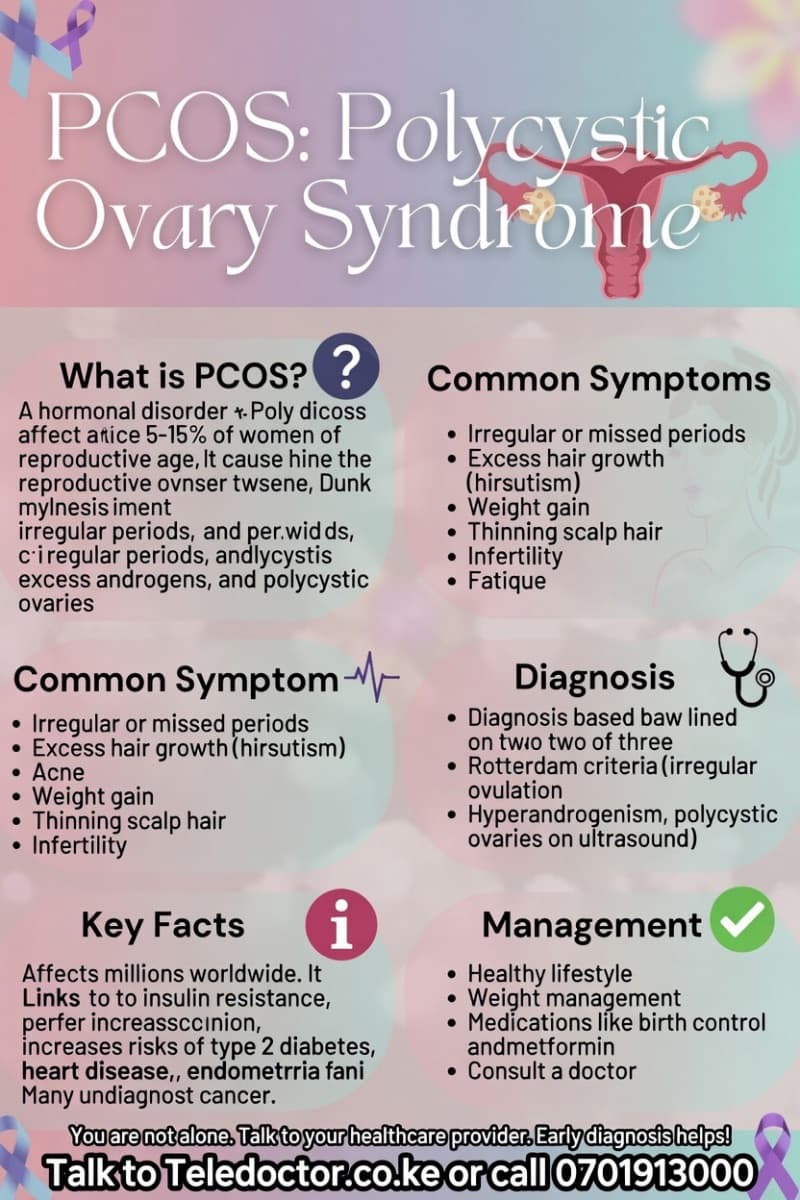
Polycystic Ovary Syndrome (PCOS): Understanding a Common Hormonal Condition
Polycystic Ovary Syndrome (PCOS) is one of the most common hormonal disorders affecting women of reproductive age. It can affect menstrual cycles, fertility, metabolism, skin, and emotional wellbeing.
Although PCOS is a lifelong condition, it can be effectively managed with lifestyle changes, medication, and regular medical care. Early diagnosis helps reduce the risk of complications and improves quality of life.
At Teledoctor Kenya, we provide comprehensive assessment, diagnosis, and personalized treatment plans for women living with PCOS.
What Is PCOS?
PCOS is a hormonal disorder characterized by a combination of:
- Irregular or absent ovulation
- Higher-than-normal levels of male hormones (androgens)
- Multiple small follicles (“cysts”) visible on the ovaries during ultrasound in some women
Despite the name, not all women with PCOS have ovarian cysts, and having ovarian cysts alone does not mean you have PCOS.
⸻
How Common Is PCOS?
PCOS affects approximately 1 in 10 women of reproductive age, making it one of the leading causes of irregular periods and infertility worldwide.
Many women remain undiagnosed for years.
What Causes PCOS?
The exact cause is unknown, but several factors contribute.
Insulin Resistance
Many women with PCOS have insulin resistance, meaning the body’s cells do not respond normally to insulin.
This causes:
- Higher insulin levels
- Increased androgen production
- Difficulty losing weight
- Higher risk of developing type 2 diabetes
Hormonal Imbalance
Women with PCOS often have increased production of androgens, which can interfere with normal ovulation.
Genetics
PCOS tends to run in families.
If your mother or sister has PCOS, your risk is increased.
Lifestyle Factors
Although lifestyle does not directly cause PCOS, excess body weight may worsen symptoms in susceptible women.
Symptoms of PCOS
Symptoms vary considerably between individuals.
Common symptoms include:
Menstrual Problems
- Irregular periods
- Infrequent periods
- Absent periods
- Heavy menstrual bleeding
- Difficulty predicting menstrual cycles
Fertility Problems
Irregular ovulation may make it more difficult to become pregnant.
PCOS is one of the most common causes of infertility due to anovulation.
Excess Hair Growth (Hirsutism)
Women may develop coarse hair on the:
- Face
- Chin
- Upper lip
- Chest
- Abdomen
- Back
Acne
Persistent acne may occur due to increased androgen levels.
Hair Thinning
Some women experience thinning hair on the scalp or female-pattern hair loss.
Weight Gain
Many women find it easier to gain weight and harder to lose it, particularly around the abdomen.
Darkened Skin
Some women develop darker, velvety patches of skin (acanthosis nigricans), especially around the:
- Neck
- Armpits
- Groin
This may be a sign of insulin resistance.
Can You Have PCOS Without Being Overweight?
Yes.
Although obesity increases the risk of insulin resistance and may worsen symptoms, lean women can also develop PCOS.
Treatment is individualized regardless of body weight.
How Is PCOS Diagnosed?
There is no single test for PCOS.
Healthcare professionals typically use the Rotterdam criteria, which require at least two of the following three features, after excluding other conditions:
- Irregular or absent ovulation
- Clinical or laboratory evidence of excess androgens
- Polycystic ovaries on ultrasound
Investigations
Your doctor may recommend:
Blood Tests
These may assess:
- Testosterone and other androgen levels
- Blood sugar (fasting glucose or HbA1c)
- Lipid profile (cholesterol)
- Thyroid function
- Prolactin
- Other hormone levels where indicated
Pelvic Ultrasound
Ultrasound may show enlarged ovaries with multiple small follicles.
However, a normal ultrasound does not exclude PCOS.
Complications of PCOS
Without appropriate management, PCOS increases the risk of:
- Infertility
- Type 2 diabetes
- Prediabetes
- High blood pressure
- High cholesterol
- Heart disease
- Obstructive sleep apnea
- Endometrial hyperplasia
- Endometrial cancer (particularly in women with prolonged absence of periods)
- Anxiety and depression
Regular follow-up is important to monitor and reduce these risks.
PCOS and Pregnancy
Many women with PCOS become pregnant naturally.
Others may require treatment to improve ovulation.
Pregnancy with PCOS may carry a higher risk of:
- Gestational diabetes
- Pregnancy-induced hypertension
- Preeclampsia
- Preterm birth
Early antenatal care is recommended.
Treatment
Treatment depends on your symptoms and whether you are trying to conceive.
Lifestyle Changes
Healthy lifestyle changes are the foundation of treatment.
These include:
- Regular physical activity
- Balanced nutrition
- Weight loss where appropriate
- Adequate sleep
- Stress management
Even a modest weight loss of 5–10% in women who are overweight may improve ovulation, menstrual regularity, and insulin sensitivity.
Medications
Combined Oral Contraceptive Pills
These help:
- Regulate menstrual cycles
- Reduce acne
- Improve excess hair growth
- Protect the lining of the uterus
Metformin
Metformin may improve insulin resistance and help restore more regular ovulation in some women, particularly those with insulin resistance or prediabetes.
Ovulation Induction
For women wishing to conceive, medications that stimulate ovulation may be recommended under specialist supervision.
These include:
- Letrozole (often considered first-line for ovulation induction)
- Clomifene citrate (selected cases)
Treatment should be guided by a healthcare professional.
Medicines for Excess Hair Growth
Some women benefit from medications that reduce androgen effects, although these are not suitable during pregnancy.
Can PCOS Be Cured?
There is currently no cure.
However, symptoms can be effectively controlled with:
- Healthy lifestyle habits
- Medication
- Regular monitoring
- Appropriate fertility treatment when needed
Many women lead healthy lives with good symptom control.
Diet for PCOS
A healthy eating pattern may improve symptoms.
Focus on:
- Vegetables
- Fruits
- Whole grains
- Lean proteins
- Healthy fats
- High-fibre foods
Limit:
- Sugary drinks
- Highly processed foods
- Refined carbohydrates
- Excess sweets
There is no single “PCOS diet,” but sustainable healthy eating is recommended.
When Should You See a Doctor?
Arrange an appointment if you experience:
- Irregular periods
- Difficulty becoming pregnant
- Excess facial hair
- Persistent acne
- Rapid weight gain
- Hair thinning
- Missing periods for several months
- Heavy or prolonged menstrual bleeding
Early assessment improves outcomes.
Can Teledoctor Help?
Yes.
Teledoctor Kenya provides comprehensive women’s health services.
Our healthcare professionals can:
- Assess symptoms suggestive of PCOS
- Arrange laboratory tests and pelvic ultrasound referrals
- Develop personalized treatment plans
- Prescribe appropriate medications
- Support fertility planning
- Monitor diabetes and cardiovascular risk
- Provide ongoing follow-up care
Living Well with PCOS
A diagnosis of PCOS can feel overwhelming, especially for women concerned about fertility or long-term health.
The encouraging news is that with early diagnosis, healthy lifestyle choices, and appropriate medical care, most women successfully manage their symptoms, maintain good health, and achieve successful pregnancies if desired.
You do not have to manage PCOS alone—support and effective treatment are available.
Book a Women’s Health Consultation with Teledoctor Kenya
If you have irregular periods, acne, excess facial hair, or difficulty becoming pregnant, our healthcare professionals are here to help.
Our services include:
- PCOS assessment
- Fertility counselling
- Hormonal evaluation
- Pelvic ultrasound referrals
- Weight management support
- Diabetes screening
- Women’s health consultations
📞 Call or WhatsApp: 0701 913 000
🌐 Visit: www.teledoctor.co.ke
📍 Online and In-Person Consultations Available
Frequently Asked Questions
Can women with PCOS get pregnant?
Yes. Many women with PCOS conceive naturally, while others may benefit from ovulation-induction treatment or fertility support.
Does every woman with PCOS have ovarian cysts?
No. The diagnosis is based on a combination of clinical features, hormone levels, and ultrasound findings. Not all women with PCOS have cysts visible on ultrasound.
Can losing weight help PCOS?
For women who are overweight, even modest weight loss can improve menstrual cycles, ovulation, and insulin resistance.
Is PCOS linked to diabetes?
Yes. Women with PCOS have an increased risk of insulin resistance, prediabetes, and type 2 diabetes. Regular screening is important.
Is PCOS a lifelong condition?
Yes, but its symptoms and health risks can be effectively managed with lifestyle measures, regular monitoring, and appropriate medical treatment.