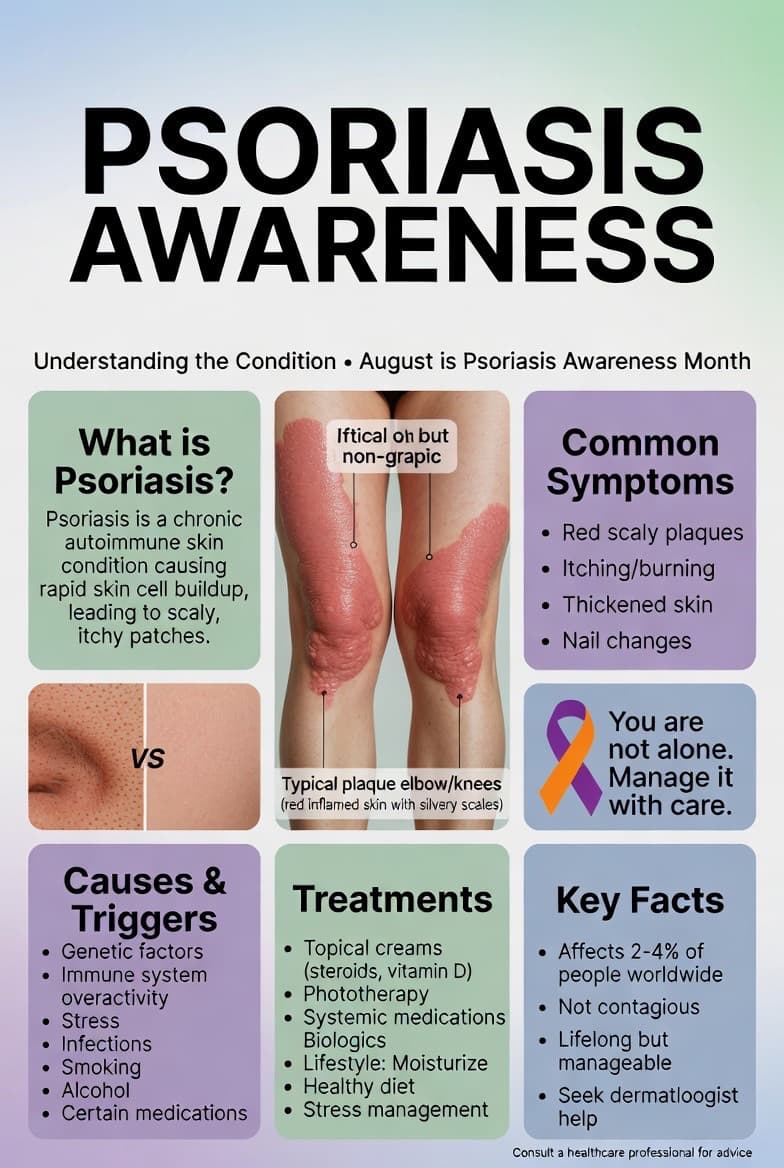
Psoriasis: More Than Just a Skin Condition
Psoriasis is a chronic inflammatory skin disease that causes skin cells to multiply much faster than normal. This rapid turnover leads to thick, raised patches of skin covered with silvery-white scales.
Although psoriasis is a lifelong condition, it is not contagious, and many people achieve excellent symptom control with appropriate treatment and lifestyle measures.
Beyond the skin, psoriasis may also affect the joints, emotional wellbeing, and overall quality of life.
At Teledoctor Kenya, we provide expert assessment, personalized treatment plans, and ongoing support for people living with psoriasis.
What Is Psoriasis?
Normally, skin cells are replaced every 3 to 4 weeks. In psoriasis, this process speeds up dramatically, with new skin cells reaching the surface in just a few days.
Because the old cells do not have enough time to shed, they accumulate, forming the characteristic thick, scaly plaques.
Psoriasis is an immune-mediated disease, meaning the immune system becomes overactive and triggers inflammation in the skin.
Is Psoriasis Contagious?
No.
Psoriasis cannot be spread by:
- Touching someone
- Sharing clothes
- Swimming together
- Hugging
- Sexual contact
It is not caused by poor hygiene.
Types of Psoriasis
Plaque Psoriasis
The most common type.
Symptoms include:
- Thick red or dark patches
- Silvery-white scales
- Itching
- Dry, cracked skin
Scalp Psoriasis
Affects the scalp and may cause:
- Thick scales
- Flaking
- Itching
- Temporary hair shedding due to inflammation or scratching.
Guttate Psoriasis
Often appears after a throat infection.
It causes:
- Numerous small, drop-shaped spots
- Commonly affects children and young adults
Inverse Psoriasis
Occurs in skin folds such as:
- Armpits
- Groin
- Under the breasts
The skin appears smooth, red, and inflamed with little scaling.
Pustular Psoriasis
A less common form characterized by:
- Pus-filled blisters
- Red, inflamed skin
This requires prompt medical evaluation.
Erythrodermic Psoriasis
A rare but serious type involving widespread redness, scaling, and inflammation over much of the body.
It is a medical emergency requiring urgent treatment.
Symptoms of Psoriasis
Symptoms vary between individuals.
Common features include:
- Thick raised patches of skin
- Silvery scales
- Itching
- Burning sensation
- Dry, cracked skin
- Bleeding from cracked plaques
- Nail changes
- Thickened nails
- Nail pitting (small dents)
- Nail separation from the nail bed
Symptoms often come and go in cycles.
Commonly Affected Areas
Psoriasis frequently affects:
- Elbows
- Knees
- Scalp
- Lower back
- Hands
- Feet
- Nails
However, it can occur almost anywhere on the body.
What Causes Psoriasis?
The exact cause is not fully understood.
It is thought to result from a combination of:
Genetics
Psoriasis often runs in families.
Immune System Dysfunction
Overactive immune cells trigger inflammation and rapid skin cell growth.
Environmental Triggers
Common triggers include:
- Stress
- Skin injuries
- Infections (especially streptococcal throat infections)
- Cold weather
- Smoking
- Excessive alcohol intake
- Certain medications
Avoiding known triggers may help reduce flare-ups.
Psoriasis and Joint Disease
Up to one in three people with psoriasis may develop psoriatic arthritis.
Symptoms include:
- Joint pain
- Swollen fingers or toes
- Morning stiffness
- Reduced joint movement
Early diagnosis and treatment are important to prevent permanent joint damage.
How Is Psoriasis Diagnosed?
Diagnosis is usually based on:
- Medical history
- Physical examination
- Appearance and distribution of the rash
Occasionally, a small skin biopsy may be performed if the diagnosis is uncertain.
Treatment Options
Treatment depends on the severity of the disease.
Moisturizers (Emollients)
Regular moisturizing:
- Reduces dryness
- Decreases itching
- Softens scales
- Improves skin comfort
Topical Treatments
Prescription creams may include:
- Corticosteroids
- Vitamin D analogues
- Calcineurin inhibitors (for certain sensitive areas)
- Coal tar preparations (in selected cases)
Always use prescription creams as directed by your healthcare provider.
Phototherapy
Controlled ultraviolet (UV) light treatment may help people with moderate psoriasis.
This treatment should only be provided under medical supervision.
Oral Medications
Moderate to severe psoriasis may require systemic medicines that reduce immune system activity.
These medications require regular medical monitoring.
Biologic Medicines
Biologics are newer injectable medications that target specific parts of the immune system.
They can be highly effective for severe psoriasis and psoriatic arthritis but are generally reserved for selected patients under specialist care.
Daily Skin Care Tips
Simple daily habits can reduce flare-ups.
Moisturize Frequently
Use fragrance-free creams or ointments several times each day.
Avoid Harsh Soaps
Choose gentle cleansers designed for sensitive skin.
Take Short, Lukewarm Baths
Avoid hot water, which can worsen dryness and itching.
Protect Your Skin
Cuts, burns, and insect bites can trigger new psoriasis plaques in some people.
Manage Stress
Stress is a common trigger.
Relaxation techniques, exercise, and adequate sleep may help.
Lifestyle Changes That Help
Healthy lifestyle choices can improve overall wellbeing.
These include:
- Maintaining a healthy weight
- Exercising regularly
- Avoiding smoking
- Limiting alcohol intake
- Managing stress
- Following treatment consistently
Possible Complications
Psoriasis is associated with an increased risk of several health conditions, including:
- Psoriatic arthritis
- High blood pressure
- Heart disease
- Obesity
- Type 2 diabetes
- Anxiety
- Depression
Regular medical follow-up helps monitor overall health.
When Should You See a Doctor?
Arrange a consultation if:
- Your rash is spreading
- Home treatment is not helping
- Joint pain develops
- Your skin becomes painful or infected
- The diagnosis is uncertain
- Psoriasis affects your quality of life
Early treatment often prevents complications.
Can Teledoctor Help?
Yes.
Teledoctor Kenya provides expert care for psoriasis and other chronic skin conditions.
Our healthcare professionals can:
- Diagnose psoriasis
- Recommend individualized treatment
- Prescribe appropriate medications
- Treat skin infections
- Screen for psoriatic arthritis
- Refer to dermatologists or rheumatologists when needed
Living Well with Psoriasis
Although psoriasis is a lifelong condition, many people enjoy long periods of clear or nearly clear skin with appropriate treatment.
Following your treatment plan, caring for your skin every day, and avoiding known triggers can significantly reduce flare-ups and improve quality of life.
Remember, psoriasis does not define you. With proper care and support, you can continue to lead a healthy, active, and fulfilling life.
Book a Skin Consultation with Teledoctor Kenya
If you are experiencing persistent itchy, scaly, or inflamed skin, our healthcare professionals are here to help.
We provide:
- Online skin consultations
- Diagnosis of psoriasis and other skin diseases
- Personalized treatment plans
- Prescription medications
- Follow-up care
- Dermatology referrals when needed
📞 Call or WhatsApp: 0701 913 000
🌐 Book your consultation today at www.teledoctor.co.ke
Frequently Asked Questions
Can psoriasis be cured?
There is currently no permanent cure, but many treatments effectively control symptoms and reduce flare-ups.
Is psoriasis contagious?
No. Psoriasis cannot be spread through physical contact or sharing personal items.
Can stress make psoriasis worse?
Yes. Stress is one of the most common triggers for psoriasis flare-ups.
What is the difference between psoriasis and eczema?
Psoriasis usually causes well-defined, thick plaques with silvery scales, while eczema often causes intensely itchy, dry, inflamed skin with less sharply defined borders. A healthcare professional can distinguish between the two.
Can people with psoriasis live normal lives?
Absolutely. With appropriate treatment and healthy lifestyle habits, most people with psoriasis live active, productive, and fulfilling lives.