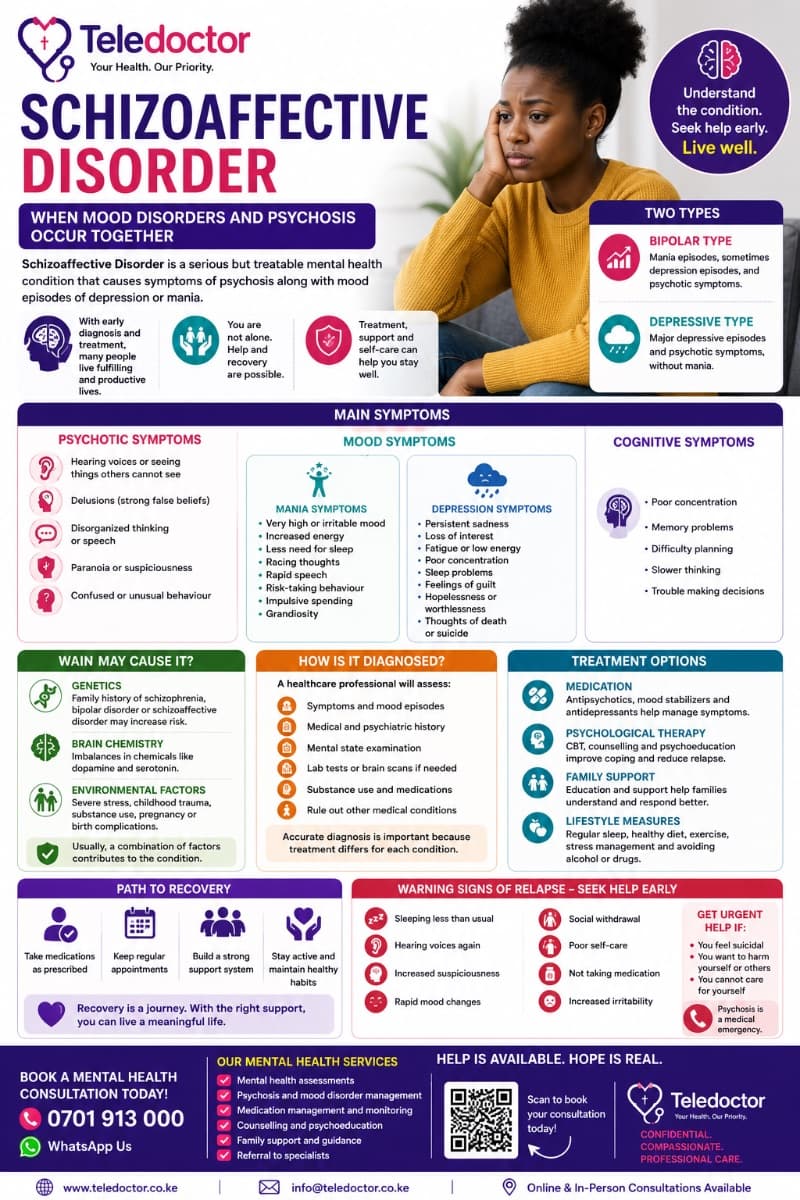
Schizoaffective Disorder: When Mood Disorders and Psychosis Occur Together
Schizoaffective Disorder is a serious but treatable mental health condition that combines features of schizophrenia and a mood disorder (either bipolar disorder or major depressive disorder). People with this condition experience symptoms of psychosis—such as hallucinations or delusions—as well as significant episodes of depression or mania.
Although Schizoaffective Disorder can be challenging, early diagnosis, appropriate medication, psychological therapy, and ongoing support allow many individuals to lead productive and fulfilling lives.
At Teledoctor Kenya, we provide confidential mental health assessments, medication management, counselling, and referrals to psychiatric specialists when needed.
What Is Schizoaffective Disorder?
Schizoaffective Disorder is a psychiatric illness in which a person experiences:
- Symptoms of psychosis, similar to schizophrenia
- Significant mood episodes (mania, depression, or both)
A key feature is that psychotic symptoms may continue even when mood symptoms have improved, distinguishing it from mood disorders with psychotic features.
Types of Schizoaffective Disorder
Bipolar Type
This is characterized by:
- Episodes of mania
- Sometimes episodes of depression
- Psychotic symptoms
This is the more common subtype.
Depressive Type
This type involves:
- Major depressive episodes
- Psychotic symptoms
- No episodes of mania
Symptoms
Symptoms vary from person to person.
Psychotic Symptoms
These include:
- Hearing voices (auditory hallucinations)
- Seeing things others cannot see
- Delusions (strong false beliefs)
- Disorganized thinking
- Disorganized speech
- Confused behaviour
- Suspiciousness or paranoia
Mood Symptoms
Mania
People experiencing mania may have:
- Extremely elevated mood
- Increased energy
- Reduced need for sleep
- Rapid speech
- Racing thoughts
- Grandiosity
- Impulsive spending
- Risk-taking behaviour
- Increased sexual activity
- Irritability
Depression
Depressive episodes may involve:
- Persistent sadness
- Loss of interest in activities
- Fatigue
- Poor concentration
- Sleep disturbances
- Feelings of guilt or hopelessness
- Thoughts of death or suicide
Cognitive Symptoms
Some individuals experience:
- Poor concentration
- Memory difficulties
- Difficulty planning
- Slower thinking
- Problems making decisions
What Causes Schizoaffective Disorder?
The exact cause remains unknown, but several factors appear to contribute.
Genetics
A family history of:
- Schizophrenia
- Bipolar disorder
- Schizoaffective Disorder
may increase risk.
Brain Chemistry
Abnormal regulation of neurotransmitters such as dopamine and serotonin is thought to play an important role.
Environmental Factors
Potential contributing factors include:
- Severe psychological stress
- Childhood trauma
- Cannabis or stimulant drug use
- Pregnancy or birth complications
Usually, several factors interact rather than a single cause.
Who Is Most at Risk?
Schizoaffective Disorder usually develops in:
- Late adolescence
- Early adulthood
Risk factors include:
- Family history of psychotic disorders
- Bipolar disorder in close relatives
- Substance misuse
- Significant life stress
How Is It Diagnosed?
Diagnosis requires a comprehensive psychiatric assessment.
A healthcare professional will evaluate:
- Current symptoms
- Duration of illness
- Previous mood episodes
- Family history
- Medical history
- Medication use
- Substance use
Blood tests or brain imaging may be requested to exclude other medical causes.
How Is Schizoaffective Disorder Different from Other Conditions?
Schizophrenia
Psychosis without prominent ongoing mood episodes
Bipolar I Disorder
Mania (with or without depression); psychosis occurs only during mood episodes
Major Depression with Psychotic Features
Psychosis occurs only during depressive episodes
Schizoaffective Disorder
Both psychosis and major mood episodes, with psychosis sometimes occurring independently of mood symptoms Correct diagnosis is important because treatment differs for each condition.
Treatment
Most people benefit from a combination of treatments.
Medication
Treatment may include:
Antipsychotic Medication
These medicines reduce:
- Hallucinations
- Delusions
- Disorganized thinking
One medication specifically approved for schizoaffective disorder in some countries is paliperidone, although other antipsychotics may also be used depending on the individual’s needs.
Mood Stabilizers
For people with bipolar-type Schizoaffective Disorder, mood stabilizers may be prescribed, including:
- Lithium
- Valproate
- Lamotrigine (in selected patients)
Antidepressants
For individuals with depressive-type Schizoaffective Disorder, antidepressants may be used alongside antipsychotic medication when appropriate.
Medication should always be taken under medical supervision.
Psychological Therapy
Therapy helps people:
- Understand their illness
- Recognize early warning signs
- Improve coping skills
- Reduce relapse
- Strengthen relationships
- Improve medication adherence
Common therapies include:
- Cognitive Behavioural Therapy (CBT)
- Psychoeducation
- Family therapy
- Supportive counselling
Family Support
Families play a crucial role by:
- Learning about the illness
- Supporting medication adherence
- Recognizing relapse signs
- Providing emotional support
- Reducing stress at home
Lifestyle Measures
Healthy habits improve recovery.
These include:
- Getting adequate sleep
- Avoiding alcohol and recreational drugs
- Regular physical activity
- Healthy eating
- Managing stress
- Keeping regular medical appointments
Can People Recover?
Yes.
Many people with Schizoaffective Disorder achieve long periods of stability.
Recovery often involves:
- Consistent medication
- Psychological therapy
- Family support
- Employment or educational rehabilitation
- Healthy lifestyle habits
Although relapses can occur, early treatment significantly improves long-term outcomes.
Warning Signs of Relapse
Contact your healthcare provider if you notice:
- Sleeping less than usual
- Increased suspiciousness
- Hearing voices again
- Rapid mood changes
- Social withdrawal
- Poor medication adherence
- Increased irritability
- Declining self-care
Prompt treatment may prevent a full relapse.
When Should Emergency Medical Care Be Sought?
Seek urgent medical attention if someone:
- Expresses suicidal thoughts
- Becomes violent or aggressive
- Is hearing voices telling them to harm themselves or others
- Cannot distinguish reality from hallucinations or delusions
- Stops eating or drinking because of psychotic beliefs
- Cannot care for themselves safely
Mental health emergencies require immediate professional assessment.
Can Teledoctor Help?
Yes.
Teledoctor Kenya provides confidential mental health care.
Our healthcare professionals can:
- Assess symptoms of psychosis and mood disorders
- Diagnose common mental health conditions
- Prescribe and monitor medications where appropriate
- Provide counselling
- Educate patients and families
- Coordinate specialist psychiatric referrals
- Offer ongoing follow-up care
Living Well with Schizoaffective Disorder
Receiving a diagnosis of Schizoaffective Disorder can feel overwhelming, but it is important to remember that treatment is available and recovery is possible.
With the right combination of medication, therapy, family support, and healthy lifestyle habits, many individuals successfully pursue education, careers, relationships, and meaningful lives.
If you notice symptoms in yourself or someone you care about, seeking help early can make a significant difference.
Book a Mental Health Consultation with Teledoctor Kenya
Our mental health team provides compassionate, confidential, and evidence-based care.
Our services include:
- Mental health assessments
- Psychosis evaluation
- Bipolar disorder assessment
- Depression management
- Medication review
- Counselling and psychoeducation
- Family support
- Referral to psychiatrists when required
📞 Call or WhatsApp: 0701 913 000
🌐 Visit: www.teledoctor.co.ke
📍 Online and In-Person Consultations Available
Frequently Asked Questions
Is Schizoaffective Disorder the same as schizophrenia?
No. Schizoaffective Disorder includes both psychotic symptoms and significant mood episodes, whereas schizophrenia primarily involves psychotic symptoms without persistent mood episodes.
Can Schizoaffective Disorder be cured?
There is no permanent cure, but it can often be managed effectively with medication, therapy, and ongoing support.
Can someone with Schizoaffective Disorder work?
Yes. Many people are able to work, study, and maintain relationships when their condition is well managed.
Does cannabis make Schizoaffective Disorder worse?
Yes. Cannabis and other recreational drugs can worsen symptoms, trigger relapse, and interfere with treatment.
Is lifelong treatment necessary?
Many people require long-term treatment, although the specific medications and doses may change over time. Decisions about treatment should always be made with a qualified healthcare professional.