Schizophrenia: Understanding a Treatable Mental Health Condition
Schizophrenia is a serious but treatable mental health condition that affects how a person thinks, feels, perceives reality, and behaves. Although it is often misunderstood, many people living with schizophrenia can lead meaningful, productive lives with appropriate treatment, family support, and regular follow-up.
Schizophrenia is not a split personality or a sign of personal weakness. It is a medical condition involving changes in brain function that require professional care.
At Teledoctor Kenya, we believe that early recognition, prompt treatment, and ongoing support can significantly improve quality of life for people living with schizophrenia.
What Is Schizophrenia?
Schizophrenia is a chronic psychiatric disorder characterized by episodes of psychosis, during which a person may lose touch with reality.
The condition affects:
- Thinking
- Emotions
- Behaviour
- Perception
- Social relationships
- Work and school performance
Symptoms often begin in late adolescence or early adulthood, although they can occur earlier or later.
What Is Psychosis?
Psychosis is a condition in which a person has difficulty distinguishing between what is real and what is not.
During psychosis, a person may:
- Hear or see things others do not (hallucinations)
- Hold firmly to false beliefs despite evidence to the contrary (delusions)
- Have disorganized thinking or speech
- Behave in unusual or unpredictable ways
Psychosis can occur in schizophrenia as well as in other medical or psychiatric conditions.
Symptoms of Schizophrenia
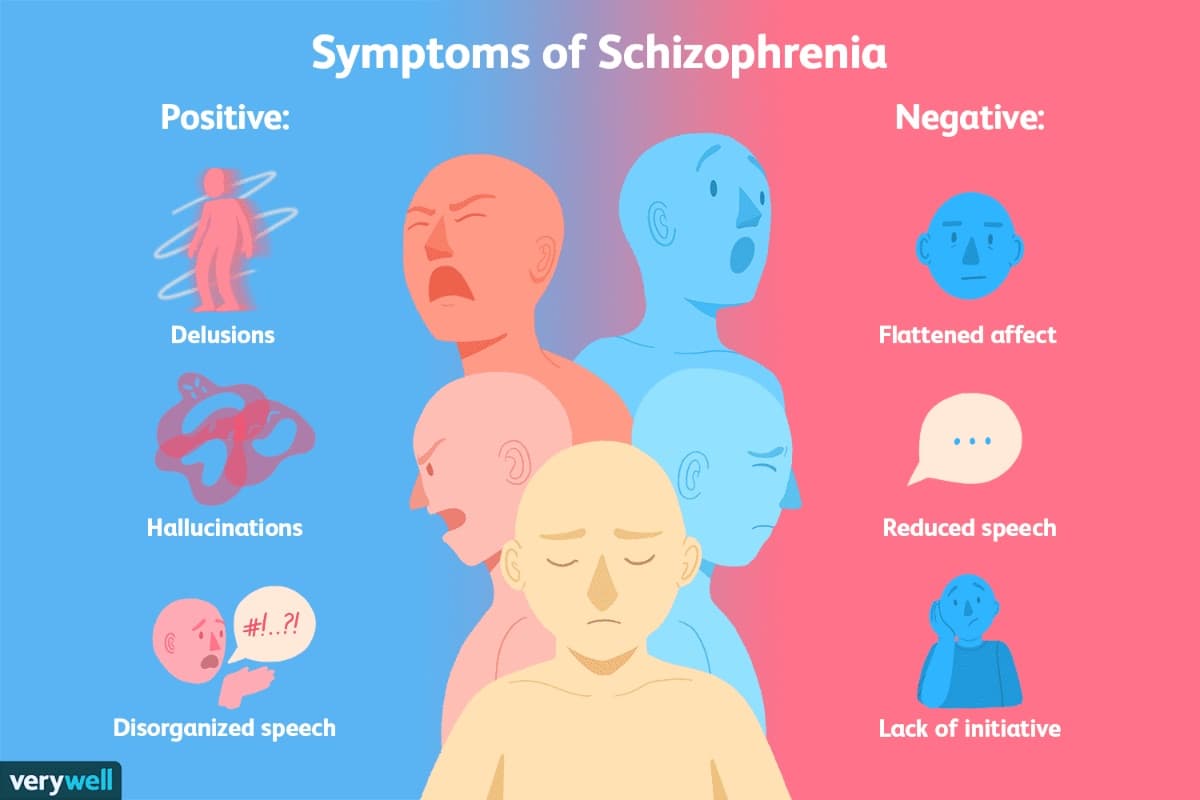
Healthcare professionals often group symptoms into three categories.
Positive Symptoms
These are experiences that are added to normal functioning.
They include:
Hallucinations
Hallucinations involve sensing things that are not actually present.
The most common are:
- Hearing voices
- Hearing conversations
- Hearing someone calling your name
Less commonly, people may experience visual, smell, or tactile hallucinations.
Delusions
Delusions are fixed false beliefs.
Examples include believing that:
- Someone is trying to harm you
- You are being watched or followed
- Television or radio messages are directed specifically at you
- You possess extraordinary powers or abilities
Disorganized Thinking
A person may:
- Jump rapidly between unrelated ideas
- Speak in a way that is difficult to understand
- Have trouble organizing thoughts
Negative Symptoms
These involve a reduction in normal emotional or behavioural functioning.
Examples include:
- Reduced emotional expression
- Loss of motivation
- Social withdrawal
- Speaking very little
- Reduced interest in daily activities
- Poor self-care
Negative symptoms are often mistaken for laziness or depression but are part of the illness.
Cognitive Symptoms
Many people also experience difficulties with:
- Memory
- Attention
- Planning
- Decision-making
- Problem-solving
These symptoms can affect work, education, and independent living.
What Causes Schizophrenia?
There is no single cause.
Research suggests that schizophrenia results from a combination of factors.
Genetics
People with a close family member who has schizophrenia have a higher risk, although most do not develop the condition.
Brain Chemistry and Structure
Differences in brain development and neurotransmitters, including dopamine and glutamate, are thought to contribute.
Environmental Factors
Possible contributing factors include:
- Pregnancy or birth complications
- Severe stress
- Childhood trauma
- Certain recreational drugs, particularly high-potency cannabis in susceptible individuals
These factors may increase risk but do not directly cause schizophrenia.
Who Is at Risk?
Risk factors include:
- Family history of schizophrenia
- Previous psychotic episodes
- Substance misuse
- Major psychosocial stressors
- Certain developmental or birth-related complications
How Is Schizophrenia Diagnosed?
Diagnosis requires assessment by a qualified healthcare professional, often a psychiatrist.
The evaluation includes:
- Detailed medical history
- Mental state examination
- Physical examination
- Medication review
- Screening for substance use
- Blood tests or brain imaging when needed to rule out other medical conditions
There is no single laboratory test that confirms schizophrenia.
Treatment Options
Schizophrenia is a long-term condition, but effective treatments are available.
Antipsychotic Medication
Antipsychotic medicines are the cornerstone of treatment.
They help reduce:
- Hallucinations
- Delusions
- Agitation
- Disorganized thinking
Some medications are taken daily as tablets, while others are available as long-acting injections.
Treatment should always be supervised by a healthcare professional.
Psychological Therapies
Therapies may include:
- Cognitive Behavioural Therapy (CBT)
- Family therapy
- Psychoeducation
- Social skills training
- Occupational rehabilitation
These approaches complement medication and help improve recovery.
Family Support
Family members play an important role by:
- Encouraging treatment adherence
- Recognizing early warning signs
- Reducing stress at home
- Providing emotional support
Education about schizophrenia helps families respond effectively and compassionately.
Recognizing Early Warning Signs
Symptoms often develop gradually.
Possible early warning signs include:
- Social withdrawal
- Declining academic or work performance
- Poor personal hygiene
- Increasing suspiciousness
- Difficulty concentrating
- Changes in sleep patterns
- Unusual beliefs
- Hearing voices
Early treatment can improve long-term outcomes.
Can People Recover?
Yes.
Although schizophrenia is usually a long-term condition, many people experience significant improvement with appropriate treatment.
Recovery may include:
- Stable symptoms
- Returning to work or school
- Living independently
- Maintaining relationships
- Enjoying hobbies and meaningful activities
Recovery looks different for each individual and often requires ongoing support.
Common Myths About Schizophrenia
“People with schizophrenia have multiple personalities.”
False. Schizophrenia is not the same as dissociative identity disorder.
“People with schizophrenia are always violent.”
False. Most people with schizophrenia are not violent. They are more likely to be vulnerable than dangerous, particularly when receiving appropriate treatment.
“Schizophrenia cannot be treated.”
False. Medication, therapy, family support, and rehabilitation can greatly improve symptoms and quality of life.
“People with schizophrenia cannot work.”
False. Many people with schizophrenia study, work, raise families, and contribute meaningfully to society, especially when treatment is started early and maintained.
When Should You Seek Medical Help?
Arrange a medical assessment if someone develops:
- Hearing voices
- Persistent suspiciousness
- Strong false beliefs
- Disorganized speech
- Significant personality changes
- Withdrawal from family or friends
- Difficulty functioning at work or school
- Neglect of personal hygiene
Urgent assessment is needed if the person becomes severely distressed, aggressive, unable to care for themselves, or appears at risk of harming themselves or others.
Can Teledoctor Help?
Yes.
Teledoctor Kenya provides confidential mental health consultations.
Our healthcare professionals can:
- Assess symptoms of psychosis
- Screen for schizophrenia and related conditions
- Prescribe medication when appropriate
- Monitor treatment progress
- Provide counselling and psychoeducation
- Support families and caregivers
- Refer to psychiatrists or hospitals when specialized care is required
Living Well with Schizophrenia
A diagnosis of schizophrenia can be life-changing, but it is not the end of hope.
Many people with schizophrenia achieve long periods of stability, pursue education, maintain employment, and build fulfilling relationships. Consistent treatment, healthy routines, family support, and regular follow-up are key to successful long-term management.
Seeking help early offers the best chance of recovery and improved quality of life.
Book a Confidential Mental Health Consultation with Teledoctor Kenya
If you or someone you care about is experiencing symptoms of psychosis or schizophrenia, our healthcare professionals are here to help.
We provide:
- Confidential online consultations
- Mental health assessments
- Medication review and management
- Counselling and family education
- Ongoing follow-up
- Specialist referrals when needed
📞 Call or WhatsApp: 0701 913 000
🌐 Book your online consultation today at www.teledoctor.co.ke
Frequently Asked Questions
Is schizophrenia the same as split personality?
No. Schizophrenia is a psychotic disorder that affects thinking and perception. Split or multiple personalities refer to a different and much rarer condition called dissociative identity disorder.
Can schizophrenia be cured?
There is currently no cure, but many people achieve long-term symptom control and recovery with ongoing treatment and support.
Can stress cause schizophrenia?
Stress alone does not cause schizophrenia, but it can trigger symptoms or relapses in people who are already vulnerable to the condition.
Do people with schizophrenia need lifelong medication?
Many people require long-term treatment to reduce the risk of relapse. Treatment plans are individualized and should only be changed in consultation with a healthcare professional.
Can people with schizophrenia live independently?
Yes. Many individuals live independently, work, study, and have fulfilling relationships with the right treatment and support.