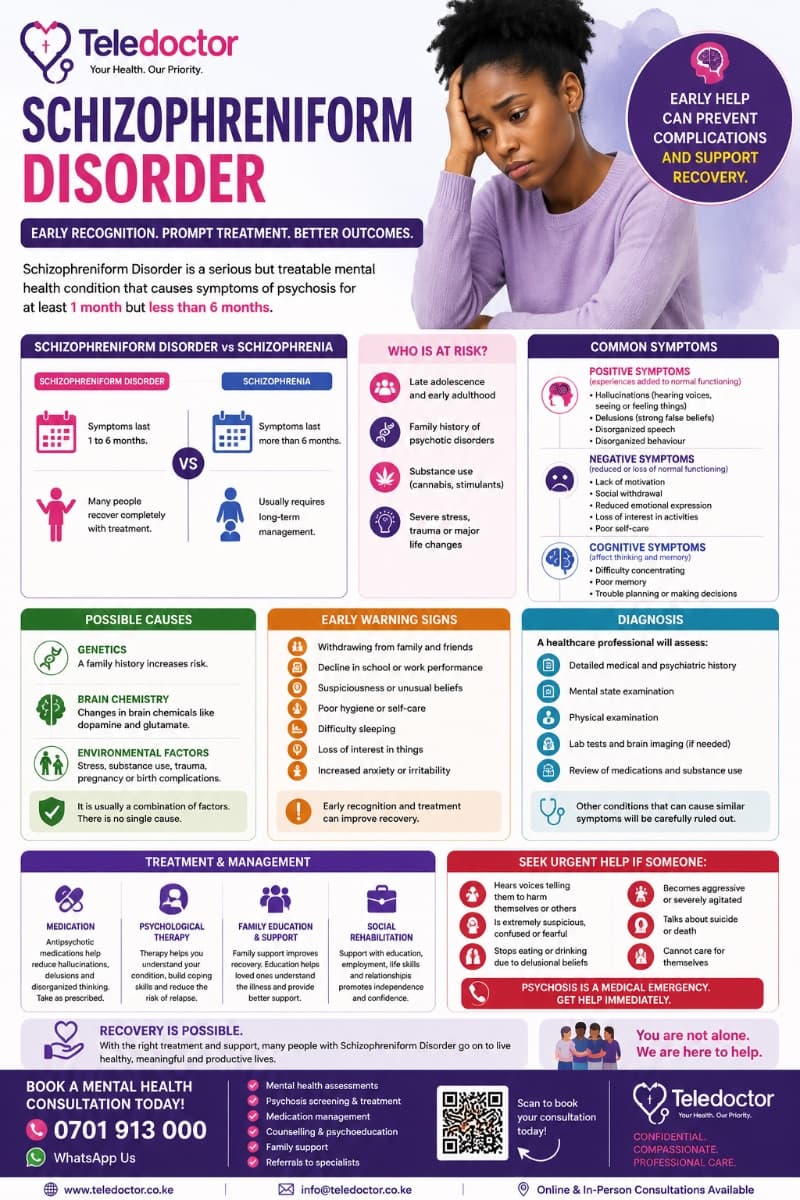
Schizophreniform Disorder: Recognizing Early Psychosis
Schizophreniform Disorder is a serious but treatable mental health condition that causes symptoms similar to schizophrenia, including hallucinations, delusions, disorganized thinking, and changes in behaviour. The key difference is the duration of symptoms.
People with Schizophreniform Disorder experience psychotic symptoms for at least one month but less than six months. Some individuals recover completely, while others may later be diagnosed with schizophrenia or another psychotic disorder if symptoms persist.
Early diagnosis and prompt treatment greatly improve the chances of recovery.
At Teledoctor Kenya, we provide confidential mental health assessments, treatment, and referrals to specialist psychiatric care when needed.
What Is Schizophreniform Disorder?
Schizophreniform Disorder is a psychiatric illness characterized by psychotic symptoms that significantly affect a person’s thoughts, emotions, perceptions, and behaviour.
Unlike schizophrenia, which requires symptoms to persist for more than six months, Schizophreniform Disorder lasts:
- At least one month
- Less than six months
The diagnosis may later change depending on how symptoms evolve over time.
Schizophreniform Disorder vs Schizophrenia Schizophreniform Disorder- Symptoms last 1–6 months
Schizophrenia- Symptoms last more than 6 months
Schizophreniform disorder- Some people recover completely
Schizophrenia- Usually requires long-term treatment
Sczhizophreniform disorder- Early treatment may prevent progression
Schizophrenia- Often requires ongoing management
What Causes Schizophreniform Disorder?
The exact cause remains unknown.
It is believed to result from a combination of factors.
Genetics
A family history of schizophrenia or other psychotic disorders increases risk.
⸻
Brain Chemistry
Changes in neurotransmitters such as dopamine and glutamate are thought to contribute to psychotic symptoms.
Environmental Factors
Potential contributing factors include:
- Severe psychological stress
- Substance use (particularly cannabis and stimulant drugs)
- Childhood trauma
- Pregnancy or birth complications affecting brain development
In most cases, there is no single identifiable cause.
Who Is at Risk?
Schizophreniform Disorder most commonly develops during:
- Late adolescence
- Early adulthood
Risk factors include:
- Family history of psychotic illness
- Cannabis or stimulant drug use
- Previous psychotic episode
- Significant life stressors
Symptoms
Symptoms are similar to those seen in schizophrenia.
Positive Symptoms
These represent experiences added to normal functioning.
They include:
- Hallucinations (hearing voices is most common)
- Delusions (strong false beliefs)
- Disorganized speech
- Disorganized behaviour
Negative Symptoms
These involve reduced normal functioning.
Examples include:
- Reduced emotional expression
- Lack of motivation
- Social withdrawal
- Reduced speech
- Loss of interest in activities
- Poor self-care
Cognitive Symptoms
Some people experience:
- Difficulty concentrating
- Poor memory
- Impaired planning
- Difficulty making decisions
These symptoms can affect work, school, and relationships.
Early Warning Signs
Symptoms often develop gradually.
Possible warning signs include:
- Social isolation
- Declining academic or work performance
- Suspiciousness
- Reduced personal hygiene
- Emotional withdrawal
- Difficulty sleeping
- Unusual beliefs
- Increased anxiety
Recognizing these early changes can allow earlier treatment.
How Is Schizophreniform Disorder Diagnosed?
Diagnosis requires assessment by a qualified healthcare professional.
The evaluation includes:
- Detailed medical history
- Mental state examination
- Physical examination
- Review of medications and substance use
- Laboratory tests where appropriate
- Brain imaging if another neurological condition is suspected
The diagnosis is based on symptom pattern, duration, and exclusion of other causes.
Other Conditions That Can Cause Similar Symptoms
Your healthcare provider may need to rule out:
- Schizophrenia
- Brief Psychotic Disorder
- Bipolar I Disorder with psychotic features
- Major Depressive Disorder with psychotic features
- Substance-induced psychosis
- Brain infections
- Epilepsy
- Autoimmune disorders
- Thyroid disease
Treatment
Early treatment offers the best chance of recovery.
Antipsychotic Medication
Antipsychotic medicines help reduce hallucinations, delusions, and disorganized thinking.
Treatment should always be supervised by a qualified healthcare professional, who will monitor benefits and possible side effects.
Psychological Therapy
Once symptoms improve, therapy can help patients:
- Understand their illness
- Develop coping strategies
- Improve insight
- Reduce relapse risk
- Return to work or school
Common approaches include Cognitive Behavioural Therapy (CBT), psychoeducation, and supportive counselling.
Family Education
Families play an important role in recovery.
Education helps relatives:
- Recognize early warning signs
- Support medication adherence
- Reduce stress at home
- Respond appropriately during relapses
Social Rehabilitation
Recovery often includes support with:
- Returning to education
- Employment
- Independent living
- Social relationships
Can People Recover?
Yes.
Many individuals with Schizophreniform Disorder recover completely, particularly when treatment begins early.
However:
- Some recover within a few months.
- Others later develop schizophrenia.
- Some develop schizoaffective disorder or bipolar disorder.
Regular follow-up is essential to monitor progress.
Preventing Relapse
People recovering from Schizophreniform Disorder should:
- Take medications as prescribed.
- Attend follow-up appointments.
- Avoid cannabis and recreational drugs.
- Get adequate sleep.
- Manage stress.
- Seek help promptly if symptoms return.
- Maintain supportive relationships.
When Should You Seek Urgent Medical Care?
Seek immediate medical attention if a person:
- Hears voices telling them to harm themselves or others.
- Becomes extremely suspicious or fearful.
- Is unable to distinguish reality from imagination.
- Stops eating or drinking because of delusional beliefs.
- Becomes aggressive or severely agitated.
- Expresses suicidal thoughts.
- Is unable to care for themselves.
Psychosis is a medical emergency that requires prompt assessment.
Can Teledoctor Help?
Yes.
Teledoctor Kenya provides confidential mental health consultations.
Our healthcare professionals can:
- Assess psychotic symptoms
- Screen for Schizophreniform Disorder
- Initiate treatment where appropriate
- Coordinate care with psychiatrists
- Monitor medication response
- Support patients and families throughout recovery
Outlook
Receiving a diagnosis of Schizophreniform Disorder can be frightening, but recovery is possible.
Early recognition, appropriate medication, psychological support, and family involvement greatly improve outcomes.
If you or someone you know develops symptoms of psychosis, do not delay seeking medical care. Prompt treatment can reduce complications and improve long-term wellbeing.
Book a Mental Health Consultation with Teledoctor Kenya
Our mental health team offers compassionate, confidential care for individuals experiencing changes in thoughts, emotions, or behaviour.
Our services include:
- Mental health assessments
- Psychosis screening
- Medication management
- Counselling and psychoeducation
- Family support
- Referral to psychiatrists when needed
- Ongoing follow-up care
📞 Call or WhatsApp: 0701 913 000
🌐 Visit: www.teledoctor.co.ke
📍 Online and In-Person Consultations Available
Frequently Asked Questions
Is Schizophreniform Disorder the same as schizophrenia?
No. The symptoms are similar, but Schizophreniform Disorder lasts between one and six months, while schizophrenia persists for more than six months.
Can Schizophreniform Disorder go away?
Yes. Many people recover completely, especially with early treatment. Others may later be diagnosed with schizophrenia or another psychotic disorder if symptoms continue.
What is the most common symptom?
Hallucinations (especially hearing voices), delusions, and disorganized thinking are among the most common symptoms.
Does cannabis increase the risk?
Heavy cannabis use, particularly high-potency cannabis, has been associated with an increased risk of psychotic disorders in susceptible individuals and may worsen existing psychosis.
Can someone with Schizophreniform Disorder work or study again?
Many people are able to return to school, work, and normal daily activities after treatment, especially when the condition is recognized and managed early.