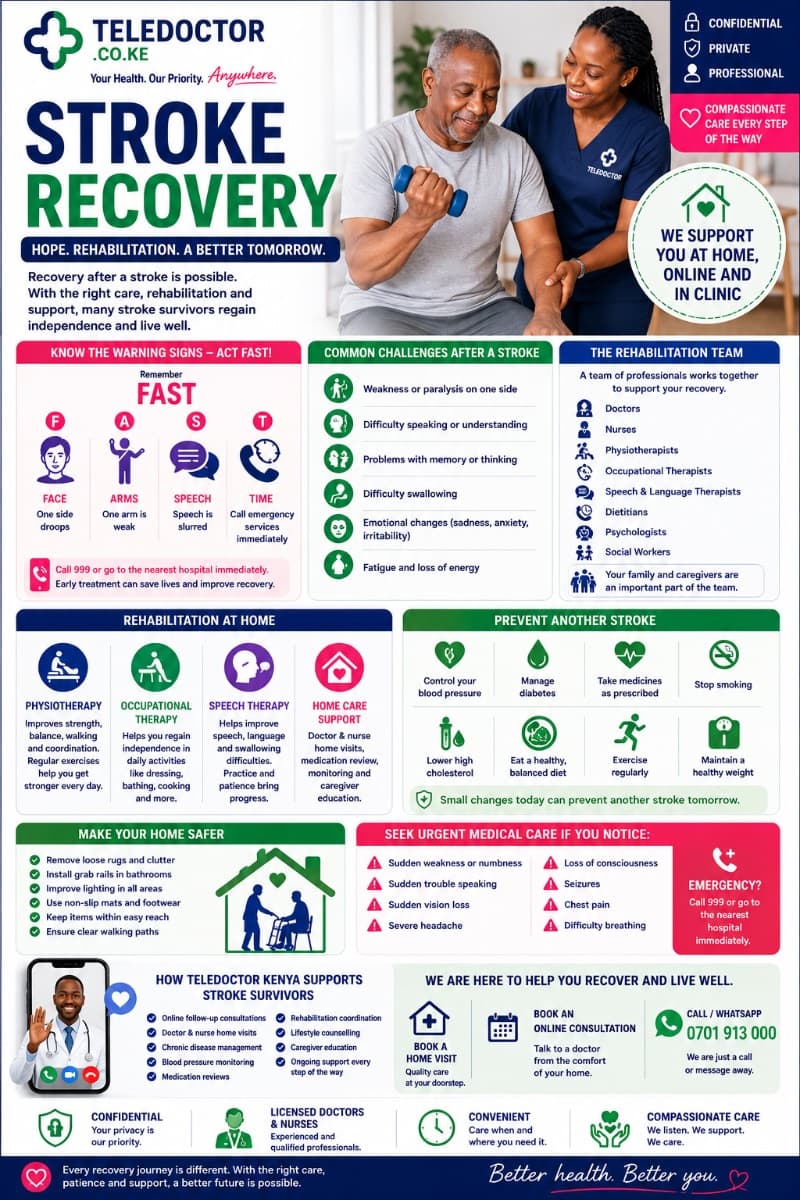
Certainly. Stroke recovery is an excellent topic for Teledoctor.co.ke because it attracts patients, caregivers, and Kenyans in the diaspora looking for support for loved ones. It also complements your Home Care, Home Visits, Hypertension, and Diabetes services.
⸻
Stroke Recovery: What to Expect, Rehabilitation, and Living Well After a Stroke
URL Slug: stroke-recovery-rehabilitation-kenya
Category: Neurology
Publication Status: Published
Meta Title: Stroke Recovery in Kenya | Rehabilitation, Home Care & Online Support | Teledoctor Kenya
Meta Description: Learn what to expect after a stroke, rehabilitation options, home care, warning signs, and how Teledoctor Kenya can support stroke survivors and their families.
Author: Dr. Aisha Ochiang, MBChB, MMed
Author Initials: AO
Read Time: 10 min read
Tags: Stroke, Stroke Recovery, Rehabilitation, Home Care, Physiotherapy, Telemedicine, Kenya
Featured Post: True
⸻
Stroke Recovery: What to Expect, Rehabilitation, and Living Well After a Stroke
A stroke can change a person’s life in a matter of minutes. It may affect movement, speech, memory, emotions, and the ability to carry out everyday activities. Recovery can be challenging, but with timely rehabilitation, medical follow-up, and family support, many stroke survivors regain independence and enjoy a meaningful quality of life.
Recovery is often a gradual process. Every person’s journey is different, and improvement may continue for months or even years.
⸻
What Is a Stroke?
A stroke occurs when blood flow to part of the brain is interrupted, depriving brain cells of oxygen and nutrients.
There are two main types:
- Ischaemic stroke – caused by a blockage in a blood vessel supplying the brain. This is the most common type.
- Haemorrhagic stroke – caused by bleeding into or around the brain after a blood vessel ruptures.
Both types require urgent medical attention.
⸻
Why Is Rehabilitation Important?
Recovery begins as soon as the person is medically stable.
Rehabilitation helps patients:
- Regain strength and mobility
- Improve speech and communication
- Learn new ways to perform daily activities
- Reduce disability
- Prevent complications
- Improve confidence and independence
The earlier rehabilitation starts, the better the chances of recovery for many patients.
⸻
Common Challenges After a Stroke
Every stroke is different, but common problems include:
Weakness or Paralysis
Many survivors experience weakness on one side of the body, making walking, dressing, or eating difficult.
⸻
Speech and Language Difficulties
Some people struggle to:
- Speak clearly
- Find the right words
- Understand speech
- Read or write
Speech and language therapy can be very helpful.
⸻
Swallowing Problems
Difficulty swallowing increases the risk of choking and chest infections.
A healthcare professional should assess swallowing before normal eating resumes if there is concern.
⸻
Memory and Thinking Problems
Some survivors notice:
- Poor concentration
- Memory loss
- Slower thinking
- Difficulty planning tasks
These often improve with rehabilitation and supportive strategies.
⸻
Emotional Changes
Stroke survivors may experience:
- Depression
- Anxiety
- Irritability
- Mood swings
- Emotional outbursts
These reactions are common and treatable.
⸻
The Stroke Rehabilitation Team
Recovery often involves several healthcare professionals working together.
Depending on individual needs, the team may include:
- Doctors
- Nurses
- Physiotherapists
- Occupational therapists
- Speech and language therapists
- Dietitians
- Psychologists
- Social workers
Family members and caregivers also play an important role.
⸻
Rehabilitation at Home
Many stroke survivors continue rehabilitation after leaving hospital.
Home-based rehabilitation may include:
Physiotherapy
Exercises improve:
- Balance
- Strength
- Walking
- Coordination
- Joint movement
Regular practice is essential.
⸻
Occupational Therapy
Occupational therapists help patients regain independence in daily activities such as:
- Bathing
- Dressing
- Cooking
- Writing
- Returning to work where possible
⸻
Speech Therapy
Speech therapy helps improve communication and swallowing difficulties.
Progress often requires patience and regular practice.
⸻
Preventing Another Stroke
Having one stroke increases the risk of another.
Reducing this risk is an important part of recovery.
Your healthcare provider may recommend:
- Taking medications exactly as prescribed
- Controlling high blood pressure
- Managing diabetes
- Lowering high cholesterol
- Stopping smoking
- Limiting alcohol intake
- Eating a heart-healthy diet
- Exercising regularly as advised
- Maintaining a healthy weight
Attending follow-up appointments is equally important.
⸻
Supporting a Loved One After a Stroke
Family members and caregivers can help by:
- Encouraging rehabilitation exercises
- Providing emotional support
- Assisting with medications
- Making the home safer
- Helping with appointments
- Celebrating small improvements
Recovery can be emotionally demanding for caregivers as well, so seeking support is important.
⸻
Home Safety Tips
Simple home modifications may reduce falls and improve independence.
Consider:
- Removing loose rugs
- Installing grab rails in bathrooms
- Improving lighting
- Using non-slip footwear
- Keeping frequently used items within easy reach
- Ensuring clear walking paths
A home assessment by a healthcare professional may identify additional safety improvements.
⸻
Can Stroke Survivors Receive Care at Home?
Yes.
Many people benefit from home healthcare services after discharge from hospital.
Home visits may include:
- Doctor reviews
- Nursing care
- Blood pressure monitoring
- Medication review
- Wound care if needed
- Physiotherapy coordination
- Caregiver education
- Chronic disease management
Home care helps reduce unnecessary travel while supporting ongoing recovery.
⸻
Can Stroke Follow-Up Be Managed Through an Online Consultation?
Yes.
Telemedicine is valuable for ongoing follow-up.
An online consultation allows your healthcare professional to:
- Review recovery progress
- Monitor blood pressure and medications
- Address new symptoms
- Provide lifestyle advice
- Coordinate referrals for rehabilitation
- Support caregivers with practical guidance
Some assessments still require in-person evaluation, but many routine reviews can be conducted conveniently online.
⸻
When Should You Seek Urgent Medical Attention?
Call emergency services immediately if a stroke survivor develops:
- Sudden weakness or numbness
- New difficulty speaking
- Facial drooping
- Sudden vision loss
- Severe headache
- Loss of consciousness
- Seizures
- Chest pain or difficulty breathing
Remember the FAST warning signs:
- F – Face: One side droops.
- A – Arms: One arm is weak.
- S – Speech: Speech is slurred or difficult.
- T – Time: Seek emergency medical care immediately.
Prompt treatment can save brain tissue and improve outcomes.
⸻
Recovery Takes Time
Recovery after a stroke is often measured in small but meaningful achievements.
Walking a little farther, speaking more clearly, or becoming more independent with daily activities are all important milestones.
With consistent rehabilitation, appropriate medical care, and strong family support, many stroke survivors continue to make progress long after leaving hospital.
⸻
Stroke Recovery Support from Teledoctor Kenya
Teledoctor Kenya provides ongoing support for stroke survivors and their families through:
- Online follow-up consultations
- Home doctor and nursing visits
- Chronic disease management
- Blood pressure monitoring
- Medication reviews
- Lifestyle counselling
- Caregiver education
- Coordination of rehabilitation services
Whether you are recovering from a recent stroke or caring for a loved one, our team is here to support your journey.
Call or WhatsApp: 0701 913 000
Book your online consultation or home visit today and continue your recovery with confidence.
⸻
Frequently Asked Questions
How long does stroke recovery take?
Recovery varies widely. Some people improve within weeks, while others continue to recover over months or years. Early rehabilitation and consistent therapy can improve outcomes.
Can stroke survivors recover completely?
Some people recover almost fully, while others may have lasting disabilities. The extent of recovery depends on the type and severity of the stroke, how quickly treatment was received, and ongoing rehabilitation.
Can rehabilitation continue at home?
Yes. Home-based rehabilitation, supported by healthcare professionals and caregivers, is an important part of recovery for many stroke survivors.
Can high blood pressure cause another stroke?
Yes. High blood pressure is one of the strongest risk factors for both first and recurrent strokes. Keeping blood pressure under control is essential.
Can I arrange home care through Teledoctor Kenya?
Yes. Teledoctor Kenya offers home visits, online follow-up consultations, medication reviews, chronic disease management, and support for stroke survivors and caregivers.