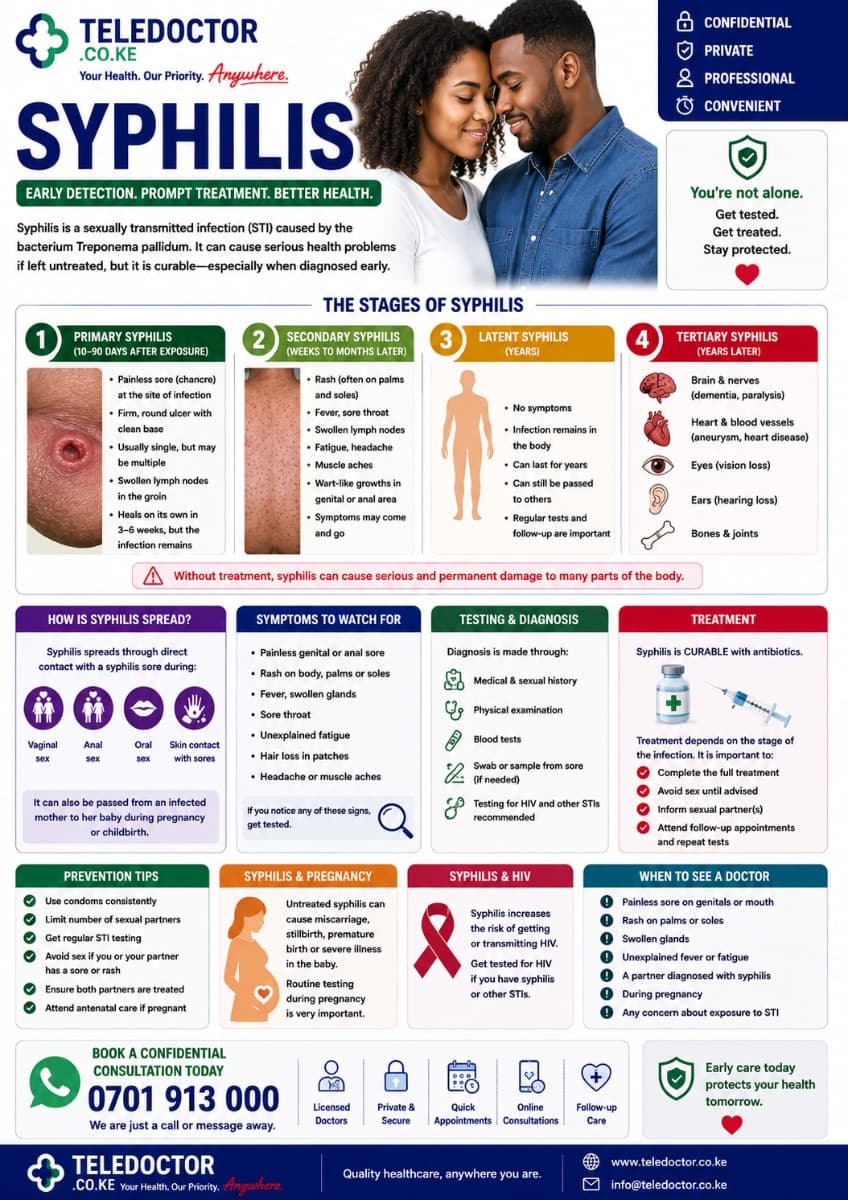
Syphilis: Early Diagnosis and Treatment Can Prevent Serious Complications
Syphilis is a sexually transmitted infection (STI) caused by the bacterium Treponema pallidum. It can affect both men and women and often begins with a painless sore that may go unnoticed.
Without treatment, syphilis progresses through different stages and can eventually damage the brain, heart, eyes, nerves, and other organs. Fortunately, syphilis is curable, especially when diagnosed and treated early.
Regular testing, early treatment, and informing sexual partners are essential to preventing complications and reducing transmission.
What Causes Syphilis?
Syphilis is caused by the bacterium Treponema pallidum.
The infection is transmitted through direct contact with a syphilitic sore (chancre) during:
- Vaginal sex
- Anal sex
- Oral sex
A pregnant woman with untreated syphilis can also pass the infection to her baby during pregnancy or childbirth (congenital syphilis), which can lead to serious complications.
Syphilis is not spread through:
- Toilet seats
- Swimming pools
- Sharing utensils
- Hugging or shaking hands
- Sharing food
Syphilis progresses through four stages if left untreated.
- Primary Syphilis
The first sign is usually a single painless ulcer (chancre) at the site where the bacteria entered the body.
The sore may appear on:
- Penis
- Vulva
- Vagina
- Cervix
- Anus
- Rectum
- Lips or mouth
Other features include:
- Firm, round ulcer
- Clean base
- Swollen lymph nodes in the groin
The sore usually heals on its own within a few weeks, but the infection remains in the body if not treated.
- Secondary Syphilis
Several weeks after the chancre heals, symptoms may include:
- A rash, often involving the palms of the hands and soles of the feet
- Fever
- Swollen lymph nodes
- Sore throat
- Fatigue
- Headache
- Muscle aches
- Hair loss in patches
- Moist wart-like lesions around the genital or anal area (condyloma lata)
These symptoms may also resolve without treatment, but the infection continues.
- Latent Syphilis
During the latent stage:
- There may be no symptoms
- Blood tests remain positive
- The infection can remain dormant for years
Even without symptoms, medical follow-up and treatment are important.
- Tertiary Syphilis
Untreated syphilis can, over many years, damage multiple organs.
Possible complications include:
- Stroke
- Heart and blood vessel disease
- Blindness
- Hearing loss
- Memory problems
- Dementia
- Nerve damage
- Difficulty walking
These complications can be severe but are largely preventable with early treatment.
Neurosyphilis
Syphilis can affect the brain and nervous system at any stage.
Symptoms may include:
- Severe headaches
- Vision changes
- Hearing loss
- Weakness
- Balance problems
- Confusion
- Memory difficulties
Neurosyphilis requires urgent specialist treatment.
Congenital Syphilis
If syphilis is not treated during pregnancy, it can be transmitted to the unborn baby.
Possible complications include:
- Miscarriage
- Stillbirth
- Premature birth
- Low birth weight
- Severe infection in the newborn
- Developmental problems
Routine syphilis screening is an important part of antenatal care.
How Is Syphilis Diagnosed?
Diagnosis usually involves:
- A medical and sexual history
- Physical examination
- Blood tests (treponemal and non-treponemal tests)
- Swab or sample from a sore in selected cases
- HIV testing and screening for other STIs when appropriate
Your healthcare provider will recommend the most suitable tests based on your symptoms and stage of infection.
Treatment
Syphilis is curable with appropriate antibiotics.
The recommended treatment depends on:
- The stage of infection
- Whether the nervous system is involved
- Pregnancy status
- Previous treatment history
Early treatment helps prevent long-term complications and reduces the risk of transmission.
It is essential to:
- Complete the prescribed treatment
- Avoid sexual activity until advised by your healthcare provider
- Ensure recent sexual partner(s) are informed, tested, and treated if necessary
- Attend follow-up appointments and repeat blood tests as recommended
Follow-Up After Treatment
Even after successful treatment, your healthcare provider may recommend repeat blood tests over several months to confirm that treatment has been effective.
Follow-up is an important part of care.
Can Syphilis Be Prevented?
You can reduce your risk by:
- Using condoms consistently (while recognising they do not provide complete protection because sores may occur on uncovered skin)
- Limiting the number of sexual partners
- Having regular STI screening if you are at increased risk
- Avoiding sexual contact if you or your partner has a genital sore until assessed
- Ensuring both partners are treated if syphilis is diagnosed
- Attending routine antenatal care during pregnancy
Syphilis and HIV
People with syphilis are at increased risk of acquiring or transmitting HIV.
For this reason, healthcare providers commonly recommend HIV testing when syphilis is diagnosed.
When Should You See a Doctor?
Seek medical advice if you have:
- A painless genital ulcer
- A new rash involving the palms or soles
- Swollen lymph nodes
- A partner diagnosed with syphilis
- Unprotected sex with a new or multiple partners
- Symptoms during pregnancy
- Any concern about possible exposure to an STI
Early diagnosis allows prompt treatment and helps protect both you and your partner(s).
Can Teledoctor Help?
Yes.
Teledoctor Kenya offers confidential online consultations for syphilis and other sexually transmitted infections.
Our licensed healthcare professionals can:
- Assess your symptoms
- Recommend appropriate laboratory tests
- Interpret blood test results
- Prescribe treatment where clinically appropriate
- Provide advice on partner notification
- Arrange specialist referrals when needed
- Offer follow-up care and monitoring
Some patients may require an in-person examination or laboratory testing to confirm the diagnosis.
Early Treatment Prevents Serious Complications
Syphilis is a curable infection, but delaying treatment increases the risk of serious health problems.
If you notice a genital sore, unexplained rash, or believe you may have been exposed, seek medical advice promptly.
Book a Confidential Online Sexual Health Consultation with Teledoctor Kenya
If you have symptoms of syphilis or would like STI testing and advice, Teledoctor Kenya is here to help.
Our experienced healthcare professionals provide:
- Confidential online consultations
- STI testing guidance
- Treatment where appropriate
- Partner management advice
- Pregnancy-related STI counselling
- Follow-up care
📞 Call or WhatsApp: 0701 913 000
🌐 Book your online consultation today at www.teledoctor.co.ke
Frequently Asked Questions
Can syphilis be cured?
Yes. Syphilis is curable with appropriate antibiotic treatment. Early treatment offers the best outcomes and helps prevent long-term complications.
Is the syphilis sore always painful?
No. The first sore (chancre) is usually painless, which is why many people do not realise they are infected.
Can I get syphilis more than once?
Yes. Previous infection does not provide immunity. You can become infected again if exposed.
Should my sexual partner be treated?
If you are diagnosed with syphilis, your recent sexual partner(s) should be informed, evaluated, and treated if necessary to prevent reinfection and further spread.
Is syphilis dangerous during pregnancy?
Yes. Untreated syphilis during pregnancy can have serious consequences for the baby. Routine antenatal screening and prompt treatment.