Throat Cancer: Recognizing the Early Signs Can Save Lives
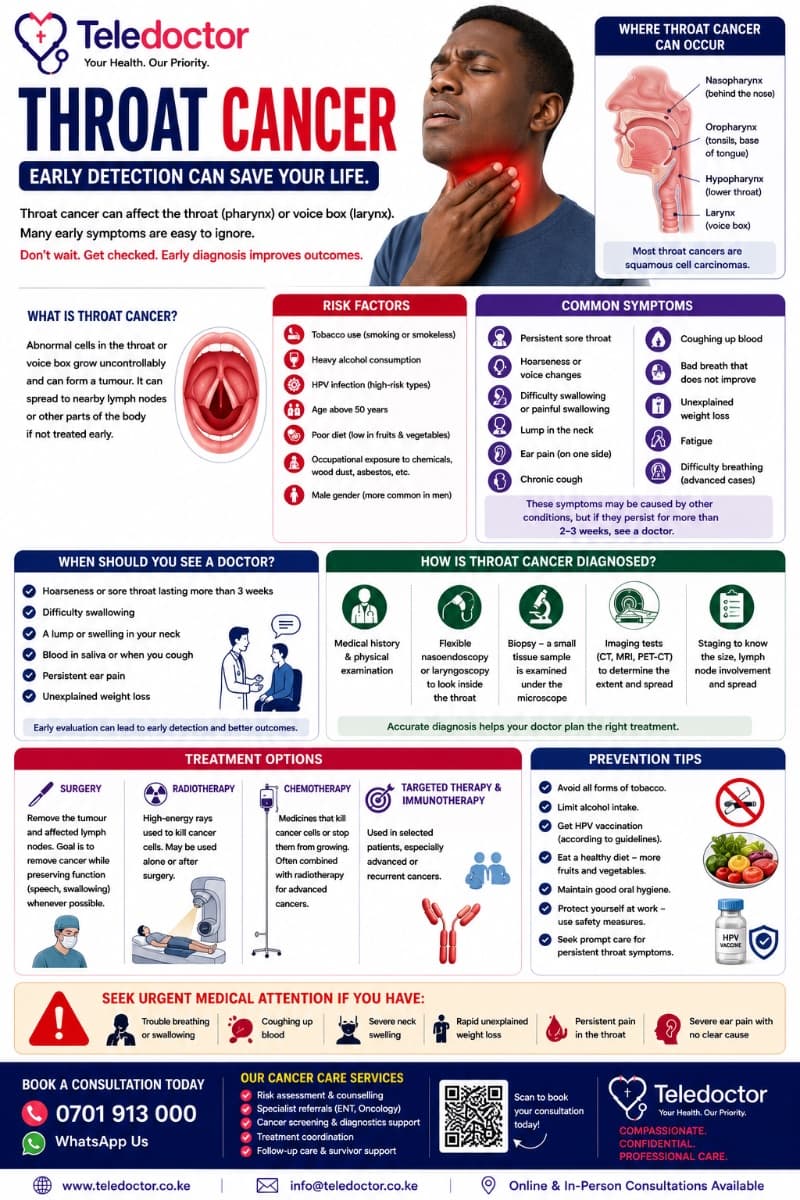
Throat cancer is a type of head and neck cancer that develops in the tissues of the throat (pharynx), voice box (larynx), or nearby structures such as the tonsils and the base of the tongue. Although it is less common than cancers of the breast, prostate, or colon, throat cancer can have a significant impact on speaking, swallowing, and breathing.
Many early symptoms resemble common conditions such as sore throat or hoarseness, which may delay diagnosis. Recognizing persistent symptoms and seeking medical evaluation promptly can lead to earlier treatment and improved outcomes.
At Teledoctor Kenya, we help patients recognize warning signs, assess their cancer risk, arrange specialist referrals, and provide ongoing support throughout diagnosis and treatment. What Is Throat Cancer?
The term throat cancer refers to cancers that arise in the:
- Pharynx (throat), including:
- Nasopharynx (behind the nose)
- Oropharynx (including the tonsils and base of the tongue)
- Hypopharynx (lower throat)
- Larynx (voice box)
Most throat cancers are squamous cell carcinomas, meaning they develop from the thin, flat cells lining the throat.
Types of Throat Cancer
Oropharyngeal Cancer
Develops in the middle part of the throat, including:
- Tonsils
- Base of the tongue
- Soft palate
Some cases are linked to persistent infection with high-risk Human Papillomavirus (HPV).
Laryngeal Cancer
Develops in the voice box and commonly presents with persistent hoarseness.
Hypopharyngeal Cancer
Occurs in the lower part of the throat near the entrance to the esophagus.
Nasopharyngeal Cancer
Develops behind the nose and above the soft palate. It is less common but has distinct risk factors, including infection with the Epstein–Barr virus (EBV) in some populations. Risk Factors
Several factors increase the risk of throat cancer.
Tobacco Use
Smoking cigarettes, cigars, pipes, or using smokeless tobacco is one of the strongest risk factors.
Alcohol Consumption
Heavy alcohol use increases the risk, particularly when combined with smoking.
Human Papillomavirus (HPV)
Persistent infection with certain high-risk HPV types, especially HPV-16, is associated with many cancers of the oropharynx.
Age and Sex
Most throat cancers occur in adults over the age of 50, although HPV-related cancers may occur in younger adults. Men are affected more often than women.
Poor Nutrition
A diet low in fruits and vegetables may increase risk.
Occupational Exposure
Long-term exposure to wood dust, asbestos, certain industrial chemicals, and other workplace hazards may increase risk.
Symptoms of Throat Cancer
Symptoms often develop gradually.
Common warning signs include:
- Persistent sore throat lasting more than three weeks
- Hoarseness or voice changes
- Difficulty swallowing (dysphagia)
- Pain when swallowing
- A lump in the neck
- Persistent ear pain (especially on one side)
- Chronic cough
- Coughing up blood
- Bad breath that does not improve
- Unexplained weight loss
- Difficulty breathing (advanced cases)
These symptoms are often caused by non-cancerous conditions, but persistent symptoms require medical evaluation.
When Should You See a Doctor?
Arrange a medical consultation if you have:
- Hoarseness lasting more than three weeks
- A sore throat that does not improve
- Difficulty swallowing
- A persistent lump in the neck
- Blood in your saliva or sputum
- Persistent ear pain without an obvious ear infection
- Unexplained weight loss
Early diagnosis greatly improves treatment success.
How Is Throat Cancer Diagnosed?
Your healthcare provider may recommend:
Medical History and Physical Examination
This includes examination of the mouth, throat, neck, and lymph nodes.
Flexible Nasoendoscopy or Laryngoscopy
A thin flexible camera is used to examine the throat and voice box. Biopsy
A biopsy is required to confirm the diagnosis. A small tissue sample is removed and examined under a microscope.
Imaging
Depending on the findings, additional tests may include:
- CT scan
- MRI
- PET-CT scan (in selected patients)
- Ultrasound of the neck
These tests help determine the extent of the disease.
Staging
After diagnosis, the cancer is staged to determine:
- Tumour size
- Involvement of nearby lymph nodes
- Spread to other parts of the body
Staging helps guide treatment decisions.
Treatment
Treatment depends on the location, stage, and overall health of the patient.
Surgery
Surgery may remove:
- The tumour
- Part of the throat or voice box when necessary
- Involved lymph nodes
Modern surgical techniques aim to preserve speech and swallowing whenever possible.
Radiotherapy
Radiotherapy uses high-energy radiation to destroy cancer cells.
It may be used:
- As the main treatment for early-stage disease
- After surgery
- Together with chemotherapy for more advanced cancers
Chemotherapy
Chemotherapy is often combined with radiotherapy for locally advanced disease or used in metastatic cancer.
Targeted Therapy and Immunotherapy
Selected patients with advanced disease may benefit from targeted therapies or immunotherapy, depending on tumour characteristics and current treatment guidelines.
Rehabilitation After Treatment
Treatment may affect speaking, swallowing, or nutrition.
Many patients benefit from support by:
- Speech and language therapists
- Dietitians
- Physiotherapists
- Psychologists
- Oncology specialists
Comprehensive rehabilitation helps improve recovery and quality of life.
Can Throat Cancer Be Prevented?
Although not all cases can be prevented, you can reduce your risk by:
- Avoiding all forms of tobacco
- Limiting alcohol intake
- Receiving HPV vaccination according to national recommendations
- Eating a healthy diet rich in fruits and vegetables
- Maintaining good oral hygiene
- Attending regular dental check-ups
- Seeking prompt evaluation for persistent throat symptoms
Living With and Beyond Throat Cancer
Many people successfully recover from throat cancer, especially when it is diagnosed early.
Long-term follow-up focuses on:
- Monitoring for recurrence
- Managing treatment side effects
- Nutritional support
- Speech and swallowing rehabilitation
- Emotional wellbeing
- Smoking and alcohol cessation support.
Can Teledoctor Help?
Yes.
Teledoctor Kenya provides comprehensive support for patients with persistent throat symptoms or concerns about head and neck cancer.
Our healthcare professionals can:
- Assess persistent throat symptoms
- Identify risk factors
- Arrange ENT specialist referrals
- Coordinate imaging and biopsy referrals
- Support patients during treatment
- Provide smoking cessation counselling
- Offer long-term follow-up support
Book a Consultation with Teledoctor Kenya
If you have persistent hoarseness, a sore throat that does not improve, difficulty swallowing, or a lump in your neck, our healthcare professionals are here to help.
Our services include:
- Cancer risk assessment
- ENT referrals
- Smoking cessation support
- Diagnostic referrals
- Oncology care coordination
- Follow-up care
📞 Call or WhatsApp: 0701 913 000
🌐 Visit: www.teledoctor.co.ke
📍 Online and In-Person Consultations Available
Frequently Asked Questions
Is a persistent sore throat always cancer?
No. Most sore throats are caused by viral or bacterial infections. However, symptoms lasting more than three weeks or recurring without an obvious cause should be evaluated.
Does every smoker develop throat cancer?
No. Smoking greatly increases the risk, but not everyone who smokes develops cancer. Quitting smoking substantially lowers the risk over time.
Can HPV cause throat cancer?
Yes. Persistent infection with certain high-risk HPV types is associated with many cancers of the oropharynx.
Is throat cancer curable?
Yes. Many cases are curable, especially when diagnosed at an early stage.
Can throat cancer affect the voice?
Yes. Cancer involving the voice box (larynx) commonly causes persistent hoarseness or voice changes.