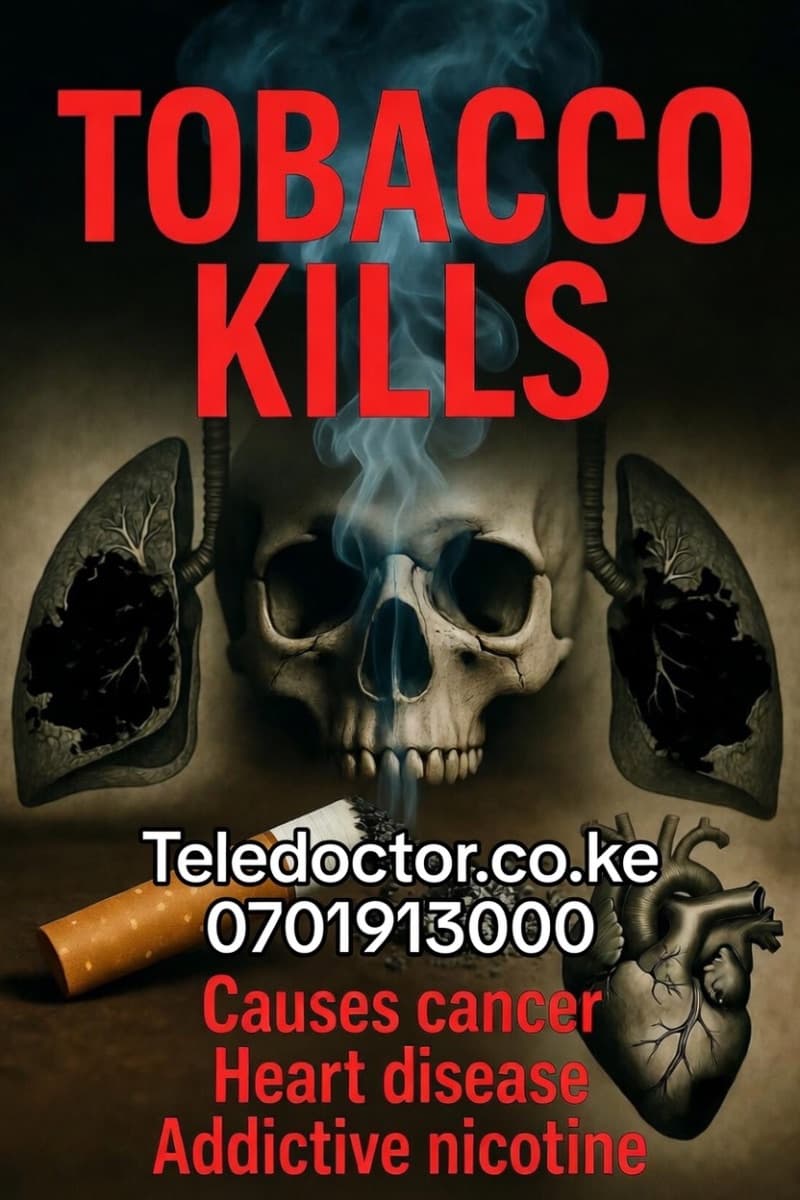
Tobacco Use Disorder: Breaking Free from Nicotine Addiction
Tobacco use remains one of the leading preventable causes of illness and premature death worldwide. Whether smoked or used in smokeless forms, tobacco exposes the body to harmful chemicals that increase the risk of numerous diseases.
Many people who use tobacco want to quit but find it difficult because nicotine, the addictive substance in tobacco, creates physical dependence and cravings.
The good news is that quitting tobacco at any age improves health. Even after years of smoking, stopping can significantly reduce the risk of heart disease, stroke, cancer, and lung disease.
At Teledoctor Kenya, we provide compassionate, evidence-based support to help individuals stop using tobacco and improve their long-term health.
What Is Tobacco Use Disorder?
Tobacco Use Disorder is a medical condition in which a person continues using tobacco despite knowing that it is causing harm.
It is characterized by:
- Strong cravings for tobacco
- Difficulty controlling use
- Withdrawal symptoms when attempting to stop
- Continued use despite health, financial, or social consequences
Nicotine addiction is a recognized medical condition—not simply a lack of willpower.
Types of Tobacco Products
People may use tobacco in different forms, including:
Smoked Tobacco
- Cigarettes
- Cigars
- Pipes
- Roll-your-own tobacco
- Shisha (hookah)
Smokeless Tobacco
- Chewing tobacco
- Snuff
- Oral tobacco products
Electronic Cigarettes (Vapes)
E-cigarettes do not contain tobacco leaf but often deliver nicotine. While they may expose users to fewer toxic substances than combustible cigarettes, they are not risk-free, and their long-term health effects continue to be studied. They are not recommended for non-smokers, children, or pregnant women.
Why Is Nicotine So Addictive?
Nicotine rapidly reaches the brain after inhalation or absorption.
It stimulates the release of dopamine, a chemical associated with pleasure and reward.
Over time, the brain adapts, making the person:
- Crave nicotine
- Need regular doses to feel normal
- Experience withdrawal when nicotine levels fall
This cycle reinforces dependence.
Health Risks of Tobacco Use
Tobacco affects nearly every organ in the body.
Heart and Blood Vessels
Smoking increases the risk of:
- High blood pressure
- Heart attack
- Stroke
- Peripheral artery disease
Lungs
Smoking is a major cause of:
- Chronic Obstructive Pulmonary Disease (COPD)
- Chronic bronchitis
- Emphysema
- Lung cancer
- Worsening asthma
Cancer
Tobacco use is strongly linked to cancers of the:
- Lung
- Mouth
- Throat
- Larynx
- Esophagus
- Stomach
- Pancreas
- Kidney
- Bladder
- Cervix
- Colon
- Liver
Quitting lowers cancer risk over time.
Reproductive Health
Smoking may contribute to:
Women
- Reduced fertility
- Pregnancy complications
- Miscarriage
- Premature birth
- Low birth weight
Men
- Erectile dysfunction
- Reduced sperm quality
- Decreased fertility
Oral Health
Smoking and smokeless tobacco increase the risk of:
- Gum disease
- Tooth loss
- Bad breath
- Oral cancer
Secondhand Smoke
Secondhand smoke is the smoke inhaled by people nearby.
Exposure increases the risk of:
- Asthma attacks
- Ear infections in children
- Pneumonia
- Heart disease
- Lung cancer in non-smokers
Protecting family members from tobacco smoke is an important public health measure.
Signs of Tobacco Use Disorder
A person may:
- Smoke shortly after waking up
- Feel unable to stop
- Experience strong cravings
- Become irritable when unable to smoke
- Continue smoking despite medical advice
- Smoke even when ill
- Spend significant money on tobacco despite financial strain
Nicotine Withdrawal Symptoms
Withdrawal symptoms commonly begin within hours of stopping and usually improve over several weeks.
Symptoms may include:
- Cravings
- Irritability
- Anxiety
- Difficulty concentrating
- Restlessness
- Increased appetite
- Trouble sleeping
- Low mood
These symptoms are temporary and can be managed with appropriate support.
Benefits of Quitting Tobacco
The body begins recovering almost immediately after quitting.
Within:
- 20 minutes: Heart rate and blood pressure begin to fall.
- 24 hours: The risk of another heart attack starts to decrease.
- Weeks to months: Lung function and circulation improve.
- 1 year: The risk of coronary heart disease is about half that of someone who continues smoking.
- Several years: The risks of stroke and many cancers continue to decline.
It is never too late to quit.
Treatment for Tobacco Use Disorder
Quitting often requires a combination of approaches.
Behavioural Counselling
Counselling helps individuals:
- Identify triggers
- Develop coping strategies
- Prevent relapse
- Stay motivated
Nicotine Replacement Therapy (NRT)
NRT provides controlled doses of nicotine without the harmful chemicals found in tobacco smoke.
Options include:
- Nicotine gum
- Nicotine patches
- Nicotine lozenges
- Nicotine inhalers (where available)
These products can reduce withdrawal symptoms and improve quit success.
Prescription Medications
Some people benefit from medications such as:
- Varenicline
- Bupropion
These should only be used under the guidance of a qualified healthcare professional.
Support Groups
Support from healthcare professionals, family, friends, or structured smoking cessation programmes increases the likelihood of long-term success.
Practical Tips for Quitting
If you are planning to quit:
- Set a quit date.
- Tell family and friends about your plan.
- Remove cigarettes and tobacco products from your home and car.
- Avoid situations that trigger smoking.
- Stay physically active.
- Drink plenty of water.
- Practice stress-management techniques.
- Reward yourself for reaching milestones.
- Seek professional support if cravings become difficult to manage.
Many people require several attempts before quitting permanently. Each attempt is an opportunity to learn and move closer to success.
When Should You Seek Medical Help?
Speak with a healthcare professional if:
- You want help quitting tobacco.
- You have withdrawal symptoms.
- You have chronic cough or breathlessness.
- You smoke during pregnancy.
- You have developed tobacco-related health problems.
- Previous quit attempts have been unsuccessful.
Professional support can significantly increase your chances of quitting.
Can Teledoctor Help?
Yes.
Teledoctor Kenya provides confidential smoking cessation support.
Our healthcare professionals can:
- Assess nicotine dependence
- Develop a personalized quit plan
- Provide behavioural counselling
- Recommend nicotine replacement therapy when appropriate
- Prescribe suitable medications if indicated
- Monitor progress
- Support relapse prevention
Recovery Is Possible
Quitting tobacco is one of the most important decisions you can make for your health.
Although nicotine addiction is challenging, millions of people have successfully stopped smoking. With determination, professional support, and the right treatment, you can too.
Every smoke-free day is a step toward a healthier future.
Book a Smoking Cessation Consultation with Teledoctor Kenya
If you are ready to quit smoking or using tobacco, we are here to support you.
Our services include:
- Smoking cessation counselling
- Nicotine addiction assessment
- Nicotine replacement therapy guidance
- Medication review
- Follow-up support
- Preventive health advice
📞 Call or WhatsApp: 0701 913 000
🌐 Visit: www.teledoctor.co.ke
📍 Online and In-Person Consultations Available
Frequently Asked Questions
Is nicotine the same as tobacco?
No. Nicotine is the addictive substance in tobacco, while tobacco smoke contains thousands of chemicals, many of which are toxic and cancer-causing.
Is vaping safer than smoking?
Vaping generally exposes users to fewer harmful chemicals than smoking cigarettes, but it is not risk-free. It is not recommended for non-smokers or young people, and anyone considering vaping to quit smoking should discuss this with a healthcare professional.
How many attempts does it take to quit?
Many people require several quit attempts before stopping permanently. Each attempt increases experience and can improve future success.
Will I gain weight after quitting?
Some people gain a small amount of weight, but the health benefits of quitting far outweigh this risk. Healthy eating and regular exercise can help.
Is it ever too late to quit smoking?
No. Quitting at any age improves health and reduces the risk of tobacco-related diseases.