Vulvovaginal yeast infection, also known as vaginal candidiasis, is one of the most common causes of vaginal itching and abnormal vaginal discharge. It affects millions of women worldwide and is experienced by many women at least once during their lifetime.
Although uncomfortable, a yeast infection is usually not dangerous and can often be treated successfully with antifungal medication. Because the symptoms may be similar to other vaginal infections or sexually transmitted infections (STIs), it is important to obtain an accurate diagnosis before starting treatment.
⸻
What Is a Vulvovaginal Yeast Infection?
A vulvovaginal yeast infection is an overgrowth of a naturally occurring fungus called Candida, most commonly Candida albicans.
Small amounts of Candida normally live in the vagina without causing problems. Healthy bacteria, particularly Lactobacillus, help keep yeast growth under control.
When this natural balance is disrupted, Candida can multiply excessively, leading to symptoms.
⸻
Common Symptoms
Women with a yeast infection may experience:
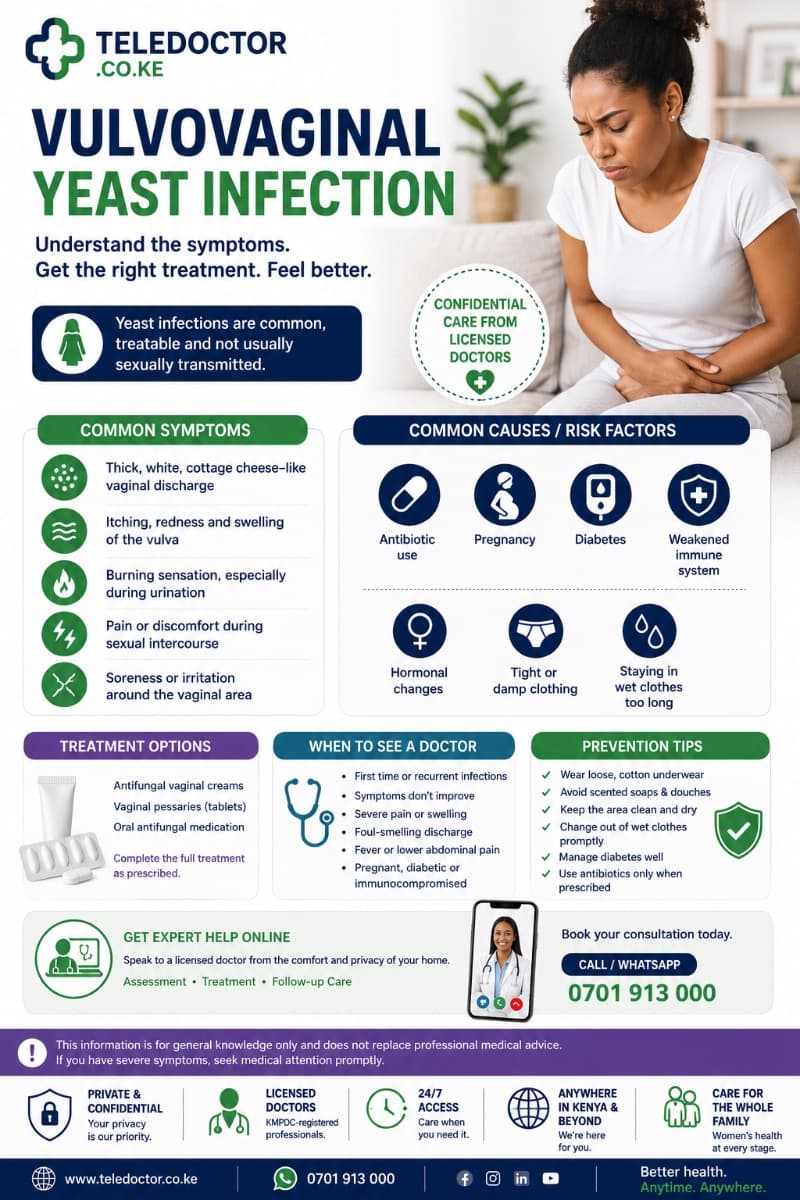
- Intense vaginal or vulval itching
- Burning sensation, especially during urination
- Thick, white vaginal discharge that is often described as “cottage cheese-like”
- Redness and swelling of the vulva
- Soreness or irritation around the vaginal opening
- Pain or discomfort during sexual intercourse
- Small cracks in the skin caused by severe irritation
Some women have mild symptoms, while others experience significant discomfort.
⸻
What Causes a Yeast Infection?
Several factors can increase the risk of developing a yeast infection.
Antibiotic Use
Antibiotics may reduce the number of healthy vaginal bacteria, allowing yeast to grow more easily.
Pregnancy
Hormonal changes during pregnancy increase the likelihood of vaginal candidiasis.
Diabetes
Poorly controlled blood sugar creates an environment that encourages yeast growth.
Weakened Immune System
People with conditions or treatments that weaken the immune system may be more prone to recurrent infections.
Hormonal Changes
Hormonal contraceptives or hormone replacement therapy may slightly increase the risk in some women.
Tight or Damp Clothing
Wearing tight underwear or remaining in wet clothing for long periods can create a warm, moist environment that favours yeast growth.
⸻
Is a Yeast Infection Sexually Transmitted?
No.
A vulvovaginal yeast infection is not generally considered a sexually transmitted infection (STI).
Although sexual activity may occasionally contribute to irritation or trigger symptoms in some women, yeast infections usually occur because of an imbalance in the normal vaginal environment rather than transmission from a sexual partner.
If symptoms occur after a new sexual relationship or are associated with sores, foul-smelling discharge, or pelvic pain, medical assessment is important to exclude an STI or another condition.
⸻
How Is It Diagnosed?
Many women who have had previous yeast infections recognise the symptoms. However, other conditions—such as bacterial vaginosis, trichomoniasis, allergic reactions, or STIs—can cause similar symptoms.
A healthcare professional may diagnose a yeast infection based on:
- Your symptoms
- Medical history
- Previous episodes
- Risk factors
In some cases, particularly if symptoms are severe, recurrent, or atypical, a vaginal examination and laboratory testing may be recommended.
⸻
Treatment
Most uncomplicated yeast infections respond well to antifungal treatment.
Depending on your symptoms and medical history, treatment may include:
- Antifungal vaginal creams
- Vaginal pessaries (tablets inserted into the vagina)
- Oral antifungal medication
It is important to complete the recommended treatment, even if symptoms improve quickly.
Avoid self-medicating repeatedly without medical advice, as recurring symptoms may have another cause.
⸻
Home Care Tips
Alongside medical treatment, the following measures may help reduce irritation:
- Wear loose-fitting cotton underwear.
- Avoid prolonged use of damp clothing such as swimsuits or gym wear.
- Avoid scented soaps, vaginal deodorants, and perfumed feminine hygiene products.
- Wash the genital area gently with water or mild, fragrance-free cleansers.
- Avoid vaginal douching, which disrupts the normal vaginal environment.
⸻
Preventing Future Yeast Infections
Although not every infection can be prevented, these measures may reduce the risk:
- Keep diabetes well controlled.
- Only use antibiotics when prescribed.
- Change out of wet clothing promptly.
- Wear breathable underwear.
- Maintain good genital hygiene without excessive washing.
- Seek medical advice if infections occur repeatedly.
⸻
When Should You See a Doctor?
Arrange a medical consultation if:
- This is your first episode of vaginal itching or discharge.
- Symptoms do not improve after treatment.
- Symptoms return within two months.
- You have recurrent infections (four or more in one year).
- You are pregnant.
- You have diabetes or a weakened immune system.
- You develop fever, pelvic pain, or foul-smelling discharge.
These features may indicate another condition requiring further assessment.
⸻
Can a Yeast Infection Be Managed Through an Online Consultation?
Yes.
Many women with uncomplicated symptoms can be assessed through a confidential online consultation.
A licensed healthcare professional can:
- Review your symptoms
- Assess whether a yeast infection is the likely cause
- Recommend appropriate treatment
- Advise if laboratory testing is needed
- Arrange follow-up care if symptoms persist
- Identify warning signs that require an in-person examination
Telemedicine provides convenient, discreet access to medical advice from the comfort of your home.
⸻
Protecting Your Vaginal Health
Maintaining a healthy vaginal environment is an important part of overall wellbeing.
Avoid unnecessary antibiotics, practise good hygiene, manage chronic conditions such as diabetes, and seek medical advice if you notice unusual symptoms.
Prompt treatment not only relieves discomfort but also helps ensure that more serious conditions are not overlooked.
⸻
Book an Online Women’s Health Consultation with Teledoctor Kenya
If you are experiencing vaginal itching, unusual discharge, irritation, or discomfort, our licensed healthcare professionals are here to help.
Teledoctor Kenya offers confidential online consultations where you can discuss your symptoms, receive personalised treatment advice, and be referred for additional investigations if necessary.
Quality women’s healthcare is private, convenient, and accessible—wherever you are in Kenya.
Book your online consultation with Teledoctor Kenya today.
⸻
Frequently Asked Questions
Can a yeast infection go away on its own?
Some mild infections may improve without treatment, but many require antifungal medication. It is advisable to seek medical advice, especially if symptoms are severe or persistent.
Is thick white discharge always a yeast infection?
No. While thick white discharge is common with yeast infections, other vaginal conditions can also cause abnormal discharge. A medical assessment helps ensure the correct diagnosis.
Should my partner be treated?
Routine treatment of sexual partners is not usually necessary unless they have symptoms or your healthcare provider advises otherwise.
Can I prevent recurrent yeast infections?
Good genital hygiene, avoiding unnecessary antibiotics, wearing breathable underwear, and managing diabetes effectively can help reduce the risk of recurrent infections.
Can I get treatment through an online consultation?
Yes. Many uncomplicated yeast infections can be assessed and managed through a confidential online consultation. If an examination or laboratory testing is required, your clinician will advise you accordingly.